

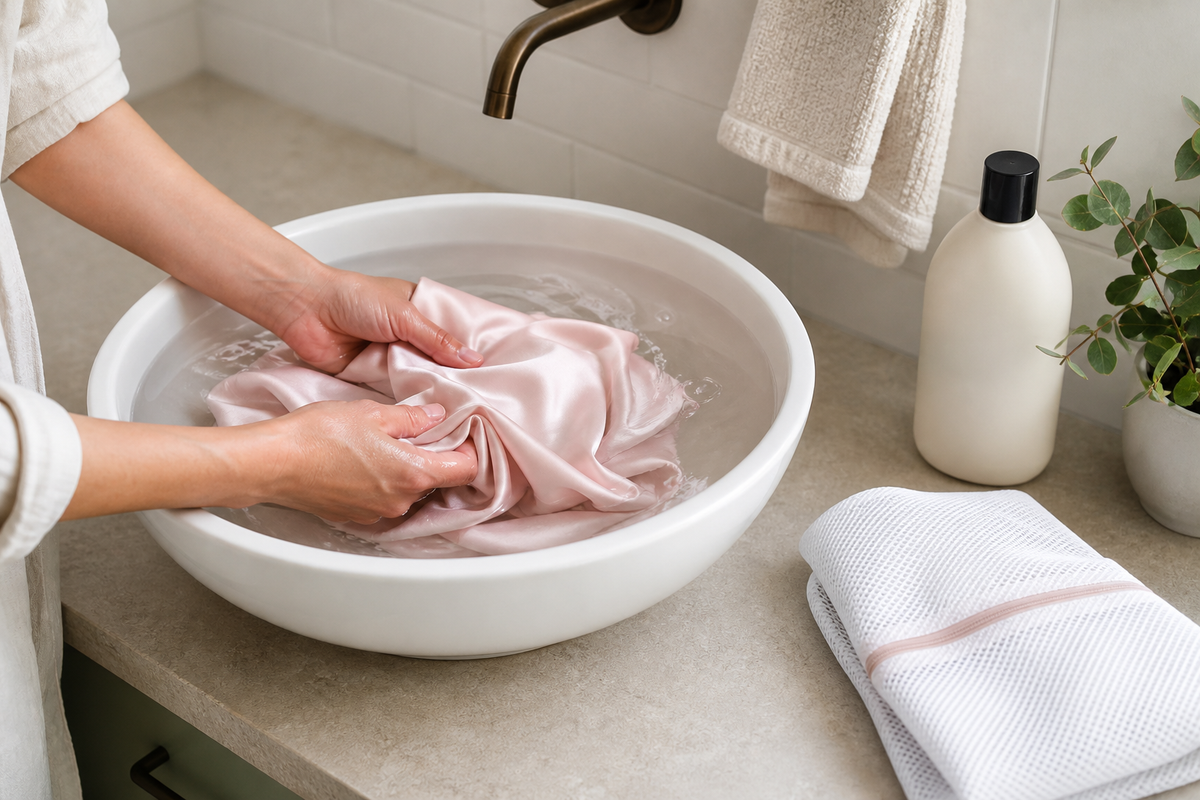
The safest way to wash a silk pillowcase is with cool water, a small amount of silk-safe detergent and as little rubbing, twisting and heat as possible.
Silk care sounds complicated because the mistakes are repeated more often than the method. In practice, you need to avoid a short list of things: hot water, harsh detergent, bleach, fabric conditioner, aggressive spin cycles, tumble-dryer heat and direct strong sunlight.
Always read the sewn-in care label first. It belongs to your exact pillowcase and takes priority over any general guide, including this one.
What you need
- A clean basin or a washing machine with a cold delicate cycle
- A detergent specifically suitable for silk or delicate protein fibres
- A mesh laundry bag if machine washing
- A clean white or colourfast towel
- A flat drying surface or padded airer away from direct sunlight
How to hand wash a silk pillowcase
1. Check the label and test the colour
Confirm that hand washing is permitted. For a strongly coloured or printed pillowcase, test an inconspicuous internal area with cool water before washing the whole item.
2. Fill a clean basin with cool water
Use cool or barely lukewarm water. Hot water can stress the fibre, encourage shrinkage and affect the finish.
3. Add a small amount of silk-safe detergent
More detergent does not mean a cleaner pillowcase. Follow the dose on the bottle and make sure the product is suitable for silk. Avoid biological detergents containing enzymes intended to break down protein-based stains, because silk itself is a protein fibre.
4. Turn the pillowcase inside out
This protects the visible face and gives you easier access to the area that has been in contact with the pillow and any internal zip or envelope seam.
5. Move it gently through the water
Submerge the pillowcase and use a light swishing motion. Do not scrub one section against another, twist the fabric or leave it soaking for longer than the care instructions recommend.
6. Rinse in cool clean water
Drain the wash water and rinse gently until the water runs clear and no detergent remains. Support the fabric rather than lifting a heavy, wet pillowcase from one corner.
7. Press, never wring
Gather the pillowcase loosely and press out water with your hands. Lay it flat on a clean towel, roll the towel and press gently so the towel takes up the remaining moisture.
8. Air dry away from heat and strong sunlight
Reshape the pillowcase and dry it flat or over a padded airer. Strong direct sunlight can affect colour, while radiators and tumble dryers expose silk to unnecessary heat.
How to machine wash a silk pillowcase
Only use a washing machine when the care label permits it.
- Turn the pillowcase inside out and close any zip.
- Place it in a clean mesh laundry bag.
- Wash silk alone or with similarly delicate, smooth items. Do not add towels, denim or clothes with hooks and rough fastenings.
- Select a cold silk, hand-wash or delicate cycle with low agitation.
- Use the correct dose of silk-safe detergent.
- Choose the lowest suitable spin or remove the item before a strong spin if the machine allows.
- Take it out promptly, press in a towel and air dry.
Can you tumble dry a silk pillowcase?
Unless the care label explicitly says otherwise, avoid the tumble dryer. Heat and repeated tumbling can affect the fibre, surface and shape. Air drying is slower but much kinder to the finish you bought the pillowcase for.
Can you iron silk?
If the label allows ironing, work while the pillowcase is very slightly damp or use a clean pressing cloth. Turn it inside out, choose the coolest silk setting and keep the iron moving. Do not allow water droplets to spit from a steam iron onto the fabric because they can leave marks.
Often the better option is to smooth the pillowcase by hand as it dries and accept a few soft creases. They usually relax once the pillow is inserted.
How often should you wash a silk pillowcase?
There is no perfect number for every household. Consider how much skincare or hair product you use, whether you sleep hot, whether pets share the bed and how sensitive you are to a pillowcase that no longer feels fresh.
A useful routine is to keep two pillowcases in rotation. One can be washed and air dried properly while the other is on the bed, removing the temptation to rush the process with heat.
How to deal with make-up, oil or a small stain
- Act promptly, but do not scrub.
- Blot excess product with a clean white cloth.
- Use a small amount of diluted silk-safe detergent on the affected area.
- Work from the outside of the mark towards the centre with a light pressing motion.
- Rinse thoroughly with cool water.
- For persistent, valuable or heavily dyed silk, use a professional cleaner experienced with silk.
Avoid home stain removers unless they explicitly state that they are safe for the exact silk item. Bleach and strong alkaline products can cause irreversible damage.
Five silk-washing mistakes to avoid
- Using ordinary biological detergent: enzymes and harsh cleaning agents are not the gentle treatment silk needs.
- Wringing the pillowcase: twisting wet fabric puts stress on the fibres and seams.
- Washing it with rough items: towels, zips and denim can create friction in the drum.
- Adding fabric conditioner: it can leave a coating and is unnecessary on naturally smooth silk.
- Speed-drying with heat: radiators and tumble dryers trade a little time for a much greater chance of damage.
Does silk blend or satin need the same care?
Not automatically. A silk blend combines fibres, while satin describes a weave that might use rayon, polyester or silk. Each product can have different washing limits.
The Meadow Drift Silk-Blend Pillowcase Pair, Cool Lilt Mulberry Silk Pillowcase and Moonlit Rayon Satin Bedding Set should each be cared for according to the instructions on its own listing and sewn-in label.
Frequently asked questions
Can I wash silk at 30°C?
Some care labels permit a 30°C delicate cycle, while others call for cold hand washing. Follow the lowest and gentlest instruction on the exact item.
Can I use shampoo to wash silk?
A detergent formulated and labelled for silk is the safer choice. Shampoo formulas vary and may include conditioners, fragrances or ingredients not intended for fabric.
Can I use fabric conditioner on silk?
It is usually unnecessary and may coat the fibre. Use a silk-safe detergent and follow the care label instead.
Why does my silk pillowcase feel stiff after washing?
Possible causes include too much detergent, incomplete rinsing, hard water, heat or a product not intended for silk. Rinse again in cool water and air dry. If the problem remains, consult a professional cleaner.
How should I store a silk pillowcase?
Store it clean, completely dry and loosely folded in a breathable drawer or fabric bag. Keep it away from damp, strong sunlight and snagging hardware.
Care becomes easier when the product details are clear from the start. Explore Daylilt silk pillowcases and check the Fit, Fabric & Care information on every listing before choosing.



Leave a comment
This site is protected by hCaptcha and the hCaptcha Privacy Policy and Terms of Service apply.