


A duvet's tog rating, its filling and the fabric of its removable cover describe different things. Tog relates to insulation, filling identifies what is inside the duvet, and the outer cover has its own material, dimensions and care requirements. Read those details separately rather than expect one attractive photograph or familiar fibre name to answer every comfort question.
These distinctions become useful when a bed feels different from what you expected. A change of duvet cover may alter the surface you feel and the room's appearance, but it does not replace the filled duvet beneath it. A new filled duvet may have a different rating without supplying the matching outer textiles shown in the photograph.
This is a guide to interpreting product information, not a medical recommendation or a universal tog prescription. The arrangement that suits you depends on your preferences and circumstances. If temperature discomfort or sleep difficulty is persistent or concerning, seek appropriate healthcare advice rather than assume that a bedding specification explains everything.
Begin with the three separate questions
Ask what insulation is stated, what fills the duvet and what material makes up the removable cover. Add dimensions and care to each relevant item. Keeping the questions separate makes it easier to compare options and prevents a phrase such as “silk bedding” from being interpreted as proof about every layer on the bed.
For an illustrative example, a household may already own a filled duvet that suits its preferences but dislike the appearance of the current cover. That is mainly an outer-textile decision. Another household may like the cover but want to review the duvet underneath. The two situations can lead to different purchases even if both people begin by saying they need “new bedding”.
Write down which layer you intend to change before browsing. You are less likely to be diverted by a coordinated photograph if you can name the actual problem. A beautiful set may still be irrelevant to the component you need to replace, and an existing item may remain perfectly useful beside a new one.
What tog tells you
John Lewis's duvet guide explains that tog concerns warmth rather than weight, with higher ratings indicating a warmer duvet. It treats size, tog and filling as separate buying considerations. That is a useful starting distinction, not proof that one number is right for every room or sleeper.
Do not interpret a higher rating as a higher quality grade. It is not a score for craftsmanship, fibre purity or how expensive the product ought to be. A number that describes one property cannot answer whether the item suits your care routine, whether its construction is sound or whether you like its feel.
Likewise, avoid equating physical bulk with the stated rating. Compare the actual specifications rather than judge insulation from a photograph of a thick-looking bed. The photograph may include a cover, styling layers or a different insert. If the relevant information is missing, ask instead of estimating a rating by eye.
What filling tells you
The filling is the material inside the duvet. Read its stated composition and any proportions, together with the construction and care guidance. Do not assume that a broad label such as “natural” or “synthetic” tells you every relevant property of a finished product. Two items in the same category can have different specifications.
If animal-derived materials, particular fibres or other composition details matter to your decision, seek the exact information. Avoid substituting a product name or a general range description for a clear statement. A label should help you understand the actual selected item, not require you to infer its contents from a mood-setting word.
Claims about allergies or health need more care than a simple material preference. Do not assume that a filling category is automatically suitable for a medical concern. Seek appropriate professional advice where relevant and ask a retailer what evidence supports the exact product claim. This article does not label a filling as a treatment or universal solution.
The duvet casing is another layer
The fabric enclosing the filling belongs to the duvet itself. It is different from the removable decorative cover you put over it. Product descriptions may use “cover” for either context, so read the sentence carefully. Ask whether a composition statement describes the sewn casing, the filling or the separate cover sold with the bed linen.
This distinction matters when you keep records. A duvet may have separate information for casing and filling, while your removable cover has another label. Store each instruction with the right item. Do not assume that the fibre named most prominently in a listing represents every component.
If a description remains ambiguous, send one precise question to the retailer. “Does this percentage describe the filling or the casing?” is easier to answer than asking whether the duvet is good quality. Clear wording can resolve a basic uncertainty before it becomes an unsuitable purchase or a care mistake.
The removable cover has its own job
A duvet cover encloses the filled duvet and supplies the visible outer fabric. Check its dimensions, closure, composition and care instructions separately. It may be sold alone, with pillowcases or within a larger bundle. None of those arrangements automatically includes the filled duvet shown inside it.
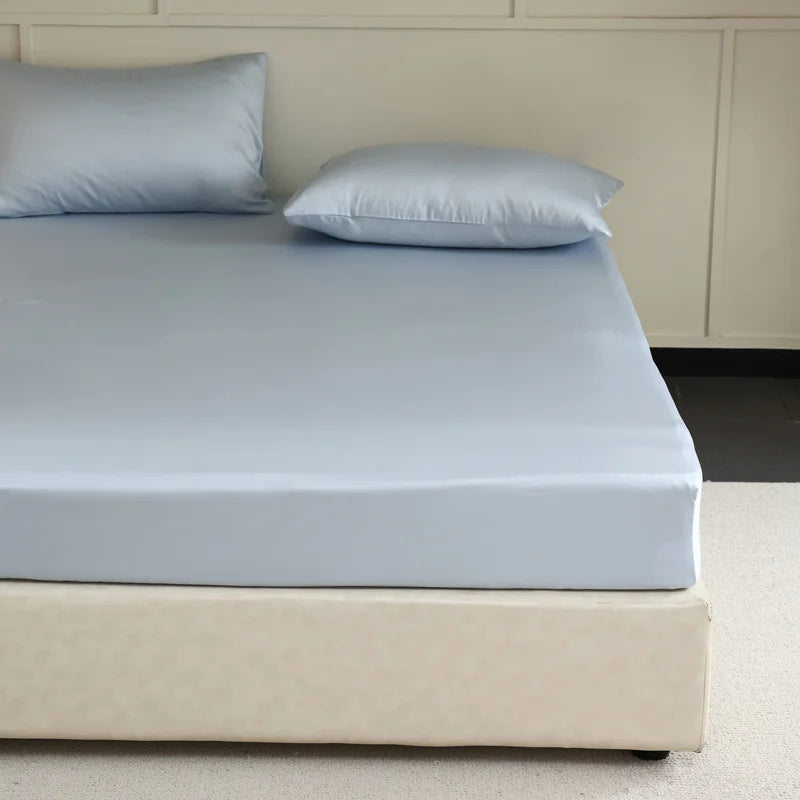
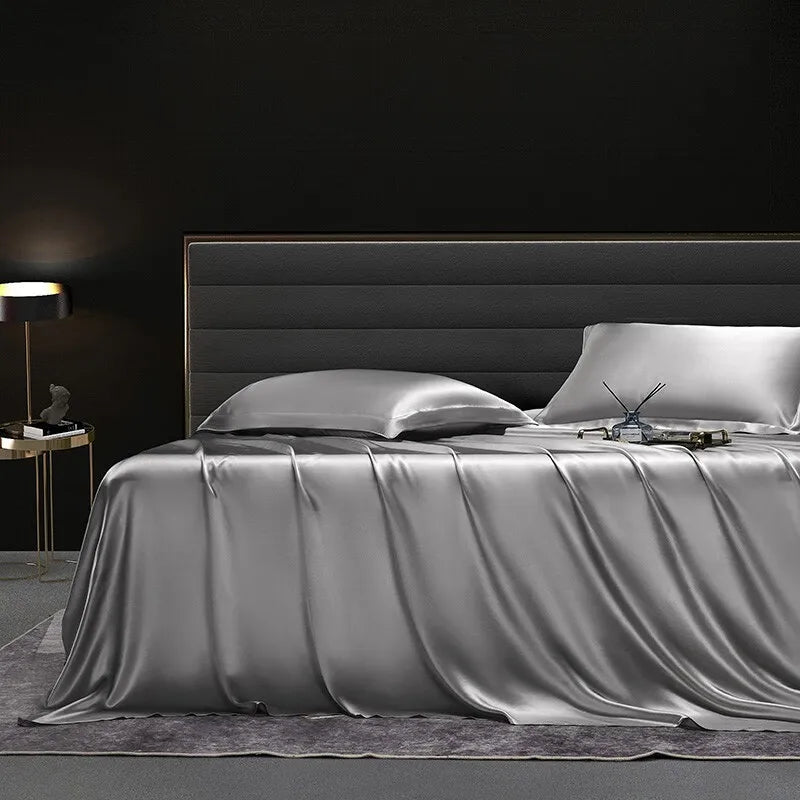
Daylilt's Soft Horizon Printed Silk-Blend Bedding Set currently lists one duvet cover, one fitted sheet and two pillowcases. The named contents are outer bedding, not a filled duvet. Use the exact selected option and current description when comparing what you need.
Do not assign the removable cover the duvet's tog rating unless the seller provides a clearly relevant tested specification. A smooth or glossy appearance does not establish insulation, and a colour name says nothing about filling. Treat a product's verified facts as useful information without extending them into properties that were not supplied.
Keep surface preference separate from whole-bed comfort
You may enjoy the feel of one outer fabric and prefer another duvet arrangement underneath. There is no contradiction in making those decisions independently. The bed is a group of components, and a single shopping category does not need to determine them all. Start with the preference you can describe clearly.
For example, “I like a smoother case against my cheek” is different from “I want to review the warmth of my duvet”. The first directs attention to the case's verified material and feel; the second directs attention to the filled item and wider circumstances. Neither sentence proves that a specific purchase will improve a health outcome.
Be cautious about a review that uses the word “cool” without explaining what was meant. It could describe an initial touch impression, a room preference or a personal experience. You can find that useful without treating it as a laboratory comparison or assuming that another person will experience the same effect.
Compare the pieces on a simple evidence sheet
A short comparison separates information that is often compressed into one listing. Use the seller's actual specification and mark missing items as questions. You do not need to complete every field for an item you are keeping, but important unknowns should remain visible rather than be filled from a similar product.
| Component | Information to identify | Do not assume |
|---|---|---|
| Filled duvet | Exact dimensions, stated tog, filling, casing and care. | A warmth rating establishes overall quality or a particular health effect. |
| Removable cover | Exact dimensions, fibre content, closure and care. | The filled duvet photographed inside is included. |
| Other set pieces | Named contents, quantities, sizes and separate instructions. | A fitted sheet or filled pillows come with every “set”. |
Keep appearance as another field if it matters to you. You are allowed to choose a print because you like it. The point of the sheet is not to remove that preference; it is to prevent a visual decision becoming unsupported evidence about an unrelated component.
Care requirements can change the practical choice
Read instructions for each piece before deciding it fits your routine. A removable cover and its duvet may need different equipment or methods. Check any capacity or specialist-care requirement rather than assume the household washing machine will handle every item. If guidance is missing, resolve the question before purchase or cleaning.
Consider what you will use while an item is being cared for. A suitable existing spare may be enough, even if it does not perfectly match the room. Avoid adding a second complete bundle without first identifying which component actually needs cover during laundry. Practical continuity and visual coordination are separate needs.
Keep the labels or reliable product records accessible. When an item changes beds or a household member takes over laundry, the information should travel with it. A remembered statement such as “the delicate one” is less useful than the exact item name and relevant instructions.
Review the existing bed before changing the whole system
Identify what works now. You may like the duvet's weight, the cover's feel or the sheet's fit. Keep those successful components visible in the decision rather than treat every purchase as an opportunity to replace the entire arrangement. A smaller change can be enough when the underlying issue is specific.
If several things bother you, list them separately and choose the most practical starting point. Do not assume that one fibre, rating or price tier can solve every concern. The bed may need a fit correction, a different care arrangement or a clearer household preference discussion rather than a single “premium” upgrade.
Where a health concern is involved, keep it in the appropriate professional conversation. You can address ordinary comfort preferences at the same time, but do not use a new duvet or cover as a diagnostic test. A shopping decision and a clinical assessment have different purposes.
Keep seasonal labels in context
“Summer”, “winter” and “all-season” are useful shopping descriptions, but read what they mean for the exact product. An all-season option might involve more than one physical piece or a particular configuration. Confirm the contents and instructions instead of assuming the phrase describes the same arrangement in every shop.
Do not convert a seller's seasonal suggestion into a universal rule for your household. Compare the stated specification with your preferences and circumstances, and keep any health questions separate. This guide concerns ordinary adult bedding decisions; do not transfer them into advice for babies or children, whose requirements need their own appropriate guidance.
Ask a retailer the question that remains
Once you have separated the layers, the remaining question is usually clearer. It might concern a filling percentage, the selected cover dimensions or whether the bundle contains a fitted sheet. Send the exact product and variant reference so that the answer does not accidentally describe another option in the same range.
Keep the reply with the current listing information. If it contradicts the page, ask for clarification rather than choose whichever version you prefer. A careful retailer should be able to identify which specification applies. Do not let a discount deadline pressure you into inventing an answer to an essential question.
Be cautious about answers that replace a specification with a broad promise. “Customers sleep wonderfully” does not identify a filling or a dimension. Reviews may describe genuine experience, but the product still needs clear factual information. Choose the verified feature you actually want, not a result that nobody has evidenced for you.
Check the delivered components before use
Compare labels, sizes and contents with the selected order before washing or use. Keep packaging and relevant records while resolving any difference. Contact the retailer through its current support process if the item does not match what was ordered. A lifestyle photograph should not be the only record of your intended purchase.
Assemble the pieces that were selected to work together and retain the instructions. If a fit problem appears, identify whether it concerns the filled duvet or the cover rather than describe the whole bed as the wrong size. That precision makes a support question easier to investigate.
The clearest bedding decision keeps three things distinct: insulation, filling and outer fabric. Add fit, care and appearance without asking any one field to prove the rest. You can then choose what suits your preferences and keep what already works, with fewer assumptions hidden beneath an attractive duvet cover.

Leave a comment
This site is protected by hCaptcha and the hCaptcha Privacy Policy and Terms of Service apply.