

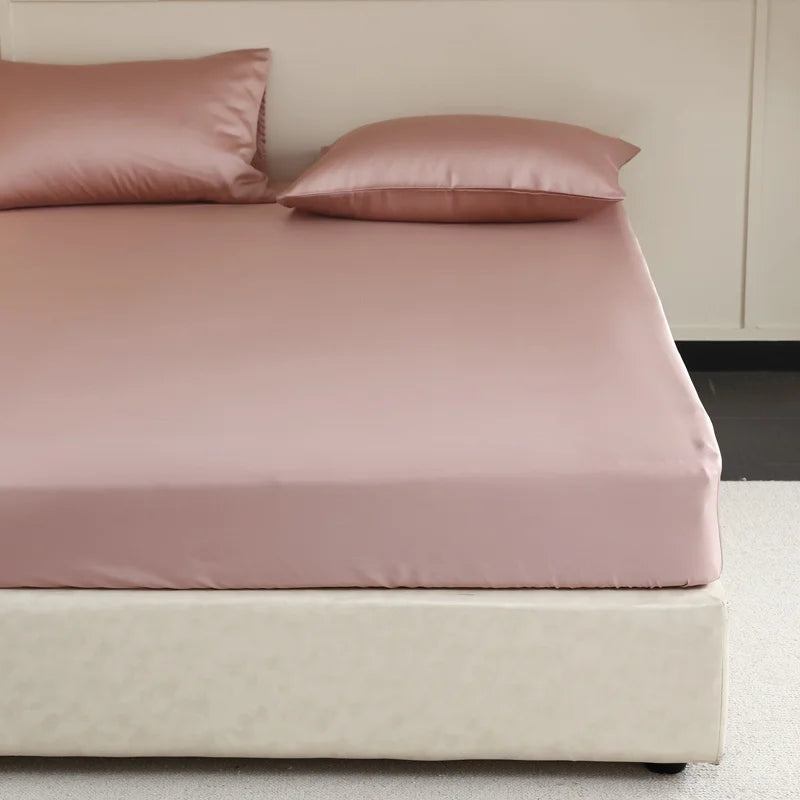
Choose between a flat and fitted sheet by how you use and make the bed, then compare the exact dimensions. A fitted sheet is shaped to sit around a mattress; a flat sheet is a rectangular piece whose position depends on your arrangement. Neither is automatically more luxurious, easier or better for sleep.
The choice can appear minor beside colour and material, but it changes the everyday task of making the bed. It also changes what you need to check in a set's selector. A photograph may show a neatly covered mattress without revealing whether the sheet is flat, fitted or even included. Begin with the practical role you want the piece to perform.
Decide where the sheet will sit
People use flat sheets in different positions. Some use one beneath the sleeper, arranged around the mattress; others use one as a top layer beneath a duvet or blanket. Before comparing products, name the role you intend. Otherwise two people can recommend a flat sheet while talking about different uses.
A fitted sheet's usual role is more specific: it covers the mattress with shaped corners and an elasticated arrangement. Its compatibility depends on the mattress footprint and depth, along with the product's construction. The familiar bed-size name is not the complete specification.
Write one sentence: “I need the sheet beneath me,” or “I want a separate top layer.” This simple distinction helps you understand what is included in a set and prevents buying a piece that does not solve the actual gap in your bedding.
Compare the bed-making action
With a fitted sheet, you generally position the shaped corners around the mattress. With a flat sheet used underneath, you arrange a rectangle and decide how it sits or tucks. Which feels easier depends on the bed, access to its sides and the person doing the task.
Think about your real access. Is one side against a wall? Can you reach the far corner comfortably? Does the mattress need lifting to complete your preferred arrangement? Do not choose from an ideal demonstration on an empty bed if yours is harder to reach.
You can try the broad method with an appropriate sheet you already own before buying a new set. The purpose is to learn which routine suits you, not to force an unsuitable item into place. If the task is physically difficult, ask for help or consider a different arrangement rather than making appearance the priority.
Read the exact set contents
A four-piece set can contain different combinations. The count alone does not tell you whether the sheet is flat or fitted, how many pillowcases are supplied or which dimensions each piece has. Read the contents and selected variant together.
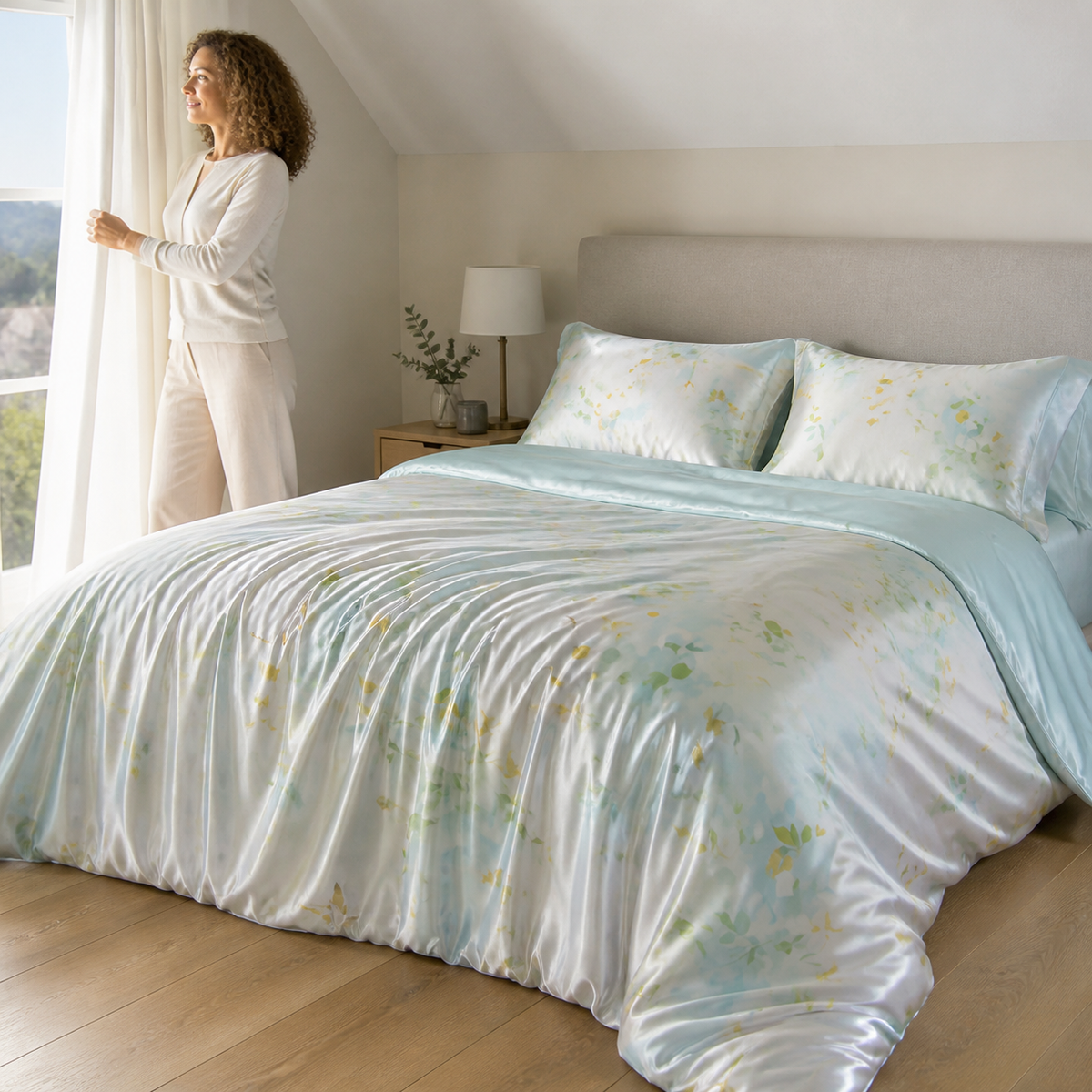
Daylilt's Moonlit set currently lists one duvet cover, a choice of flat or fitted sheet and two matching pillowcases. The sheet style changes with the selected option; the description still states four pieces. Confirm that the option in your basket is the one you intended.
Do not transfer that arrangement to another range. A different set may include only a fitted sheet, while a separate listing may sell a sheet without a duvet cover. Similar photographs and the same brand do not establish identical contents.
For fitted sheets, depth is a separate check
Measure the mattress width, length and combined depth with any topper or protector normally underneath the fitted sheet. Compare the complete setup with the exact option. If the stated depth is unclear, ask whether it describes the pocket or intended mattress fit.
Do not select a wider bed label simply to solve a depth problem. Width, length and depth are different dimensions. A larger footprint can leave excess fabric while still failing to answer whether the corners accommodate the setup.
Our mattress-and-topper depth guide covers that question in detail. Keep this comparison focused on the broader choice of routine; use the depth guide when a fitted option becomes the likely choice.
For flat sheets, decide the coverage you want
A flat rectangle needs enough length and width for the arrangement you prefer. The required coverage depends on whether it is used beneath you or as a top layer, how much overhang you want and whether you intend to tuck it. Do not assume a label alone answers those questions.
Compare the dimensions with the mattress and your intended use. If you want fabric to extend down both sides, account for that in the comparison. Avoid a universal allowance copied from another retailer; ask about the selected product where the required fit is uncertain.
A simple sketch can help. Draw the mattress footprint, mark the area you want covered and note where you expect the sheet to sit. The sketch does not need to be technically elegant. It simply makes your intended arrangement visible before a familiar size name takes over the decision.
Keep the material decision independent
Flat and fitted describe construction and form, not fibre. Either type can be offered in different materials. Silk, a silk blend and a rayon satin listing should not be treated as interchangeable because all can look smooth in photographs.
The current Moonlit description states rayon with a satin weave. That is the product-page specification, not independent testing performed for this article. This comparison does not adopt claims that the sheet style or material improves sleep, skin or hair.
Decide what matters to you about feel and care, then read the exact product information. You can prefer a certain surface without turning that preference into a universal claim. The right shape in a material you cannot care for comfortably may still be the wrong purchase.
Consider removal as well as making the bed
Imagine changing the sheet on an ordinary laundry day. How easily can you remove it, carry it to the appropriate place and prepare a replacement? The task happens repeatedly, so it deserves more weight than whether a photograph looks especially neat.
Keep care instructions for each item accessible. A duvet cover and sheet in a coordinated room may have different requirements, particularly if bought separately. Do not assume that matching colours mean the same washing or drying method.
Also consider the number of spare pieces you actually need. If the existing routine works, you may only need to replace one worn item rather than buying a complete set. Conversely, a coordinated set may suit a genuine gap across several pieces. Count the gap before comparing the total price.
Storage is another practical difference
Think about how you prefer to put clean bedding away. A flat sheet has a straightforward rectangular form; a fitted sheet has shaped corners that can make folding feel less intuitive. That is a practical preference, not proof that one is a better product.
You do not need a perfectly folded rectangle to store a fitted sheet usefully. Keep it clean, appropriately dry and identifiable, following its care instructions. A labelled storage place or grouping with matching pieces may matter more than reproducing a folding demonstration.
If several bed sizes share a cupboard, mark the dimensions or keep a simple inventory. A neatly folded piece that cannot be identified is less convenient than an ordinary fold with a clear label. The storage system should help the next person make the correct bed.
Discuss the choice in a shared bedroom
Ask what each person means by a comfortable arrangement. One may like a separate top sheet; another may prefer fewer layers to manage. A product purchase should not silently decide the routine for both people without a conversation.
Try to describe the action rather than ranking preferences. “I do not want another layer to rearrange” or “I like this piece between me and the duvet” is more useful than declaring one approach proper or luxurious. Household bedding conventions differ.
If the people using the bed have different access or comfort needs, consider those explicitly. A routine that is easy for the person shopping may be awkward for the person changing the bedding. The best choice should work for the actual household, not an imagined demonstration.
An illustrative comparison worksheet
Make two columns, one for the exact flat-sheet option and one for the exact fitted option. Add rows for intended role, dimensions, depth information where relevant, contents, care, bed-making access and the preference of anyone sharing the bed.
Use “not stated” for a missing specification rather than filling it from another product. For a flat sheet, do not pretend mattress-pocket depth is relevant; for a fitted sheet, do not leave it out because the width and length match. Some rows will answer different questions by design.
At the bottom, write one reason each option would suit your routine and one unresolved question. The exercise can reveal that you already have a clear preference and only need a fit answer. It can also show that the attractive photograph is doing more of the decision-making than the practical information.
A small-room example
Imagine a fictional bedroom where one long side of the bed sits against a wall. The person changing the bedding wants a simpler routine and is comparing sheet styles. Rather than choosing from a promotional photograph, they consider how each arrangement can be made from the accessible sides.
They measure the mattress and any layers beneath the sheet, read the selected option and decide what assistance or access is practical. A fitted sheet may or may not suit that particular setup; the article does not supply a universal answer. The point is to assess the real task before ordering.
If neither option solves the access problem, another room arrangement or a different product may be needed. Buying a more expensive material will not make an unreachable corner easier to reach. Keep the practical obstacle visible in the decision.
A top-layer example
Now imagine someone specifically wants a separate sheet beneath a duvet. They browse a four-piece set and select its fitted option because the familiar size looks correct. The purchase may be accurately described, yet it does not include the flat top layer they intended.
The correction is to identify the role first, then select an option that actually provides it. A fitted sheet and a flat top sheet are not competing solutions to the same task in this example. The shopper may need one, the other or both, depending on the arrangement they choose.
This is why contents and construction deserve attention before colour. You can still choose a coordinated look, but it should contain the pieces needed for the bed you intend to make, not merely the pieces shown in a pleasing room photograph.
Check the delivered option before use
When the item arrives, compare the label and contents with the order. Confirm sheet style, exact size, colour and included pieces. Keep the instructions and packaging while resolving any discrepancy, and use the retailer's current support and returns information.
Do not modify or force an uncertain item to make it appear suitable. If the delivered specification is unclear, ask before washing or use where relevant to the returns conditions. A clear question is easier to answer while the original labels and contents are available.
Once the choice works for your routine, keep the option details with your bedding measurements. The next replacement should not require rediscovering whether you prefer a flat or fitted arrangement and which exact dimensions suit the bed.
Your sheet-style decision
When sharing the choice with someone else, send the full selected option rather than only the product's first photograph. Include whether it is the flat or fitted style and the exact centimetre size. This is particularly useful for a gift or a purchase made by another household member: an attractive range link can still leave the important selector unresolved. The aim is to preserve the decision you have already made, not ask the next person to guess it again.
- Name the role: underneath, top layer or another clearly intended arrangement.
- Compare the bed-making task and access in your actual room.
- Read the selected set contents, not only the piece count.
- Check fitted depth or flat coverage as appropriate.
- Keep material, care and construction as separate specifications.
- Choose around the household's preferences rather than a claim of universal superiority.
The better sheet is the one that fits both the bed and the routine. Start with the job you need it to do, compare the exact option and resolve missing measurements. A clear practical choice can still look beautiful without needing to be the only correct way to make a bed.


Leave a comment
This site is protected by hCaptcha and the hCaptcha Privacy Policy and Terms of Service apply.