

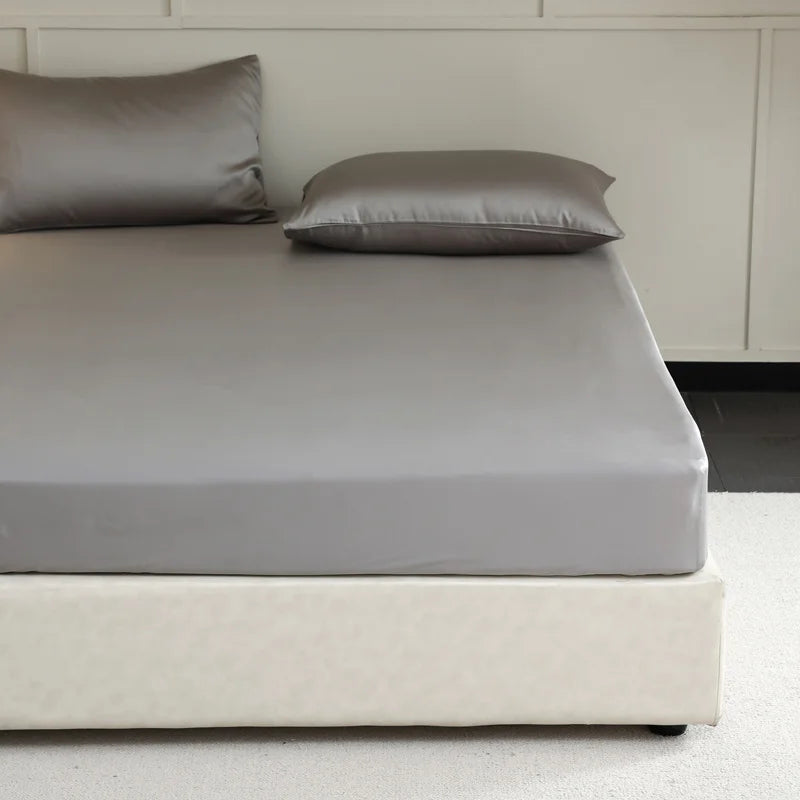
When choosing a fitted sheet for a mattress with a topper, measure the combined sleeping setup rather than the mattress alone. Compare width, length and total depth with the exact sheet option, then check what the retailer means by its stated depth. Do not assume that a nominal thirty-centimetre pocket guarantees a fit over every thirty-centimetre stack.
A topper can change a bed's practical dimensions without changing its familiar size name. You may still call it a double or king, while the corners now need more fabric than the old fitted sheet provides. The useful answer is a clear measurement record and an understanding of the selected sheet—not simply choosing the next bed size up.
Separate the three measurements
Width and length describe the mattress footprint. Depth describes the side of the sleeping setup the sheet needs to accommodate. A deeper bed is not automatically a wider bed, and a wider sheet is not necessarily the right remedy for insufficient depth. Keep the three numbers in separate fields.
Start with the mattress dimensions, then identify the layers that remain underneath the fitted sheet in normal use. That may include a topper and a protector. Do not include a duvet or a layer that sits above the sheet. The measurement should represent the arrangement you actually intend to make.
Our whole-set bedding measurement guide covers the other pieces on the bed. This article concentrates on a specific complication: adding height without changing the mattress footprint, and understanding how that affects fitted-sheet selection.
Measure the bed as it is used
Put the topper and any relevant protector in their normal positions before measuring. Smooth them as you ordinarily would when making the bed, without compressing them to force a smaller result. Record the total side depth from the upper sleeping surface to the bottom of the mattress where the sheet must wrap.
Check more than one place if the layers are uneven or the topper has a shaped edge. You are not conducting a laboratory test; you are trying to avoid measuring an unrepresentative corner. Note any uncertainty, especially if a soft layer compresses differently when handled.
If the bed is difficult to access, take time to measure safely rather than lifting heavy components awkwardly. Ask for assistance where needed. A label can be a useful reference, but the combined setup still deserves a check when several items have been added over time.
Check whether the topper changes the footprint
Some toppers sit neatly within the mattress edges; others may not align as expected. Before choosing a sheet, look for overhang, gaps or a topper that has moved. A sheet should not be expected to correct a mismatch between the topper and mattress themselves.
Measure width and length with the normal arrangement in place. Compare the topper's stated dimensions with the mattress if the edges do not align. If the items were intended to match but do not, ask the relevant retailer or manufacturer rather than disguising the discrepancy under a larger sheet.
Also check the topper's own instructions for positioning or preparation. Do not assume a fitted sheet should supply structural support or stop every kind of movement. The sheet's role and the topper's setup are separate questions, even though they meet at the same corner.
Ask what the published depth means
A listing may describe pocket depth, maximum intended mattress depth or another nominal dimension. These terms should not be treated as identical without clarification. If the wording is ambiguous and your setup is close to the limit, ask the seller for the exact intended fit.
Do not invent a standard allowance to add or subtract. Construction and the way elasticated edges sit underneath the mattress can vary. A general suggestion from another brand may not apply to the selected sheet. Your enquiry should name the exact product and option.
A useful question is: “My mattress, topper and protector measure this total depth. Does your stated depth describe the fabric pocket or the maximum combined mattress setup it is intended to fit?” That question is more likely to resolve the issue than asking whether the sheet is “deep enough” with no measurements.
Read the selected option, not only the product title
Product pages can combine different sizes or different item types under one listing. Check that you have selected a fitted sheet rather than pillowcases, a flat sheet or a complete set. A price or familiar colour can distract from a selector that changes what is actually included.
Daylilt's Stillair listing currently offers either one fitted sheet or a pillowcase pair as separate options. Its description states a thirty-centimetre depth for the fitted-sheet option. That published specification should be checked against your combined setup; this article does not independently verify its fit or elastic performance.
Once the item type is correct, compare the exact selected width, length and depth. Keep the full variant name in your notes. If you change colour or size while browsing, recheck the item type and dimensions before adding it to the basket.
Do not solve depth by guessing a larger bed label
A larger familiar size might add width and length without answering the depth problem. That can leave loose fabric across the sleeping surface while still giving an uncertain corner fit. It also makes the decision harder to assess because two dimensions changed at once.
Begin with the correct footprint and a clearly suitable depth specification. If no option matches, ask about alternatives or consider a different product. There is no benefit in forcing a listing to suit a setup it was not described for.
If a retailer specifically recommends another option for your measurements, keep the answer with the product details. You then have a stated reason for the choice rather than an assumption based on the word king, deep or extra-deep.
Look at how the current sheet fails
If you are replacing a sheet because corners lift, note when and where it happens. Is the problem present as soon as the bed is made, or only after use? Does one corner behave differently? Is the sheet the expected size? These observations help distinguish a selection problem from another issue requiring clarification.
Do not assume depth is the cause simply because a topper is present. The existing sheet's dimensions, construction, condition or care history may also matter. You do not need to diagnose the cause perfectly, but you should avoid buying on a conclusion you have not checked.
Take a clear photograph if asking for support, with the sheet and mattress relationship visible. Keep personal items and identifying information out of the frame. A close-up of loose fabric alone may not show which dimension is causing concern.
An illustrative depth calculation
Imagine a mattress that measures twenty-two centimetres deep with a topper that adds six centimetres in its normal position. The combined depth is approximately twenty-eight centimetres before considering any relevant protector or measurement uncertainty. These are invented example figures, not a test of a Daylilt sheet.
A product described simply as thirty centimetres deep might appear to leave two centimetres. But that subtraction does not establish suitability unless you know what the quoted thirty centimetres means and how the sheet is intended to wrap underneath. The correct next step is clarification, not a guarantee.
Now imagine the same mattress without the topper. The footprint has not changed, but the depth has. Keeping separate records for the two arrangements helps if you use the topper seasonally. You can then choose around the setup you intend to use rather than a vague average of both.
Make a complete fitted-sheet record
If the mattress has an unusual shape, rounded corners or a specialist arrangement, include that in the enquiry. A standard rectangular measurement may leave important details out. For an adjustable bed, follow the bed manufacturer's guidance and ask about compatibility rather than assuming a conventional fitted sheet will behave the same way in every position. Do not add straps or improvised attachments to solve a fit problem without appropriate guidance. Naming the unusual feature early is more useful than discovering after delivery that the seller answered a question about an ordinary flat rectangular mattress.
Use six fields: mattress width; mattress length; combined depth; layers included; intended sheet option; and unanswered fit question. Record centimetres consistently. Add the date if you change the topper or protector, so an old note does not silently become the basis for a new purchase.
Under layers included, write the actual arrangement rather than “normal bed.” That phrase is clear today but may be confusing months later. A note such as “mattress plus topper and thin protector” explains the number without relying on memory.
Keep the record somewhere shared if more than one person buys bedding. This can prevent a gift or replacement being ordered from the mattress label alone. You do not need a complicated spreadsheet; a short note with the correct measurements is enough.
Consider the whole making-the-bed routine
A suitable size is essential, but the item also needs to work with the way you maintain the bed. Think about access to the corners, the effort of removing and replacing the sheet and the care requirements. A product that creates a difficult laundry routine may not suit the household even if the measurements look promising.
Read the supplied care instructions for the exact item. Do not assume a fitted sheet, pillowcase and duvet cover all use the same method because they are a similar colour or finish. Keep the instructions accessible to anyone who handles the laundry.
If you are comparing a flat-sheet alternative, treat that as a different bed-making arrangement rather than a guaranteed fix for depth. It still needs suitable dimensions and a routine you are comfortable using. Ask what the set contains before comparing prices.
Check the item when it arrives
Compare the delivered label and contents with the order before washing or use. Check the colour, item type and exact size. Keep packaging and any instructions until you are satisfied that the supplied option is correct, following the retailer's current returns information.
If a fit check is permitted, assess the item without forcing corners or overstretching the fabric. Do not modify a new sheet to make an uncertain fit look successful. Contact the retailer if the delivered item differs from the description or the intended fit remains unclear.
Once the setup is confirmed, update your bedding record with the option that works for your actual arrangement. That is more useful for a future replacement than remembering only the product colour or the broad bed-size label.
A second example: shared purchasing
Imagine two people who share a bed but shop for bedding separately. One remembers the mattress as a standard king; the other recently added a topper. The first person orders a replacement using the old mattress depth and is surprised when the corners do not sit as expected.
The useful correction is a shared current measurement record, not an argument about which size name is right. The mattress label can remain accurate while the combined sleeping setup has changed. Both people were relying on incomplete information.
For a gift, send the exact dimensions and preferred item type through an appropriate private channel. A link to a range without the selected option can still leave the giver guessing. Clear measurements make a practical gift easier without spoiling every element of the surprise.
Before you order
- Measure width, length and combined depth separately.
- Include only the layers that normally sit beneath the fitted sheet.
- Check alignment of the topper and mattress.
- Confirm what the retailer's depth specification describes.
- Verify the selected option is the fitted sheet you intend to buy.
- Resolve missing fit information before relying on a familiar size name.
- Keep care and returns information with the measurement record.
Measure the bed you make, not the bed label you remember. A topper changes the fit question even when the mattress footprint stays the same. Three clear dimensions, one exact option and a specific enquiry can prevent a second sheet that repeats the first one's problem.


Leave a comment
This site is protected by hCaptcha and the hCaptcha Privacy Policy and Terms of Service apply.