

A silk pillowcase begins with a biological filament, but it does not arrive from a cocoon as a ready-made rectangle. Reeling gathers filaments into a usable strand; yarn preparation makes that strand suitable for fabric making; weaving creates cloth; and cutting and sewing turn cloth into an article. Those transformations explain why “silk” names a material rather than one single manufacturing operation.
Here we follow that journey through established technical and museum sources, with original paper-and-string illustrations of the ideas. This is an introduction to manufacture, not instructions for processing cocoons at home. It does not verify the farms, factories or particular production route behind any Daylilt item.
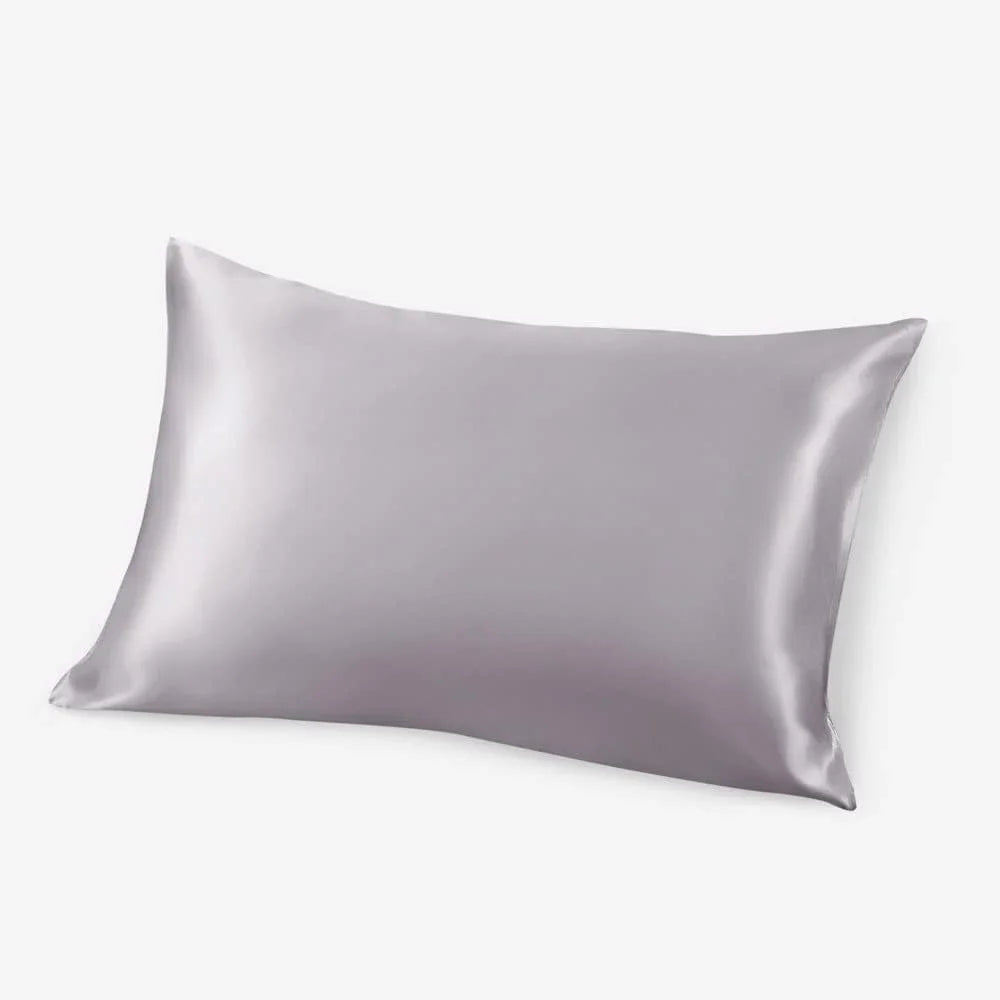
The cover photograph is Daylilt's existing Cool Lilt pillowcase image, checked against the current product record. It shows the finished product in a bedroom, not a cocoon, loom or supplier facility. Nothing in that photograph establishes the earlier manufacturing stages described here.
The cocoon is a structure, not a length of cloth
The FAO's foundational silk-reeling manual describes domesticated Bombyx mori caterpillars producing a liquid protein that hardens in air, with sericin binding the filament into a cocoon. Heating softens that binding so a filament can be unwound. The manual dates from 1999; its description is used here for basic process terminology, not its historical production statistics or a claim about today's factory arrangements. FAO: introduction to silk reeling.
Picture an ordinary ball of string and a piece of woven ribbon. Both may contain long strands, but their organisation is different. The ball stores a length in a compact form. The ribbon arranges strands into a surface. That comparison is only a visual aid: a cocoon is a biological structure, not a neatly wound commercial ball, and silk processing involves more than pulling an end.
The distinction matters because the familiar finished fabric can hide the first transformation. We tend to recognise a smooth pillowcase immediately, while finding it harder to imagine a filament recovered from a small shell. Keep the two objects separate in your mental picture. The cocoon is the starting structure; the broad fabric surface has not yet been made.
Conventional production includes an animal-welfare question
The CFDA's material guide explains that conventional commercial silk production commonly kills the insect inside the cocoon before moth emergence, preserving the filament for reeling. That is a material production fact worth acknowledging, rather than presenting silk as a purely plant-based textile. The guide also discusses other routes, but those descriptions do not establish which route a particular retailer's product follows. CFDA: silk fibre guide.
A general manufacturing account and a product-specific assurance are different kinds of information. The first explains an established practice. The second would need evidence connecting a named product to a defined production arrangement. This article supplies the former, not the latter. It does not describe Daylilt's silk as vegan, cruelty-free, organic or certified.
That boundary also prevents a misleading story in the opposite direction. We cannot reconstruct every supplier's process from one photograph or apply one historical method to every modern article. Learning the conventional route gives the reader useful context, while leaving unverified variations unverified. There is no need to replace missing information with either a reassuring fantasy or an invented accusation.
Reeling: several fine filaments become a working strand
The FAO explains that individual filaments are too fine for ordinary production use on their own, so several are gathered into a strand during reeling. This is not yet the act of interlacing yarns into fabric. It is an earlier operation that creates a form of material which can be handled in later textile processes. FAO: reeling and filature.
For a deliberately simplified model, place four separate lengths of sewing thread beside one another on a table. Hold their ends together and wind them loosely around a card. You have gathered several lengths into one handled group. You have not woven a fabric, and you have not made the individual threads chemically merge into a new substance.
The model uses ordinary thread, not actual silk filaments, and is not a miniature industrial procedure. Its purpose is to distinguish gathering from weaving. Imagine labelling the card “several strands handled together”, rather than “finished fabric”. That small change in language keeps the operation understandable without needing specialist equipment.
Here is an original arithmetic illustration. Suppose five imaginary filaments each contribute one unit of linear mass. Their combined strand contributes five units. If one imaginary contributor is absent, that toy total becomes four. Real filaments are not identical mathematical units, and real reeling is not this simple addition exercise. It nevertheless illustrates why gathering a group is a separate production problem from creating each constituent filament.
Winding, doubling and twisting do different jobs
China National Silk Museum describes raw silk being moved from hanks to smaller spools, and distinguishes a filament, raw silk yarn and plied yarn. Its manufacturing account includes doubling and twisting before yarns are prepared for weaving. These words describe handling and organisation of strands; they are not alternative names for the original cocoon. China National Silk Museum: yarn formation.
You can see the distinction with the thread-and-card model. Moving the same gathered lengths onto a second card changes the package, not the number of constituent lengths. Placing a second group beside the first changes what has been gathered. Turning groups around one another changes their arrangement. Each action can be described without claiming that the material has already become cloth.
This is why manufacturing vocabulary is often more exact than the everyday word “thread”. In ordinary conversation, that word can refer to a fine component or a ready-to-sew strand. A technical account may need to distinguish those levels. When following a process diagram, pay attention to the object entering an operation and the object leaving it, rather than assuming every occurrence of “thread” means the same thing.
There is also a difference between describing an operation and specifying how much of it occurred. “Twisted” identifies an action. It does not, without further information, provide a particular twist measurement. Our model demonstrates the action only; it offers no prescription for a bedding yarn or a claim about how Cool Lilt's yarn was prepared.
Degumming: removing material is another transformation
The CFDA guide describes degumming as removal of the sericin remaining on silk. It also notes that dyeing can take place at yarn or fabric stage. The useful point here is that the route need not be imagined as one rigid sequence ending in an otherwise untouched raw strand. Industrial processing can alter what remains with the silk and when colour is introduced. CFDA: degumming and dyeing.
Consider a fictional bookkeeping exercise involving a bundle with a total mass of ten arbitrary units. Suppose an operation removes two units of a surrounding material while the rest remains. The new total is eight units. That subtraction does not mean two units of fabric width disappeared; it describes a mass change. Nor does it tell us the finished article's dimensions.
Those values are invented, not silk-processing percentages or a way to estimate a product's composition. The point is to separate different quantities. Length, area, mass and material identity are not interchangeable simply because they all concern the same item. A manufacturing account becomes much easier to follow when the quantity being changed is named clearly.
This is also why a domestic washing routine should not be derived from a factory description. Explaining that a manufacturing operation removes a binding substance does not supply a safe home treatment, temperature or chemical recipe. We are following how cloth can be made, not proposing that a finished pillowcase be taken back through industrial processing.
Weaving: from lengths to a surface
China National Silk Museum describes loom weaving as interlacing warp and weft yarns at right angles. Its explanation also identifies two possible broad routes: weaving raw silk before later finishing, or weaving using yarns already degummed and coloured. The museum account is a technical and historical explanation, not evidence of the route used for Daylilt stock. China National Silk Museum: weaving mechanism.
A paper model makes the change from line to surface unusually clear. Lay six narrow strips vertically, leaving small spaces. Take another strip across them, passing over the first vertical strip, under the second, and continuing alternately. Add a second horizontal strip with the opposite sequence. Continue until you have a small interlaced patch.
You have made a simple learning model, not silk cloth. Its value is that you can point to two directions of material and see why a fabric needs more than a long strand. If you remove every horizontal strip, the surface no longer has the same interlaced organisation. If you keep only one horizontal strip, you have not reproduced the full patch.
Now use paper in two colours so the crossings are easier to follow. The colour helps reveal the structure of the exercise; it does not make one paper material superior to another. Avoid drawing conclusions about softness or strength from this model. Its single job is to show how a planned arrangement of lengths can produce a two-dimensional surface.
Fabric production and article production are separate
Once you have cloth, there is still a difference between a length of fabric and a pillowcase. Imagine a fictional rectangular piece of cloth lying flat. Folding it creates two facing surfaces; joining selected edges makes an enclosure; leaving or constructing an opening makes that enclosure usable. Those are article-making decisions, not events performed by a silkworm.
Try the idea with a piece of ordinary scrap paper, folding it into a loose pocket without fastening it. You can change the opening's position without changing the paper's original manufacture. Likewise, the shape of a finished bedding article concerns how fabric has been used. A fibre name cannot supply the entire explanation of seams, openings and panel layout.
The current Cool Lilt listing describes a mulberry silk pillowcase with a hidden zip. That is a retailer's finished-product description, not a record of the equipment used to reel, twist, weave or degum its silk. We can identify the photographed article without inventing the manufacturing steps behind that particular stock. Daylilt Cool Lilt product information.
Industrial history makes the stages visible
The Okaya Silk Museum explains that its collections include silk-reeling machinery, business documents and historical photographs. It describes the development of Suwa-style reeling equipment from Western machines, and the later establishment of Miyasaka Silk Reeling within the museum. This is one named place where silk's industrial story is documented; it is not presented as a Daylilt supplier or a place we have personally visited. Okaya Silk Museum: collection and history.
If you explore a museum's online collection, read a machine's label before admiring its complexity. Ask what material entered it, what operation it performed and what came out. A machine used to wind or reel material answers a different production question from a loom. An old photograph is particularly useful when its caption names an operation rather than leaving the viewer to guess.
Historical equipment can make an otherwise invisible sequence tangible. It should not, however, be treated as a photograph of every contemporary factory. A museum display provides evidence about its documented object and context. The most interesting lesson is often how many distinct human and mechanical operations lie between the biological starting point and a familiar piece of bedding.
Put the journey together without inventing a supplier story
Imagine explaining silk manufacture to someone who has only ever seen a finished pillowcase. Begin with the cocoon and filament. Then describe gathering filaments, preparing yarn, creating cloth and making an article. Introduce degumming and colour as processing operations whose position can vary, rather than forcing every producer into one illustrated route.
The result is a richer understanding of the material, not a promise about an unseen factory. Silk bedding brings together a biological origin and a succession of textile-making decisions. Recognising those decisions lets the finished surface remain beautiful while its manufacture becomes less mysterious: the cocoon provides a starting filament, and the usable bedding article is the outcome of much more work.

Leave a comment
This site is protected by hCaptcha and the hCaptcha Privacy Policy and Terms of Service apply.