

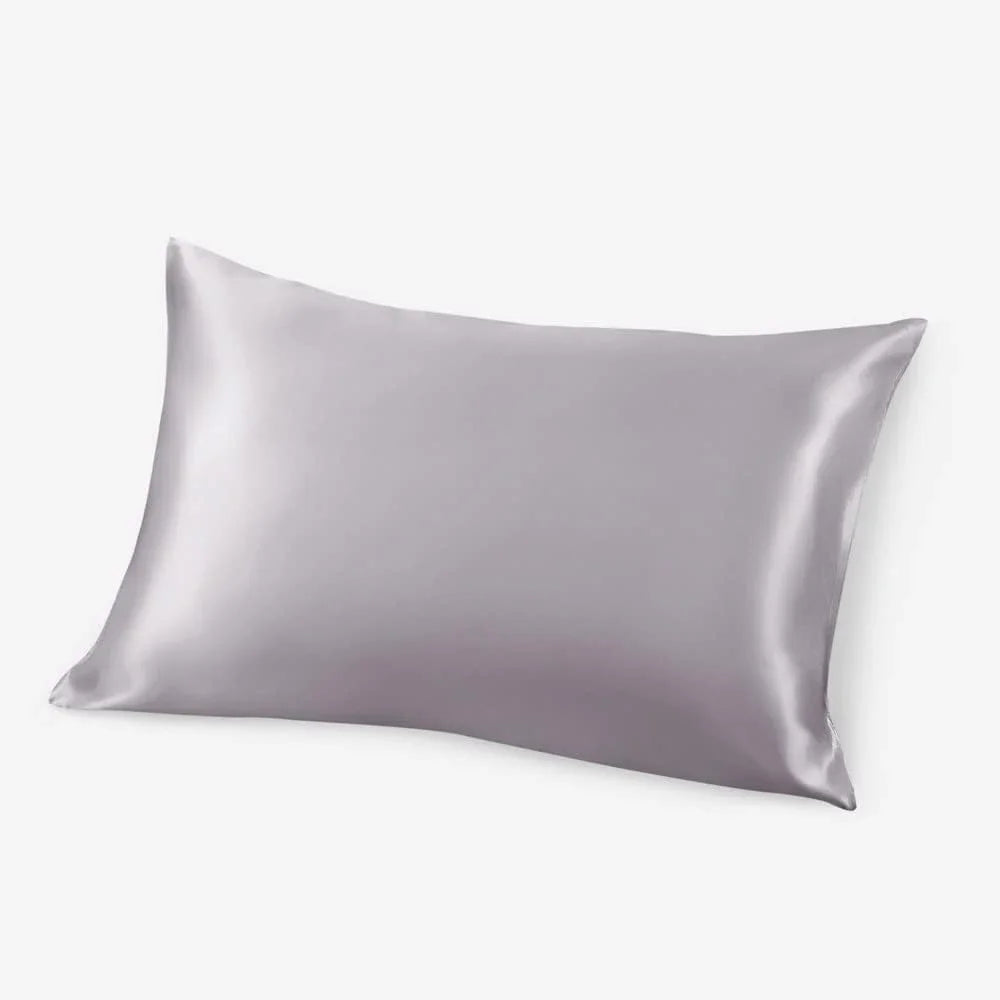
A pillow's filling name is only the start of its description. Down, feather and synthetic fibres can appear in different proportions and internal arrangements. To understand what you are considering, read the filling, construction, casing, dimensions and care information together. A familiar material name does not tell you exactly how a finished pillow will feel.
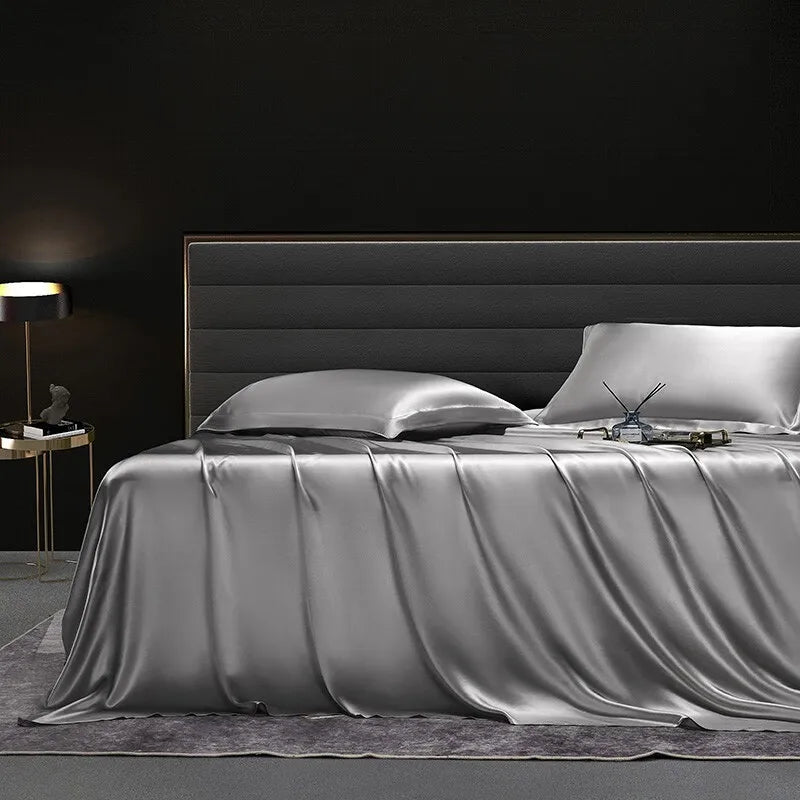
This guide explains how to read a filled adult pillow's specification without turning it into a medical recommendation or a competition between materials. It does not claim that a particular filling treats pain, prevents allergies or guarantees better sleep. Daylilt's existing bedding photograph illustrates the outside of a dressed bed; it does not reveal or verify the pillow filling underneath.
First separate the pillow from its cover
The filled pillow, a removable protector and the pillowcase are different items. A photograph may show only the last layer. Before comparing materials, identify which item the listing actually sells. “Silk pillowcase” does not mean a silk-filled pillow, just as an attractive cotton cover does not establish what is inside it.
Read the contents rather than assuming the photograph is a delivery checklist. A styled bed may include filled pillows, decorative cushions and additional textiles that are not included. Understanding the item first prevents a careful comparison of two products that solve entirely different problems.
If you are happy with the filled pillow and only want to change the visible textile, you may not need a replacement pillow at all. Conversely, changing a pillowcase cannot verify that an unsuitable inner pillow has become suitable. Keep those decisions separate so that a room refresh does not acquire an unsupported comfort promise.
What the material names actually establish
IDFL's down and feather definitions distinguish down-related components from feathers and their shafts. “Down and feather” therefore describes a combination, not two interchangeable words for the same filling. Look for the stated proportions and the part of the pillow to which they apply rather than reading a large “down” headline as the complete composition.
A synthetic description should also identify the actual material. For example, IKEA's SANDGRÄSMAL specification identifies polyester hollow-fibre filling. That is one manufacturer's product information, not evidence that every synthetic pillow has the same structure, care requirements or feel. Words such as “down-like” describe a comparison and do not convert polyester into down.
The useful habit is to translate a broad category into a literal statement. “This listing says the filling is polyester” is something you can check. “Synthetic is always best” adds a conclusion the category alone cannot support. Similarly, a natural origin is not a complete assessment of quality, suitability or the finished product.
Read percentages in the right place
A pillow can have more than one internal section. If a description lists separate mixtures for a centre and an outer layer, do not combine those figures into a whole-pillow percentage without the information needed to do so. A percentage describes a specified quantity; it does not automatically describe every part you can see or feel.
The current FJÄLLHAVRE product page, for example, separately describes pocket and core fillings. It illustrates why reading the full materials section matters. This is not a Daylilt product recommendation, and its construction must not be assumed for other pillows. If a summary and detailed composition appear inconsistent, ask the seller rather than choosing the more appealing version.
As an illustrative arithmetic example, imagine a pillow whose centre and outer compartments use different mixtures. Knowing the percentage in one compartment does not tell you its share of the entire pillow's weight. You would need the relevant quantities and a clear basis before calculating a combined figure. A missing quantity should remain missing, not become a flattering estimate.
Single chamber or compartmented?
Manufacturer DOWN inc.'s construction explanation distinguishes a single chamber from its compartmented pillows, where separate pockets hold different fills. The important shopping question is how the particular pillow you are considering is arranged. The same short material headline can conceal a different internal design.
Ask for a labelled diagram or a plain-language explanation if construction is central to your choice. You do not need to cut a pillow open or infer its arrangement from a showroom photograph. The seller should be able to identify what its own description means, including whether different parts have different compositions.
Do not treat the number of chambers as a universal ranking. More sections are not automatically better for every person or every purpose. Your aim is to understand a finished item well enough to judge it against your preferences, not collect technical terms that make any expensive option sound inevitable.
Firmness words need context
“Soft”, “medium” and “firm” can help organise one retailer's range, but they are not a personal fitting result. Read how the seller uses those words and whether you can assess a sample appropriately. Comparing a label from one brand with the same label elsewhere may be less informative than you expect.
Write your own preference in observable language. Perhaps you dislike an inner pillow that feels bulky inside your existing case, or you want something less awkward to move when making the bed. Those are specific experiences you can discuss. “I want the best pillow” leaves the seller guessing what success means for you.
A showroom impression and a night's experience are also different kinds of information. If a retailer offers a trial, read its actual terms, scope and conditions before relying on it. Do not assume all bedding can be returned after use or that a generous policy advertised for one product applies to another.
Fill weight and fill power are different descriptions
Do not treat a gram figure as a complete comfort score. Check whether it describes the filling, the whole pillow or packaged shipping weight, and compare the same size. A larger pillow can contain more material without answering whether its feel is what you want.
IDFL explains fill power as a volume measurement for a prescribed weight of down and feathers, with results affected by testing and handling factors. It is not the same as the amount of filling in a pillow. Nor is it a clinical score for how well someone will sleep.
If a number is a deciding factor, ask which test or specification it represents and whether it applies to the exact product. Avoid comparing two figures that refer to different methods or different items. You do not need to become a laboratory specialist; you need enough context to avoid giving an unexplained number more authority than it deserves.
The casing is part of the item
Read the outer fabric separately from the filling. A percentage for a cotton casing is not a percentage for the whole pillow, and a claim about the outside should not be transferred to the inside. If the pillow has an additional internal fabric layer, ask how that is described as well.
Consider the practical experience of the whole arrangement you intend to use: inner pillow, any protector and pillowcase. A product page may describe the uncovered item, while you will use it with other textiles. Do not assume a surface photograph proves the feel or sound of that complete combination in your bedroom.
Keep appearance and internal evidence separate. A neatly arranged white pillow can look similar to many others regardless of its filling. A cutaway supplied by the manufacturer may explain construction, but a generic lifestyle image cannot confirm the exact model, proportions or quality of an unseen component.
Care instructions can decide the shortlist
Before buying, read the actual label instructions and consider whether you can follow them. Identify which parts are removable and which are not. Do not assume a removable case makes the filled pillow washable, or borrow the washing temperature from another product with a similar material name.
Think through your household's practical arrangements: available laundry equipment, drying space, time and whether professional care is specified. This is a decision about the item in front of you, not an invitation to invent a universal washing method for all down, feather or synthetic products.
If a care requirement is unclear, ask before purchase. A simple question such as “Does this instruction apply to the entire pillow or only the removable cover?” can prevent a costly misunderstanding. Keep the answer with the product information so it remains available when the item needs care later.
A useful comparison table
Use a short table for two or three actual candidates. Enter only information you can locate. Leave an unknown visible rather than making one candidate look complete by guessing. The table is a way to focus your questions, not a method for awarding an invented quality score.
| Field | What to record | Why it helps |
|---|---|---|
| Exact item | Model, size and version | Keeps the comparison like for like |
| Filling | Materials and stated proportions | Separates literal content from a headline |
| Construction | Whole filling or separate compartments | Clarifies where each description applies |
| Weight | Quantity and what it measures | Avoids confusing shipping and fill weight |
| Care | Instructions for the actual item | Checks household practicality |
| Assessment options | Showroom or stated trial terms | Keeps assumptions out of the purchase |
An illustrative shortlist decision
Imagine someone comparing a down-and-feather pillow with a polyester one. They are not trying to treat a health condition; they want a replacement they understand and can care for. One listing gives a clear composition and construction, while the other uses an attractive headline but omits details. This is an example, not a customer testimonial.
They do not immediately choose the more detailed listing. Instead, they ask the second seller for the missing information and check both care requirements. The eventual choice can then reflect their preferences and household arrangements rather than the belief that one broad material category must always win.
They also keep their existing pillowcase separate from the comparison. If it remains suitable and in good condition, there may be no reason to replace it at the same time. Buying a filled pillow and refreshing the visible bedding can be two decisions made on different dates.
Keep health and sourcing claims in their own evidence lanes
If you have persistent pain, suspected allergies or a sleep problem, seek appropriate healthcare advice rather than relying on a bedding description to explain or treat it. The fact that a seller uses reassuring language does not make a materials comparison a personalised clinical assessment.
If animal welfare or another sourcing concern matters to your choice, ask for the exact claim, scope and evidence for the product. Do not infer a certification from a bird illustration, a natural-material label or a statement about a different range. A sourcing decision deserves clear provenance rather than a general impression.
The same care applies to environmental language around synthetic materials. A stated recycled content and a claim about the whole product's environmental impact are different propositions. This guide does not calculate either product's footprint or declare a universal winner from the fibre name alone.
Make the outer bedding choice afterwards
For a shared bed, do not assume both people need the same inner pillow simply because the cases match. Write down each person's preferences separately, then compare the actual items. Matching appearance can remain an outer-textile decision while the less visible choices differ. Agreement on a colour does not amount to agreement on the feel of a filled pillow.
Keep a short record of what you bought, including the model and date, rather than relying on memory when replacing it later. A familiar range name may acquire new versions. If you liked a previous item, use its old specification as a question for the seller, not proof that today's product is unchanged.
Once you understand the inner pillow, consider the pillowcase on its own terms: exact fit, preferred appearance, composition and care. Daylilt's Soft Horizon listing can be reviewed for its current outer-bedding details. Do not assume the filled pillows shown in a styled photograph are included or that the image verifies their filling.
A clearer specification does not force everyone towards the same material. It makes room for informed differences: one person values a certain construction, another prioritises a care arrangement, and another simply prefers the feel of a properly assessed sample. A good choice begins with understanding what the product actually is.

Leave a comment
This site is protected by hCaptcha and the hCaptcha Privacy Policy and Terms of Service apply.