


A useful bedside surface holds the few things you actually reach for there and leaves room to put them down. It does not need to become a display shelf, a paperwork tray or a second work surface. Start with the tasks the space serves, then decide what belongs within reach and what can live elsewhere.
This is a practical organisation guide, not medical or accessibility advice. Individual needs, equipment instructions and the room's actual layout take priority. No particular bedside arrangement is proven here to improve sleep, and you do not need to buy new furniture to try a clearer setup.
Define the bedside job
Think about what happens at this spot rather than what a styled photograph includes. Perhaps you put down glasses, switch off a lamp and leave a book. Perhaps you need space for specific personal equipment. Those tasks should lead the arrangement.
Write the essential actions in ordinary words. “Put my glasses somewhere I can find them” is more useful than “create a luxury nightstand”. The first can be tested in your actual room; the second can expand into an unlimited shopping list.
If two people share the room, define each person's needs separately before trying to make the two sides identical. Symmetry can be attractive, but it should not require one person to keep items they do not use or lose access to something they do.
Clear a working patch before adding storage
Remove only the ordinary movable clutter from the surface and look at the space that remains. Do not relocate medical equipment, electrical connections or other essential arrangements without the relevant guidance. The exercise is about everyday possessions, not changing a care setup.
Leave a patch large enough for the objects you genuinely put down there. Test it with those actual objects rather than imagining a smaller pair of glasses or a book that folds differently. A surface can look clear and still be awkward for the task.
If the available space is already sufficient, stop before buying organisers. A box that consumes the useful patch may make the area look tidier while making it less functional. Storage is helpful only when it supports retrieval and use.
Distinguish regular, occasional and misplaced items
Sort ordinary possessions by how they use the bedside area. Regular items belong there because you reach for them there. Occasional items may need nearby storage but not the top surface. Misplaced items are simply waiting for another home.
A receipt that arrived in your hand at bedtime does not automatically become a bedside essential. Nor does a decorative object need the prime position if it prevents you putting down glasses. You can enjoy decoration while giving the useful task first claim on the small space.
Be honest about the occasional category. If an item has stayed untouched for weeks, ask whether it is stored there for a reason or merely because it fit. Avoid creating a permanent pile out of things you intend to sort “later”.
Give small essentials one obvious place
Choose a place for glasses, a watch or another small regular item that does not require moving several objects first. A simple existing dish or drawer section may work, provided it suits the item and the space. You do not need a matching set of accessories.
Test retrieval as well as appearance. Can you recognise where the item goes? Can you return it without balancing it on a book? Does the chosen place remain available when the lamp and other regular items are in use?
If the arrangement is difficult, simplify it rather than adding another layer of containers. The useful outcome is an obvious home, not an impressive collection of miniature storage solutions.
Keep the active book separate from the library
If you read in bed, decide which book or device is currently in use and where the rest belong. A nightstand may hold one current title comfortably while a growing stack removes every useful surface. Returning finished books can solve the problem without a larger table.
Keep reading accessories with the actual task, but do not make the bedside area store every related possession. A bookmark and current book have a different role from a backlog of magazines or spare notebooks.
This article is not a reading-corner design guide. The narrow question is what needs to be retrievable beside the bed. If a separate reading area serves the larger collection, let it do that job instead of duplicating everything here.
Decide whether the phone belongs there
Different households use phones differently. You may use one as an alarm or prefer it elsewhere. Make that a deliberate personal decision rather than allowing the charging cable to determine the whole room arrangement.
If the device remains at the bedside, follow its manufacturer's charging and placement instructions. Do not bury a charger in bedding or alter electrical arrangements to make the surface look cleaner. For uncertain electrical questions, seek appropriate qualified advice rather than improvising.
This guide makes no universal sleep claim about a phone's location. Its practical point is that a device, cable and usable surface need an intentional arrangement. If the phone is elsewhere, make sure any alarm or communication responsibility is still handled in the way you intend.
Leave prescribed and specialist storage rules intact
Some items have storage requirements that do not come from an organisation article. Medicines, medical devices and specialist equipment should remain governed by their labels and the advice of the relevant professional. Do not move them into a decorative container simply because it matches the bedroom.
If such an item needs to remain near the bed, organise ordinary possessions around that requirement. Ask the appropriate professional about any uncertainty rather than using a generic suggestion about keeping the top clear.
The same principle applies to personal accessibility needs. An arrangement that looks minimal may not be useful for someone who needs particular items immediately available. Function means the individual's real requirements, not compliance with a photograph.
Use drawers by retrieval task
If the nightstand has a drawer, group contents according to what you need to find rather than filling every available gap. A drawer of unrelated small items can conceal clutter without making retrieval easier. Start with the specific task and remove things that belong in another room.
Use existing dividers or simple grouping only where it helps. Keep the drawer easy to open and close under its own instructions. Do not overload it or assume it can support a device arrangement not intended by the manufacturer.
A drawer is not automatically the right place for every bedside item. Something you need regularly may be easier on the surface; an occasional object may belong elsewhere. Choose the location based on actual use, not a rule that all possessions must be hidden.
Keep paperwork from becoming permanent
A note you need tomorrow can have a temporary place without turning the nightstand into a filing cabinet. Decide what will happen to it next: take it to the relevant desk, put it with the morning bag or dispose of it appropriately once finished.
Do not use the bed as the overflow surface while sorting. Keep any brief administrative task separate from the bedding and return the space to its intended use afterwards. If paperwork repeatedly gathers here, create a suitable place for it elsewhere rather than buying a taller bedside organiser.
This is a small possession-flow problem, not a demand to redesign how you work. One clear destination for tomorrow's note may be enough.
Make cleaning possible without a full rearrangement
Choose an arrangement that lets you care for the furniture according to its own instructions. If every ordinary clean requires moving a complicated display, decide whether the objects are earning the space and effort they require.
Use the appropriate care information for the actual surface. This guide does not recommend sprays, polishes or moisture levels for unspecified furniture. A decorative tray should not conceal a spill or damage that needs attention.
Keep the practical goal modest: access to the surface, a clear place for everyday items and a routine you can repeat. You do not need to label every object or make the nightstand photograph-ready after each use.
Two sides of a shared bed can differ
Discuss the arrangement without treating one person's possessions as the default. One person might use glasses and a lamp; another might prefer a clear top with an essential item in a drawer. A shared room can accommodate both without forcing identical contents.
Agree which items are shared and where they return. If a charging cable, book or remote moves between sides, give it an understood home rather than allowing each person to assume the other knows where it went.
Keep decoration negotiable. Matching lamps may be a preference, but a useful setup should not depend on both people owning the same personal items. A coordinated appearance can coexist with different practical arrangements.
An illustrative crowded surface
Imagine a fictional nightstand holding six books, receipts, decorative objects and a pair of glasses balanced on top. The owner begins by identifying the active book and the glasses as regular needs. Finished books return to their shelf; receipts move to the place where they are handled.
One decorative object remains because the owner enjoys it and it does not block the useful patch. No new organiser is bought. The result is not empty minimalism; it is a surface where the ordinary evening tasks no longer require moving a stack.
After a few days, the owner checks whether objects have returned for a real reason or through habit. They adjust the destination of incoming paperwork rather than blaming the nightstand for being too small.
An illustrative essential-equipment setup
In a second fictional room, a person has equipment that needs to remain near the bed under professional and manufacturer guidance. They do not remove it to imitate an uncluttered image. Instead, they reserve its required space and choose a separate location for books and decoration.
Any uncertainty about the equipment's placement goes to the appropriate professional. Ordinary organisation adapts around that answer. The setup succeeds because it serves the person, not because it resembles a symmetrical styling photograph.
This example deliberately makes no claim about particular equipment or accessibility compliance. It shows why a general home-organisation suggestion must leave room for actual individual requirements.
A seven-day practical check, not a challenge
Try the arrangement during ordinary use and notice the recurring problem, if there is one. Can you put down the regular item? Can you find it again? Does a temporary note reach its next destination? Is any object repeatedly moved out of the way?
You do not need a score or a perfect run of tidy evenings. One honest observation is enough to change the setup. If a container makes retrieval worse, remove it. If an essential object needs a different home, consider that specific task.
Stop revising once the area works. Constantly restyling a small surface can create more effort than the original clutter. The purpose is a useful bedside, not an ongoing makeover project.
If you regularly put a drink beside the bed, include that actual object in the space check. Follow the furniture's surface-care instructions and keep it from competing with items that cannot sensibly share the same patch. Do not create a precarious arrangement merely to preserve a decorative display; remove an optional object instead.
Keep bedding decisions separate
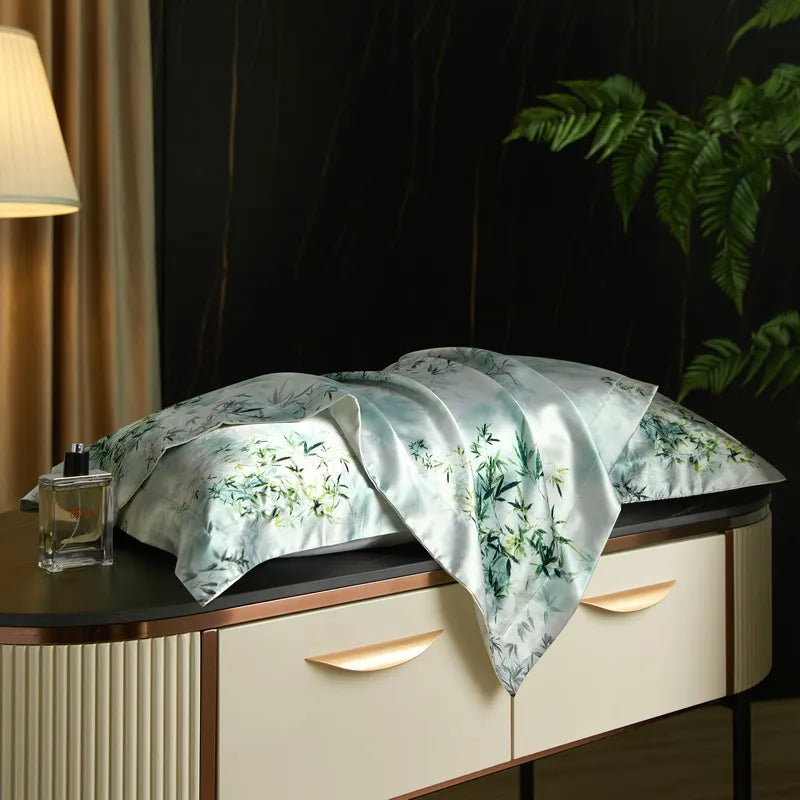
A more useful nightstand does not require a new bedding set. If you are also choosing bedding, check its own fit, composition and care independently. The room photograph is inspiration, not evidence that the table, lamp or decorative items are included.
The Soft Horizon Blush & Aqua listing provides current bedding details; it does not offer a nightstand system or guarantee a sleep outcome. Let each purchase, if any, answer a real separate need.
A good bedside arrangement can be made from what you already own. Give the essential tasks space, leave specialist requirements intact and keep the surface useful enough that the bed does not become its overflow desk.


Leave a comment
This site is protected by hCaptcha and the hCaptcha Privacy Policy and Terms of Service apply.