

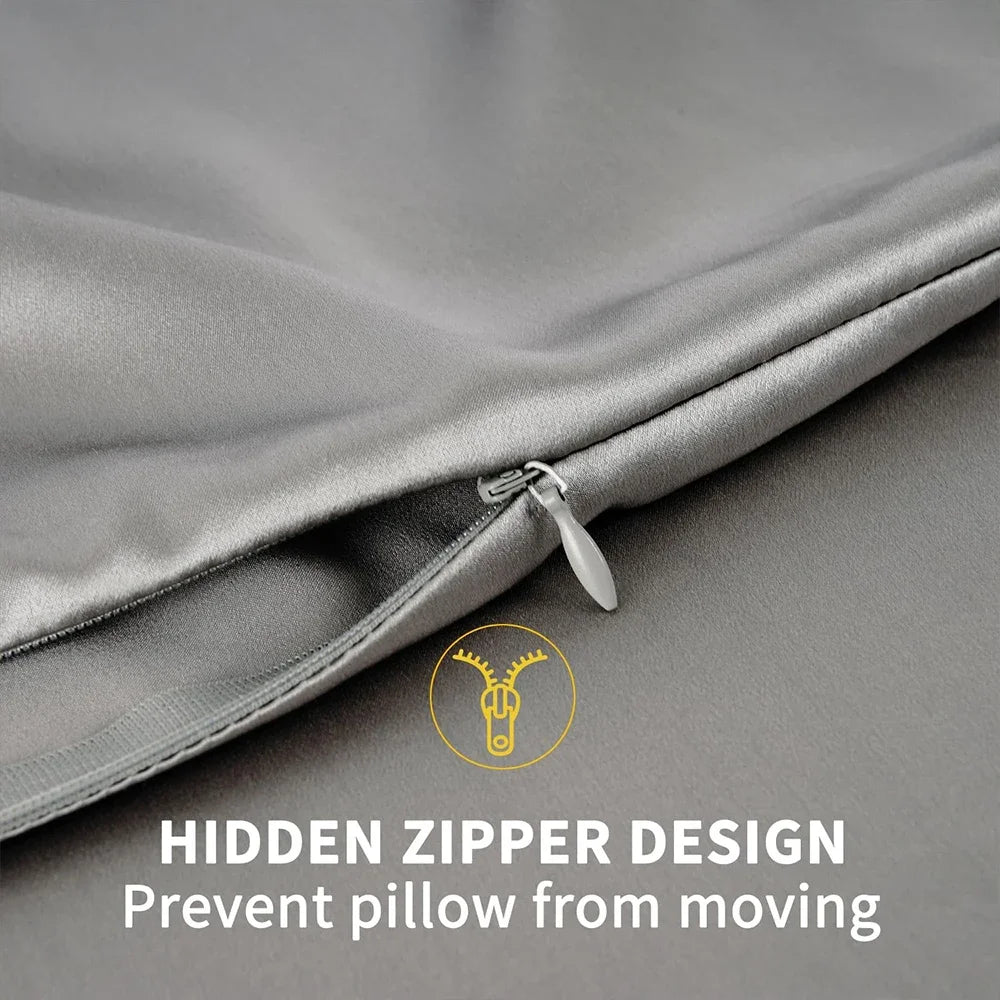
Choose a bedding closure by how easily you can put the cover on, secure it and remove it using the bedding you own. A zip, button row or envelope opening is a practical feature, not a quality grade by itself. Its position, opening width and compatibility with the rest of the item can matter as much as the name.
Ask for the exact closure information on the selected product rather than inferring it from a made-bed photograph. This guide describes questions to use when comparing or inspecting bedding; it does not claim every Daylilt item has every feature discussed. The accompanying bedroom image illustrates the overall setting, not an unseen fastening construction.
Begin with the piece you are handling
A pillowcase, duvet cover and sheet are different objects with different jobs. Do not ask only whether a set “has a zip” without identifying which piece you mean. The answer may concern one pillowcase while you are thinking about the duvet cover. Write the piece name beside each closure question so that a retailer can give you a precise answer.
Start with the difficulties you actually want to avoid. Perhaps a narrow pillowcase opening is awkward with a full pillow, or the existing duvet cover's fastening is hard to find. Describe that task rather than deciding a particular closure type will solve everything. You can then compare features against a practical need instead of a general preference copied from a review.
If hand strength, dexterity or another accessibility need affects the task, consider how you normally use similar items and seek appropriate advice where needed. A photograph cannot establish that a fastening will be easy for you. Ask whether the relevant detail can be shown clearly and whether reliable sample or demonstration information is available, without assuming the retailer provides it.
Separate opening width from closure type
A zip tells you how an opening closes, not how wide that opening is. The same is true of a button row. Ask where the opening sits and how much access it gives to the inside of the cover. A wide-looking seam in an overall product image is not a measured specification. If this feature matters to your decision, request the missing detail.
Think about the item going through the opening. A pillow with a particular shape or fullness may be easier to handle through one arrangement than another. Do not solve a poor size match by forcing the pillow into a smaller cover. Check the stated dimensions independently, using our bedding measurement guide where useful.
For a duvet cover, ask how you will reach and arrange the corners. The closure does not determine every aspect of that task. Cover dimensions, the duvet you own and the internal construction all contribute. Keep those questions separate so that an attractive fastening does not distract you from a more basic fit or access mismatch.
What to ask about a zipped opening
Find out where the zip is positioned and whether the listing shows the exact detail. Words such as hidden or concealed describe a presentation feature; they do not guarantee comfort, strength or ease of operation. Ask what the term means on this item. A clear close-up is more useful than a vague promise that the finish is premium.
Think about how you will hold the fabric while opening and closing it. Do not pull a fastening against an overfilled or incorrectly fitted cover. YKK's manufacturer handling guidance warns against forcing a slider and describes problems caused by fabric being caught. Follow the finished product's own instructions; this does not imply that Daylilt uses YKK components or that a general repair method suits your item.
When inspecting a new item, look for an ordinary, smooth action without stressing it. If something appears caught, misaligned or damaged, stop and ask the retailer rather than trying to prove the zip works by pulling harder. Record the concern with the exact product and order information. Do not apply lubricants or attempt repairs unless the appropriate product guidance supports them.
What to ask about buttons or press fasteners
Ask how many fastening points there are, where they sit and what the opening looks like when closed. Do not infer their spacing from a distant photograph. A button arrangement may be convenient for one person and fiddly for another. The relevant question is whether the exact design works with your routine, not whether buttons are universally traditional or better.
Check for loose or missing components before washing or use. Do not treat a new loose fastening as something you must repair to make a purchase acceptable. Contact the retailer using the current support and returns information. Keep practical inspection separate from making a legal claim about what outcome you are entitled to; that depends on the circumstances and applicable terms or rights.
Consider how the fastening will be placed when the bed is made. The position may matter to your own preference, but do not assume another buyer's experience predicts yours. Ask for the exact construction if it is unclear. Avoid a claim that a particular closure is safe for every user or every household merely because it is common.
What an envelope pillowcase means in practice
An envelope-style pillowcase uses an overlapping opening rather than a zipped or buttoned edge. Ask for a clear view of the opening and the relevant dimensions. The word envelope alone does not tell you the depth of the overlap or establish that it will retain every pillow shape. Treat the design as a feature to compare, not a guarantee.
Use your existing pillow dimensions and ordinary experience as the reference. If the pillow currently pushes out of a case, check whether the cause is size, fullness, the way it is inserted or a construction concern. A new closure type may or may not address the problem. Do not buy around a guessed cause without checking the basic fit.
Keep ease of removal in the comparison too. A cover that looks tidy but is awkward to change may not suit the person who handles the laundry. Ask that person what the current task involves before choosing on their behalf. A practical preference is worth respecting even if a different finish is fashionable in bedroom photographs.
Internal ties are a separate feature
A duvet cover may have internal corner ties, but you should not assume they are present unless the exact product information confirms them. Likewise, a duvet may or may not have suitable attachment loops. Check both pieces. The presence of a closure at the outside edge does not answer the question about the inside corners.
If ties are offered, ask how they are intended to be used and follow the relevant instructions. Do not cut, sew or modify a new cover merely because it lacks a feature you expected from another product. Resolve the specification before ordering where possible, and contact the retailer if the item does not match the description you relied on.
Do not let ties become a substitute for matching dimensions. They cannot make an incorrectly sized cover the correct size. Keep a short record with separate entries for duvet dimensions, cover dimensions, external closure and internal attachments. This prevents one confirmed feature from creating false confidence about the rest of the construction.
Compare the whole task, not one impressive detail
Imagine the full bed-change process: remove the old pieces, identify the clean replacements, insert pillows or duvet, arrange the corners and secure the openings. Which step is currently awkward? A different closure may only affect one part. Storage, care instructions and how much space you have to work can be just as relevant to the ordinary task.
If you share bed-making, discuss the process with the other person. They may use a different method or have a different preference for the opening. You do not need identical techniques, but you do need a purchase that both can use. Avoid choosing the set solely because one feature looks elegant in a close-up.
Keep the number of pieces and care routine in view. A coordinated set can reduce some visual choices while still requiring separate checks for each component. The current Moonlit Satin Four-Piece Bedding Set is described as four pieces in rayon satin. Its overall image does not establish an unseen fastening, so ask about the selected option if that detail matters.
Inspect a delivery without turning it into a stress test
Before washing or using a new item, compare the labels, selected option and visible construction with your order and the current product description. Use ordinary handling in an appropriate clean area. You are checking whether the item matches the information, not trying to establish an industrial strength rating at home.
Do not repeatedly pull a fastening under load or force a cover around an unsuitable insert. That can create a problem rather than clarify one. If the closure is not as described or appears defective, stop and contact the retailer with a factual account. Preserve any relevant packaging and documentation according to the instructions you receive.
Photograph the overall item and the specific concern without editing the evidence to make the problem more visible than it is. Explain which piece you are showing and what ordinary action caused the concern. A photo of a closed seam may not show an operating problem, so use clear words as well as an image.
Read care information for the finished product
Do not transfer a washing rule from one closure manufacturer or another bedding item without checking the supplied instructions. Fabric, dye, trim and construction belong to the finished product. A general explanation of zips does not authorise a wash temperature, drying method or chemical treatment for your particular cover.
Keep the care label with the item's identity. If several covers look similar, a photograph of the label saved with the order record can help you choose the right instructions later. Do not assume matching colours mean matching materials or care. The useful record is exact enough to avoid confusing a pillowcase with a different item from the same room.
If instructions conflict, ask for clarification before taking an irreversible step. You can describe the wording on the label and the wording in the listing without deciding which is correct yourself. Retain the response. A clear answer is more useful than combining several suggestions into a washing experiment.
An illustrative two-option comparison
Imagine two pillowcases with the same stated dimensions. One has an envelope opening and the other a concealed zip. The shopper likes both colours but wants a case that is straightforward to change around a full pillow. They ask for opening details rather than deciding that the zip automatically makes one option better.
The first retailer provides a clear overlap description; the second cannot yet confirm the opening width. The shopper leaves the second question unresolved and compares the available care and return information. They may choose either item or postpone. This is an illustrative decision, not a test of Daylilt products or a customer review.
The useful outcome is a requirement stated clearly enough to verify. “Easy to use with this pillow and this care routine” gives the decision a purpose. “The most luxurious closure” does not. A feature earns its place when it supports the task you actually perform.
Your closure questions before ordering
- Which piece does the closure description refer to?
- Where is the opening and how much access does it provide?
- Does the exact selected option show or specify that construction?
- Have I checked the insert and cover dimensions separately?
- Are internal ties confirmed, and does my duvet have compatible loops?
- Can the person changing the bedding reasonably use the design?
- What do the supplied care instructions say for the finished item?
A good closure is one that fits the product and your ordinary routine. Ask precise questions, keep fit separate from fastening and inspect with normal handling. Choose the detail because it is useful, not because a product photograph makes it look like a universal mark of quality.



Leave a comment
This site is protected by hCaptcha and the hCaptcha Privacy Policy and Terms of Service apply.