

Choose bedroom window privacy around the actual view into the room, the times you use it and the controls you can comfortably operate. Decide which part of the window needs covering before selecting a decorative treatment. A window can look beautifully dressed without providing the arrangement you intended.
This is a practical privacy-planning guide, not a security assessment or a treatment for sleep problems. It does not prescribe a darkness level, promise soundproofing or establish that a particular blind, film or fabric suits every window. The useful starting point is your own room and the questions a window-covering supplier needs to answer.
Name the privacy question
Begin with the moment that feels inconvenient. Is it changing clothes, using the room during the day, getting into bed or opening the curtains in the morning? These are different uses. You may want a simple full-cover arrangement for one moment and a more flexible option for another.
Describe the issue without immediately naming a product. “I want this lower part screened while keeping the upper view” is a clearer starting point than “we need new curtains.” The second statement commits you to a solution before you have explained its job.
Keep shared preferences visible. One person may value a view while another wants the covering closed earlier. Ask what each is trying to achieve and when. You do not need to prove that one preference is objectively correct to design an arrangement that both people understand.
Study the window as it actually is
Identify the window, its opening arrangement and anything already fitted. Note which controls belong to the window and which to the covering. Do not assume a product photograph shows the same recess, handle position or usable fixing arrangement as your room.
Record dimensions using the supplier's instructions for the exact kind of product you are considering. Finished-product size, intended window fit and the required measurement point can be different questions. A measurement taken for one type of covering should not automatically become an order for another.
If the arrangement is complex or you cannot safely measure it, use an appropriate professional service. Do not climb on furniture or dismantle existing fittings for a shopping comparison. A precise description of what you cannot establish is more useful than a guessed number presented as exact.
Look from the places you use
Consider the bed, the usual changing area and the route into the room. The concern may relate to one position rather than the whole floor plan. Keep the observation ordinary: what can you see from your own permitted space, and what question does that raise?
Do not enter a neighbour's property, lean out of a window or photograph private interiors to test a sightline. If an assessment requires access you do not have, use appropriate advice rather than improvising. Respect for another person's privacy belongs in the process of improving your own.
A photograph taken from inside can help describe the window to a supplier, but frame it carefully. Keep people, personal documents and neighbouring private details out where possible. Share only the information needed through an appropriate private channel.
Consider ordinary times, not one flattering moment
Review the arrangement at the times the room is actually used, without assuming one daytime impression answers the evening question. Keep notes about the covering's position and what you want to change. This is a preference review, not a technical performance test.
If a supplier makes a privacy claim, ask what conditions and configuration it applies to. Do not turn a product name or a short marketing phrase into a blanket guarantee. Ask about the exact material, window arrangement and intended use rather than treating every version as equivalent.
Similarly, a photograph of a curtain in bright daylight may not establish the finished arrangement you will receive. Read the actual product description and ask what evidence is available. The picture can inspire a colour choice without certifying privacy in your room.
Separate privacy, daylight and a view
Write down which of these you want at each ordinary moment. You may want the view while dressing the bed, partial screening when the room is occupied and fuller coverage while changing. The answer does not have to be one fixed position throughout the day.
Be realistic about which changes you want to make manually. An arrangement with several layers may offer choices but also create more actions. Decide whether you will enjoy that flexibility or prefer a simpler routine with fewer controls.
For questions about evening light rather than privacy, our bedroom-light guide considers the room's lighting arrangement separately. Neither article establishes that a particular window product improves sleep. Keep the practical job and any health question distinct.
Compare the complete covering arrangement
When comparing options, identify what is included: the fabric or panel, hardware, controls, installation and any separately supplied components. A photograph of a complete window does not mean every element is in one purchase. Compare the actual proposal, not the styled setting.
Ask how the covering is intended to sit when open and closed. Consider whether its stored position leaves the room usable and whether the controls remain reachable. Do not infer a precise clearance from a photograph with different furniture.
If you are adding a second layer, check compatibility with the existing arrangement. A separate supplier or product may require a different fitting assessment. Do not improvise an attachment because both pieces appear lightweight or have similar fittings.
Keep operation practical
Try to describe the ordinary opening and closing action. Which person uses it, from where and with what comfortable reach? A control that looks discreet may be inconvenient behind furniture. The important question is whether the actual user can operate the intended arrangement appropriately.
Do not solve a reach problem by introducing an improvised extension or moving furniture into an unsuitable position. Ask the manufacturer or installer about the exact option. If the answer is unclear, keep it unresolved before purchase.
For powered products, use the supplied instructions and an appropriately qualified installer where required. This guide contains no electrical installation, wiring or modification advice. Decorative convenience should not become a reason to guess about an unfamiliar system.
Put blind-cord safety ahead of styling
Where babies or young children may enter, review current RoSPA blind-cord and chain guidance. It warns about strangulation hazards, advises considering cordless models and explains that furniture positioning and supplied safety arrangements matter. Do not assume an adult bedroom is irrelevant because it is not labelled a child's room.
Follow the exact manufacturer's instructions and appropriate professional advice. RoSPA specifically warns against cutting cords or chains as a supposed solution. This article does not provide a retrofit or installation procedure, and a tidy appearance is not evidence that a corded arrangement is safe.
Resolve an actual safety concern before focusing on colour coordination. Do not disguise an unsafe or unclear fitting behind a decorative layer. If the existing arrangement needs attention, use the relevant official guidance and responsible professional rather than a room-styling shortcut.
Keep the window's other functions visible
Consider how the window and room are normally used, following the building's relevant instructions and requirements. A proposed treatment should not be assessed solely as a flat decorative surface. Ask the appropriate professional about anything that may affect operation or required access.
Do not block, alter or permanently cover something important merely because it complicates the appearance. If you rent or share responsibility for the property, confirm the relevant permission before making changes. This is a practical question, not a statement about your tenancy or legal rights.
For specialist glass treatments or films, ask about the actual window and manufacturer's compatibility requirements. Do not apply a material because an online example looks straightforward. The product's intended application matters more than the speed of a demonstration.
Coordinate after the functional choice
Once the useful arrangement is clear, compare its colour and texture with the furniture and bedding staying in the room. Keep the window's task in view so that the most attractive fabric does not quietly replace the option that addresses your needs.
You might prefer a quieter window treatment beside printed bedding, or enjoy several visible patterns. Those are styling preferences rather than universal rules. Compare the actual selected variants under your ordinary conditions instead of imagining that every pale or glossy textile will match.
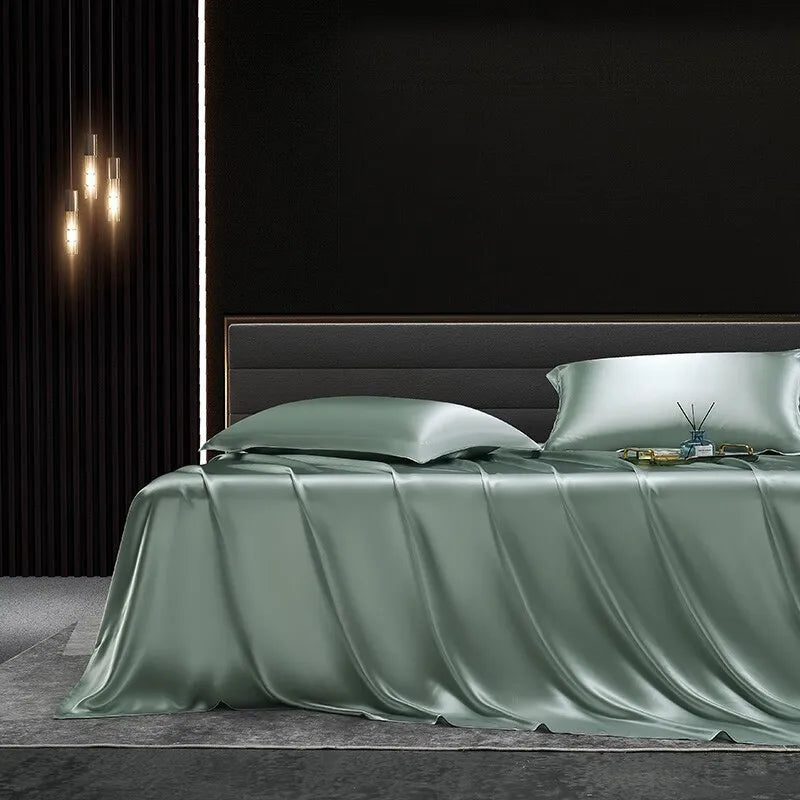
Daylilt's existing bedding photographs can provide room inspiration, but they are not window-covering specifications. This article's cover is an unchanged existing brand image. It does not establish a curtain's privacy, demonstrate your window or announce that Daylilt sells blinds.
Include care and access in the comparison
Read the care information for the exact covering and consider whether you can follow it in your home. A removable fabric, fixed panel and specialist fitting can present different practical questions. Do not assign a laundry setting from the material's appearance.
Ask how routine care should be carried out without dismantling a system you do not understand. If a professional service is required, include that in the purchase decision. Maintenance should not be discovered only after the arrangement becomes difficult to use.
The useful choice can be simpler than the most elaborate layered photograph. You are allowed to prefer an arrangement whose operation and care are manageable. Consider the whole routine rather than judging sophistication by the number of pieces around the window.
An illustrative lower-window concern
Imagine a fictional room where the household enjoys the upper view but feels uncomfortable using a changing area near the lower part of the window. They initially save photographs of completely covered windows because those are the examples easiest to find.
After describing the actual task, they ask a supplier about options for that specific arrangement, including fit, operation and the relevant privacy conditions. They do not assume that a familiar product name solves every sightline or that a staged photograph represents the promised result.
They may choose a full covering or another appropriate option after clarification. The example does not recommend a particular product. It demonstrates how naming the part of the window and moment of use makes the enquiry more useful.
An illustrative shared-room preference
Now imagine two people who disagree over when to close the covering. One wants the view while reading; the other wants privacy when changing. Their original argument treats the whole evening as one fixed room state.
They discuss the separate activities and agree how the arrangement will be used. If the existing controls make that impractical, they ask about a suitable alternative rather than buying a decorative layer simply to end the disagreement.
This is a fictional planning example, not evidence that a particular arrangement improves relationships or sleep. The useful result is a clearer task and a question that can be answered. The room does not have to remain in one position for every purpose.
Send a concise supplier enquiry
Provide the relevant window description, measurements taken according to the supplied guidance, intended moment of use and unanswered question. Explain if you need advice on fitting, operation or an existing component. Keep photographs appropriate and avoid unnecessary personal details.
Ask what the proposed product's privacy statement actually covers and which parts of the complete arrangement are included. Request clarification where the answer affects the decision. Do not ask for a universal guarantee from a supplier who has not assessed your room.
Keep the written response with the exact proposal. If you later choose a different material or control, check whether the answer still applies. An enquiry is useful only when it remains associated with the option you intend to buy.
Finish with a usable room
After an appropriately installed change, review ordinary operation and the intended tasks. If something differs from the agreed specification, use the relevant support channel rather than hiding the difference with more accessories. Do not treat an attractive photograph as the only acceptance check.
Keep instructions accessible to everyone who uses the room, including any safety information relevant to visitors. The finished arrangement should be understandable beyond the person who chose it. A clear ordinary routine can be more valuable than a complicated display.
Design the privacy job before choosing the decorative frame. Start with the actual view, people and times of use; resolve fit and safety; then coordinate the appearance. The aim is a bedroom you can use comfortably, not a window that merely looks complete in a photograph.


Leave a comment
This site is protected by hCaptcha and the hCaptcha Privacy Policy and Terms of Service apply.