

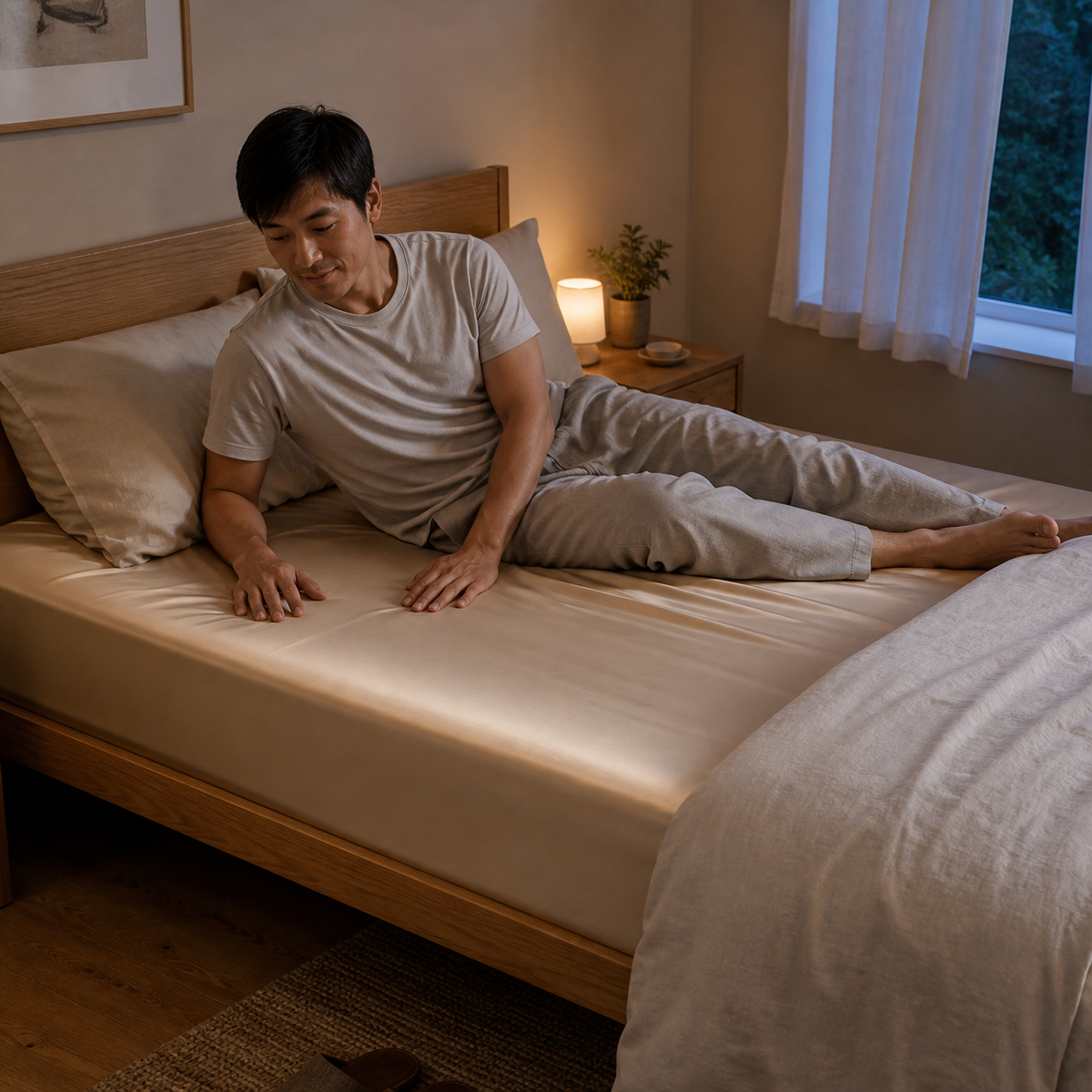
Enough good-quality sleep supports health and day-to-day functioning, including attention, memory and emotional wellbeing. That is a reason to take sleep seriously—not evidence that a particular pillowcase, fabric or bedtime purchase delivers those benefits. Separate the importance of sleep from the claims made about products sold for the bedroom.
When sleep is discussed in shopping language, the ordinary essentials can become blurred. A beautiful room is not the same thing as adequate sleep opportunity. A smooth fabric is not a diagnosis. A tracker result is not the whole story of how you feel. Understanding these differences can help you make better decisions without turning bedtime into another task to optimise perfectly.
What the health guidance actually supports
The US Centers for Disease Control and Prevention's sleep overview describes both enough sleep and good sleep quality as important. It connects adequate sleep with attention and memory, emotional wellbeing, heart health and metabolism. Its recommended duration varies by age; for adults aged eighteen to sixty, the general recommendation is at least seven hours.
Those are broad public-health statements. They do not predict how one person will feel after a particular night, and they do not identify which bedroom product to buy. If you have a health condition, unusual schedule or ongoing difficulty, a general adult figure is not a personalised assessment.
The most useful starting point is therefore not a promise of extraordinary performance. It is recognising sleep as a genuine part of health, alongside other needs, and giving persistent problems the attention they deserve. A retail guide should help you understand the boundary rather than borrowing medical credibility for a duvet cover.
Attention and learning are part of the picture
The US National Heart, Lung, and Blood Institute explains that sleep supports brain function, learning and memory, while sleep deficiency can affect focusing, reacting, decision-making and managing emotions. It also describes sleep's role in physical health and immune function. These are benefits of sleep itself, not measured outcomes from Daylilt products.
For an everyday reader, the distinction matters. You might want to feel more attentive during work or have more capacity for ordinary tasks. That is a reasonable reason to investigate poor sleep. It is not a reason to assume that replacing one fabric with another will resolve the issue.
Keep the direction of the evidence clear. Health guidance says sleep matters for functioning. A product listing says what an item is made of, its size and how it is cared for. Moving from the first statement to “this item improves memory” requires evidence that a glossy lifestyle photograph cannot provide.
Duration, quality and opportunity are separate questions
Duration asks how much sleep you obtain. Quality asks how the sleep feels and whether problems interrupt it. Opportunity asks whether your schedule actually allows enough time. Keeping these questions separate can make an unclear concern easier to discuss, without requiring you to diagnose yourself.
For example, someone might reserve only a short window between finishing late tasks and an early alarm. Another person may allow a generous window but repeatedly wake or feel unrefreshed. Those situations should not automatically receive the same advice or the same shopping recommendation.
Write down which question is most relevant to you. “I keep extending the evening” is different from “I allow time but regularly struggle.” The note is not a clinical conclusion. It is a clearer description of what is happening, which can support an appropriate conversation or practical change.
One difficult night is not a verdict on your health
It is tempting to judge the entire next day from the moment you wake. A disappointing night can become a story about what you will not be able to do. A retail article should not reinforce that pressure with dramatic promises about perfect sleep or a long list of consequences presented without context.
Instead, distinguish an occasional experience from a persistent concern. You do not need to make a new purchase after every poor night or reconstruct every evening in search of a single mistake. If problems recur, describe the pattern and seek qualified advice rather than treating each night as an isolated consumer problem.
A useful question is: “Is this a repeated issue that affects my daily life, or am I reacting to one unusual evening?” The answer may remain uncertain, and that is acceptable. Uncertainty is a reason to gather appropriate information, not to accept the strongest claim on a product page.
Keep bedroom comfort in its proper role
Comfort is a legitimate reason to choose bedding. You may dislike the feel of an existing case, struggle with a sheet that does not fit or prefer a different visual setting. Those are specific problems a suitable product may address. They should be described as such.
Before browsing, name the issue without using a health claim. “The fitted sheet will not stay around this mattress depth” leads to a size check. “The fabric does not suit my preference” leads to material and care questions. “I am exhausted despite allowing time to sleep” is not simply a bedding specification.
Our bedding measurement guide helps with the first kind of question. Use it to compare the actual mattress, duvet and pillows. A better fit is a worthwhile practical outcome without needing to promise deeper sleep or improved health.
Read material claims independently
Silk, silk blends and satin are not interchangeable descriptions. Fibre composition, weave and surface finish answer different questions. None of them, on its own, establishes a health benefit for the person using the item. The exact product and the evidence for any claimed outcome matter.
If a listing links a material to sleep, skin or hair results, ask what supports that particular statement. Do not assume that a benefit attributed to adequate sleep transfers to the fabric. Also distinguish a subjective preference, such as liking a smooth feel, from a measured treatment or performance claim.
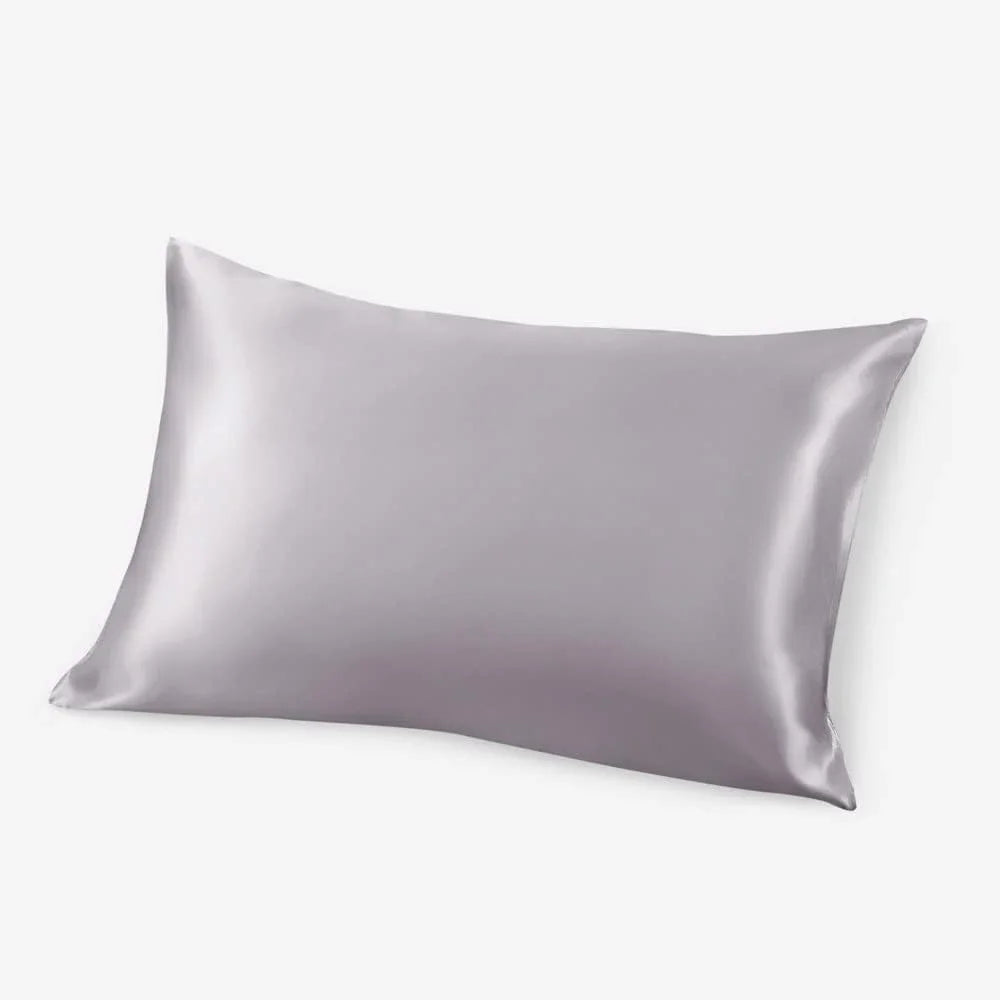
Daylilt's range includes different bedding types. Compare the selected product's description, contents, centimetre dimensions and supplied care instructions. Do not copy care advice from a similarly glossy photograph or assume the whole range has the same composition.
A simple evidence ladder for bedroom claims
At the first level are directly checkable product details: the ordered size, number of pieces, closure and stated composition. At the next level are personal preferences: whether you like the feel, colour and finish. These can guide a choice, but your preference does not become a universal result for other shoppers.
Further up are performance and health claims. These require suitable evidence for the exact claim and should not be inferred from an attractive image, a high price or an enthusiastic review. A customer liking a pillowcase does not establish that it treats a sleep disorder.
Use the ladder when comparing two options. Ask which statements are specifications, which are opinions and which claim an outcome. You do not need to reject every product with enthusiastic language. You do need to know which kind of statement you are relying on when making the decision.
Give your routine a practical review
Look at the structure of an ordinary evening and morning. When does necessary work finish? Which task regularly delays getting ready for bed? Is tomorrow's preparation still happening after you intended to stop? These questions can reveal an organisational obstacle without pretending to explain every sleep problem.
Choose one manageable adjustment if the obstacle is within your control. Move a repeated household job earlier, share a task or make the room ready before the evening becomes late. For a fuller planning workflow, see our realistic wind-down routine.
Do not turn the review into blame. Caring responsibilities, illness, work and housing conditions can limit choices. A useful plan acknowledges those constraints. Advice that assumes everyone can purchase silence, time or an entirely separate bedroom is not a realistic starting point.
Use observations, not a self-diagnosis
If you are concerned, note the things you can describe directly: when you try to sleep, interruptions you remember and how the issue affects the day. Follow any recording guidance a healthcare professional gives you. You do not need to label the problem yourself before asking for help.
Keep the record proportionate. The purpose is to communicate a pattern, not to make every night feel like an exam. A detailed number from a device can be one observation, but it should not replace your experience or appropriate professional assessment.
Also note the question you want answered. “Could my schedule be part of this?” or “I regularly feel sleepy despite allowing time” is more useful than collecting a long list of possible explanations from unrelated sources. Qualified advice can then address your actual circumstances.
An illustrative buying decision
Imagine a shopper who dislikes loose fabric around a pillow and also feels tired during the day. They see a photograph of a neatly made bed and decide that a new pillowcase might solve both issues. These are fictional circumstances, not a customer account or a product test.
Separating the questions changes the decision. The loose fabric can be investigated through pillow dimensions, case size and closure. The daytime tiredness deserves its own consideration, especially if it persists. A suitable case may resolve the fit preference while leaving the health question unanswered.
The shopper can still choose a new case, but for an evidenced reason. They are no longer relying on a purchase to do work it has not been shown to do. This is a more useful outcome than either dismissing comfort entirely or expecting bedding to act as treatment.
Know when the next step is advice
If you regularly have trouble sleeping or feel persistently sleepy, contact an appropriate healthcare professional. The CDC guidance recommends discussing ongoing problems with a provider. Do not change medication or begin treatment based on a retail article.
Sleepiness also matters for activities requiring alertness. Do not treat a new product, a motivational challenge or a belief that you can push through as proof you are fit to drive or perform a risky task. Follow relevant professional and safety advice for your circumstances.
The role of this article is educational: to help distinguish the importance of sleep from unsupported product promises. It cannot assess an individual's sleep disorder, medical history or treatment needs. Clear boundaries make the information more useful, not less caring.
Choose a bedroom change for a clear reason
If you decide to replace bedding, write one sentence describing the practical result you want. Perhaps you need the correct fitted-sheet depth, a pillowcase in the right size or a coordinated set with known contents. Compare products against that sentence before considering optional styling extras.
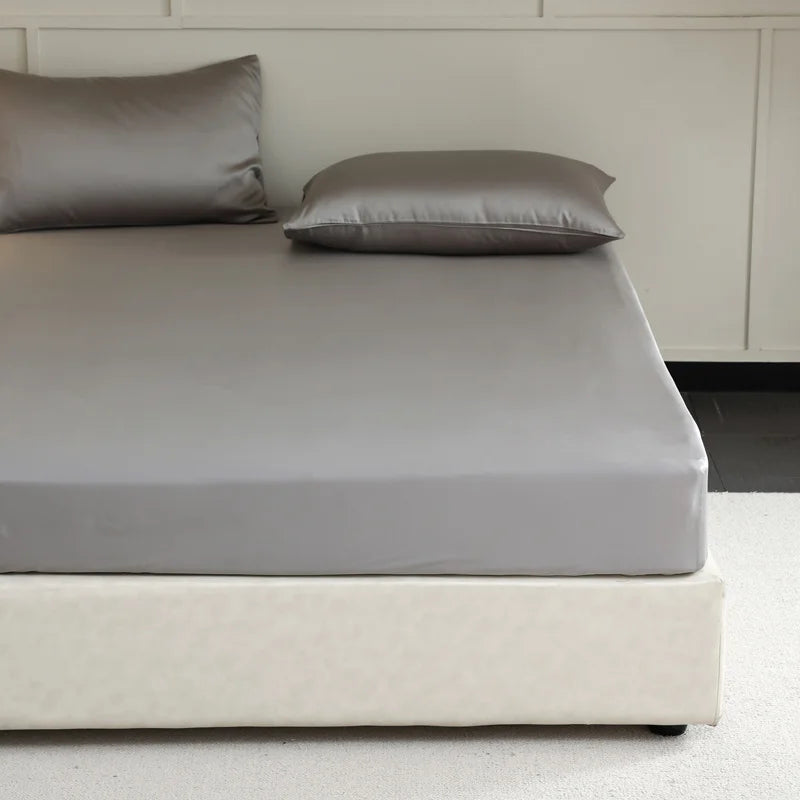
For example, the Cool Lilt listing states single-piece contents, a hidden zip and several size options. Those are product details to check. Its lifestyle image is not evidence of a medical or sleep-performance outcome, and this article makes no such claim.
Set a budget and consider care before ordering. A material you like visually may not fit the routine you can maintain. Ask about missing information instead of filling the gap with an assumption. A modest, correctly chosen item can be more useful than an expensive purchase justified by a vague promise.
The takeaway
You can keep the distinction in a two-column note: “What I can check about the bedroom” and “What I need advice about.” Put dimensions, contents and a practical task in the first column. Put persistent unexplained symptoms in the second. The note is not a treatment tool; it prevents an ordinary shopping decision from silently becoming your only response to a concern that deserves a different kind of help.
- Sleep supports health and everyday functioning; those benefits belong to sleep itself.
- Duration, quality and opportunity are related but separate questions.
- Comfort and fit are valid product goals without becoming medical claims.
- Specifications, preferences and health outcomes need different kinds of evidence.
- Persistent problems deserve qualified advice, not repeated bedding experiments.
Take sleep seriously without making it a shopping promise. Give your routine a practical look, resolve specific comfort or fit issues and seek help when the concern is bigger than the bedroom setup. Good decisions begin by asking the right question.

Leave a comment
This site is protected by hCaptcha and the hCaptcha Privacy Policy and Terms of Service apply.