

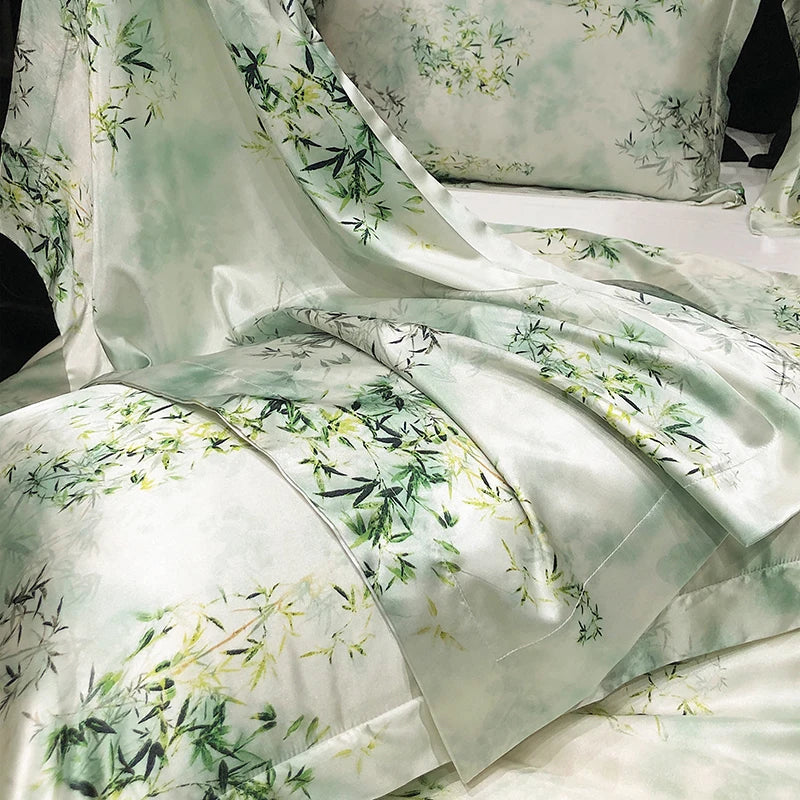
A jacquard pattern is formed through weaving control; a printed pattern is applied through a printing process. Those descriptions tell you how a design is made, not which fibre it contains or whether the bedding will suit your preferences. Start by separating the pattern-making method from material, finish, fit and care.
This guide explains the distinction without declaring one route automatically more luxurious, durable or comfortable. It does not establish that Daylilt stocks jacquard bedding. A pattern photograph can illustrate appearance, but the product's exact description is needed to identify construction.
A woven pattern begins with yarns
In a woven textile, warp and weft yarns are arranged through the weaving process. Cotton Incorporated's CottonWorks weaving guide explains that jacquard control can select individual yarns or small groups, allowing intricate designs and large repeats. The important idea is control over which yarns appear in the structure, rather than a picture added afterwards.
You do not need to understand every loom component to use that distinction. Think of the design instructions affecting the construction as weaving takes place. The final appearance still depends on the chosen yarns and design; “jacquard” is not a colour or a single fixed visual style.
A simple-looking pattern may have a construction you cannot identify from an online photograph. Equally, a visually complex design is not proof of jacquard weaving. Ask for the stated method rather than guessing from how expensive the result looks.
The name has a useful history
National Museums Scotland's explanation of the Jacquard loom describes Joseph Marie Jacquard's 1801 demonstration and the use of linked punched cards to control patterns. Rows of holes corresponded to rows of a textile design, allowing complex woven patterns to be repeated. Its collection includes a nineteenth-century silk-weaving handloom with a Jacquard attachment.
The historical connection helps explain why the term refers to a pattern-control system rather than a fibre. The museum also describes the influence of punched-card control on early computing. That is an interesting piece of textile history, not evidence that a modern bedding product was woven on a historic loom or made by hand.
Do not let a romantic manufacturing story replace the actual item's specification. You can appreciate the technology while still asking what the selected cover contains and how it should be cared for.
A printed pattern uses a different process
The CottonWorks printing introduction describes textile processes that apply colourant mixtures to fabric, with different systems using dyes or pigments. It distinguishes preparation, application and the relevant finishing stages. This is category information, not confirmation of which system made a particular bedding set.
Printing is not one uniform method. For shopping, the useful first distinction is that the pattern is produced by applying a design through a printing process rather than identifying the item as a jacquard-woven design. If the precise printing system matters to you, ask the seller for the selected product's information.
Do not assume a printed design is merely an inferior imitation of a woven one. The route can serve different visual intentions. Quality and suitability need evidence about the actual finished textile, not a hierarchy created from two category words.
Three questions that should stay separate
Ask what the item is made from, how the pattern is produced and what the finished surface is like. A composition line, construction description and personal preference answer different parts of the choice.
A seller might describe a silk jacquard, a cotton print or another combination. Do not infer fibre content from “jacquard”, and do not use “printed” as if it named a material. Similarly, a smooth-looking finish does not prove silk composition or identify the print process.
Keep these details on separate lines when comparing products. That makes it easier to spot a missing answer. If one listing provides clear composition but another only provides a pattern name, the comparison is incomplete rather than automatically won by either product.
What the reverse can help you ask
Close-up photographs of both sides can be useful when discussing a textile's construction with the seller. However, do not treat a single image of the reverse as a universal home test for every woven or printed fabric. Finishing, construction and photography can complicate what you think you see.
Ask whether the pattern and appearance differ between the two sides and how the item is intended to be used. That can matter for a turn-back, a pillowcase opening or a cover that is regularly flipped. The practical question is about this item, not proving your ability to identify every textile from a photograph.
If the product claims to be reversible, clarify what that means for its design and construction. A plain reverse is not automatically a defect, and a visible pattern on both sides is not independent proof of any particular manufacturing process.
Read pattern scale without judging quality from it
Look at the motif in relation to a known component rather than only a close crop. A small detail photograph can make a subtle design look dominant; a distant bed photograph can hide it. Ask for an image of the exact selected option if the available views do not show the scale clearly.
“Repeat” refers to the recurrence of a design, but a shopper does not need to calculate the manufacturing repeat to decide whether the appearance is wanted. Concentrate on the finished item and what is visible across its actual dimensions.
A large motif is not inherently more premium, and a fine repeat is not inherently more practical. Choose according to the appearance you want, keeping that preference separate from unsupported claims about lifespan or performance.
Check how the design sits across components
A bedding set can include several separate pieces, each cut and constructed for a different purpose. Ask whether the product images show the exact components and option you are selecting. Do not assume that a pillowcase will display the same section of a large pattern as the cover.
If a precise motif position matters to you, seek confirmation before buying. A photograph can show one arrangement without promising identical placement on every delivered component. The relevant answer belongs to the selected product's specification.
This is not an invitation to demand a guarantee the seller has not offered. It is a way to identify whether your expectation is supported. If the placement is unconfirmed and essential to your choice, keep that uncertainty visible.
Daylilt's printed-bedding example
The Soft Horizon Blush & Aqua option is a current published example of printed bedding, checked on 17 October 2026. The existing product photograph used with this article preserves the website's colours and pattern. It is not a jacquard illustration or independent proof of the fibre blend.
Use the selected option's details to confirm the actual contents, sizes and available care information. Do not infer a particular print chemistry or machine from the word “printed”. No claim about the manufacturing system has been verified here beyond the published description.
The design may appeal to you without a technical superiority claim. A preference for its particular appearance is a sufficient reason to consider it, provided the practical fit and care also work.
Do not rank durability by the category name
“Woven in” can sound like a promise that a pattern will last indefinitely. “Printed” can sound like something temporary. Neither phrase supplies an item-level lifespan. Avoid converting an intuitive picture of the process into a claim about abrasion, colour change or laundering performance.
If durability evidence matters, ask what specific tests or documented results apply to the exact finished product and under what conditions. A generic description of the manufacturing route does not answer that question.
The same boundary applies to a high price or elaborate pattern. Complexity, cost and performance are different pieces of information. You can make a preference-based purchase while admitting that a numerical durability comparison has not been established.
Care remains item-specific
Read the exact care label rather than assigning one routine to all jacquards or all prints. The item includes its fibres, construction, finishes and other details. A pattern category does not establish a washing temperature, drying method or ironing instruction.
Do not test colourfastness through an improvised soak, rub or chemical treatment that conflicts with the supplier's instructions. If you have a concern, ask the seller for its recommended check before altering the item.
Our care-label reading guide can help organise the questions. The goal is not to discover a secret universal routine but to know whether the selected bedding fits the care process you can actually follow.
An illustrative comparison
Imagine two fictional duvet-cover listings: one identifies a jacquard construction, the other a printed design. A shopper initially prefers the word jacquard because it sounds more expensive. They then separate composition, construction, measurements and care instead of comparing names alone.
The jacquard option has the appearance they want but lacks a clear measurement for their duvet. The printed option has confirmed fit but a pattern scale they do not like. Neither is the right choice yet. The shopper asks for the missing fit information rather than declaring that one process must win.
This example has no automatic outcome. It shows how construction knowledge prevents a vocabulary preference from substituting for a complete decision about the finished item.
A second illustrative design question
Another fictional shopper wants a quiet pattern that is visible close up rather than dominant across the room. They request exact-option photographs and ask how the face and reverse differ. They do not assume that this intention requires a particular fibre or that every jacquard will create the same effect.
Once the appearance, fit and care are clear, they can choose the product they prefer. If the seller cannot confirm the feature that matters, the shopper waits or selects another documented option.
The useful result is an honest expectation about what arrives. It is not a claim that the shopper has assessed the mill's production quality from a handful of pictures.
A pattern-construction comparison card
- Exact item: selected component, colour and size.
- Composition: the stated fibres, kept separate from the pattern name.
- Construction: jacquard, printed or another clearly described method.
- Appearance: exact-option motif scale, face and reverse information.
- Use: contents, fit and care that suit the actual bed.
- Evidence gap: any performance or placement claim that remains unconfirmed.
Keep the card short and stop once the choice is clear. You do not need a textile-production course to buy a duvet cover. A few accurate distinctions are enough to ask better questions and avoid importing a promise the seller never made.
Ask whether the description covers more than one stage
A listing may mention both a fabric construction and a later design treatment. Do not force every description into a simple either-or box. If two terms appear together, ask what each describes in the selected item. The useful question is whether the seller is explaining separate stages or using the words loosely.
For a fictional example, imagine a description that mentions a textured woven base and a printed motif. The shopper should not delete one detail from their notes just because they expected a single category. They ask which feature creates the texture and which creates the visible motif, then record the answer without claiming a process they have not verified.
This also helps when reading a range page covering several designs. One broad paragraph might not describe every option identically. Save the selected variant and ask about that option rather than transferring a construction statement from a neighbouring colour or product. A precise answer can be brief; it simply needs to identify the actual item and the feature under discussion.
Choose the design, not a mythology
Jacquard and printing are different ways of producing textile patterns. Their names can explain construction, but they do not automatically decide fibre content, comfort, care or quality. Read the exact finished product and use the official technical links for vocabulary, not as certification of an individual listing.
For bedding, an appearance you enjoy and practical requirements you can verify are a sound starting point. The pattern does not need a story of guaranteed superiority to earn its place on the bed.


Leave a comment
This site is protected by hCaptcha and the hCaptcha Privacy Policy and Terms of Service apply.