

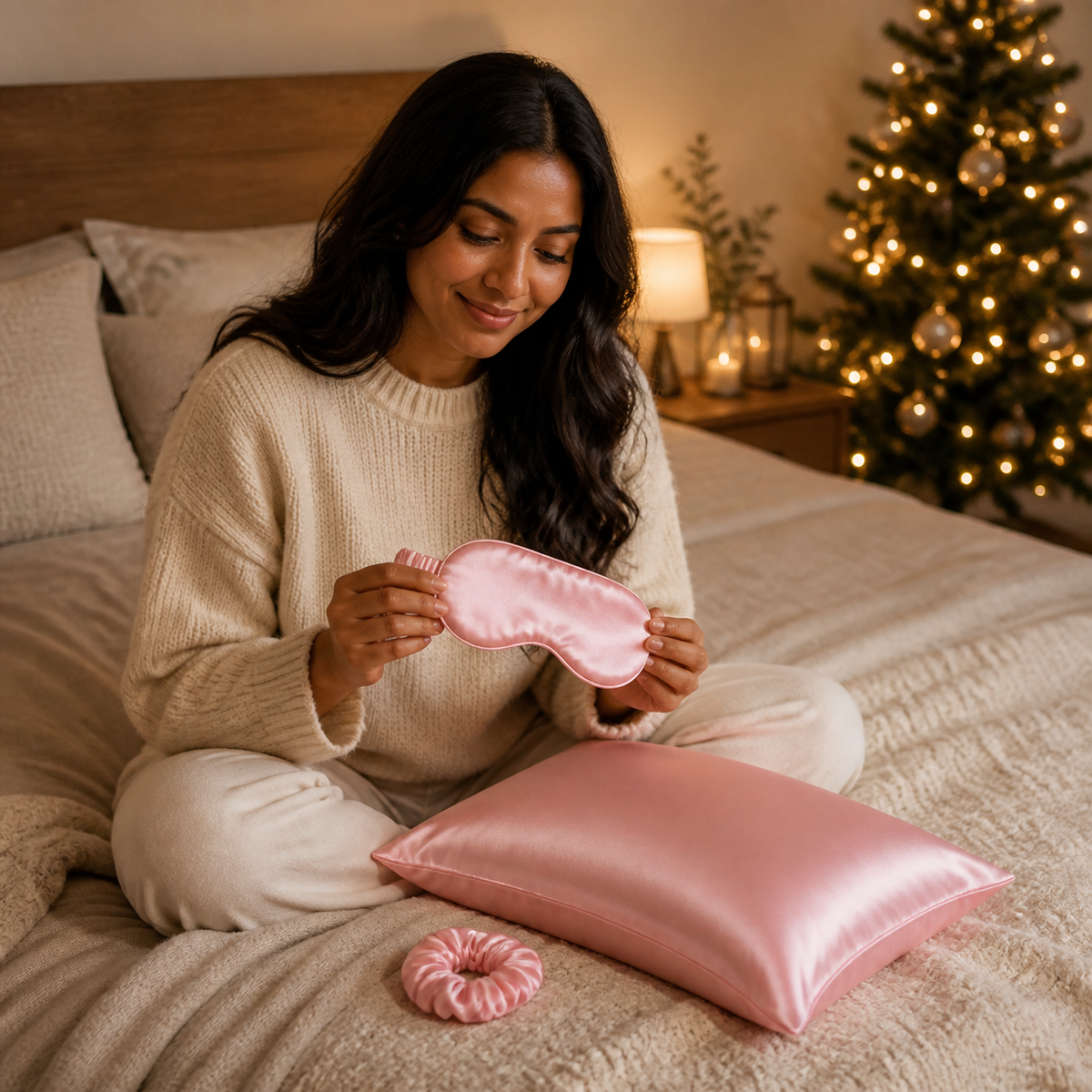
If you cannot confirm someone's pillow size, do not turn a bedding gift into a guess disguised as a surprise. Choose between asking discreetly, involving the recipient in the selection or giving something whose suitability you can actually establish. A thoughtful gift does not have to be a sealed parcel chosen without their input.
This guide is for the awkward middle ground: you would like to give bedding, but do not know the exact fit, care preferences or pieces the recipient needs. It offers ways to preserve the gesture without claiming that a popular size, luxurious description or attractive photograph will work for everyone.
Decide which part needs to remain a surprise
You may want to keep the occasion, the colour or the whole purchase secret. Those are different levels of surprise. Keeping the occasion secret does not prevent asking a general question about the bed. Keeping the exact item secret may still allow the recipient to provide measurements.
Write down what matters most: a useful present, a coordinated look, a particular material, a parcel on a particular day or the experience of choosing together. If several of those aims conflict, decide which can change. Exact fit should not be sacrificed merely because secrecy has become the organising principle.
There is no universal rule that a gift becomes less thoughtful when the recipient helps select it. For an item used daily and cared for personally, their input can be the most considerate part of the process.
Identify the actual unknown
“I do not know their bed size” may conceal several separate gaps. You might know the mattress but not the duvet, or know the duvet but not an unusually shaped pillow. You may know all the dimensions and still not know whether the person wants this fabric or can follow its care instructions.
Separate those questions before choosing a solution. A small uncertainty about colour can be approached differently from an unknown pillow shape. A recipient who already owns more pillowcases than they use may prefer a different gesture even when you can measure everything accurately.
- Fit: which pillow, duvet or mattress will the item need to suit?
- Contents: is one piece wanted, or a coordinated collection?
- Preference: what feel, appearance and closure does the person like?
- Care: what instructions are they willing and able to follow?
- Timing: is the purchase tied to a date that needs checking?
Do not fill an unknown with a familiar category label. “Standard pillow” is not a measurement you have confirmed for this recipient.
Ask a useful question without collecting too much
If asking directly is appropriate, explain why the information matters. “I am thinking about a pillowcase gift; would you rather choose one with me, and could you check the pillow dimensions?” is clear and respectful. It avoids asking for a whole bedroom inventory.
Let the recipient decline the idea or change the category. Someone may prefer to buy bedding personally, have specific care constraints or simply not need more. A no is useful information, not an obstacle to work around through a more secretive purchase.
If another household member helps, make sure they actually know the relevant item and are comfortable sharing the information. Do not ask them to search private belongings or disclose personal circumstances. A convenient insider is not a substitute for the recipient's preferences.
Use measurements, not an assumption about the household
A person's age, home size or relationship status does not tell you their pillow dimensions. Nor does a hotel pillow you saw on a trip establish what they use at home. Check the actual object that will go inside the case rather than relying on a visual memory.
Ask for measurements in clear units and confirm which direction is which. If the pillow has an unusual shape, explain that to the seller before treating a rectangular size as suitable. Our pillowcase fit guide covers the practical checks without requiring a new pillow purchase.
Do not buy a pillow as an unplanned addition merely to make the chosen case fit. That changes the gift and adds another personal-use decision. If you want to give both, involve the recipient and assess each item on its own requirements.
Know exactly what the selected option includes
Count the pieces in the option you would buy, not the pieces in a styled bed photograph. A single pillowcase and a pair are different gifts. A page with sheet and pillowcase options may sell them separately rather than as one set.
Daylilt's Cool Lilt listing, checked on 17 October 2026, describes one pillowcase. That is a useful example of why quantity needs reading. Confirm the current selected size, colour, contents and care information rather than assuming that the gift will include two matching cases or a pillow.
If you are considering a complete set instead, the uncertainty grows rather than disappears: every component has its own fit requirement. More pieces are not a workaround for missing measurements.
Give the recipient a manageable choice
A shared selection can still feel like a gift rather than an assignment. Offer a clear budget or a small set of genuinely suitable possibilities, then let the recipient decide. Avoid presenting dozens of links and asking them to solve a shopping project you have created.
For example, you could say that you would like to contribute towards a pillowcase they choose, subject to checking the fit and current terms. Do not imply that a store offers a gift card, gift-wrapping service or reserved item unless you have verified it. An informal promise from you and a retailer-issued voucher are different things.
If the recipient wants time to think, give them that time. A deadline you invented for keeping the surprise should not pressure them into selecting a personal item they do not want.
Keep material language accurate
A gift message can describe the selected product honestly without making health or beauty promises. Do not say a pillowcase will cure sleep difficulties, prevent wrinkles, protect hair or suit a medical condition unless a specific claim is properly supported. A pleasant feel and a chosen colour are enough to explain the gesture.
Read the fibre composition and construction for the exact option. “Satin” and “silk” should not be used as interchangeable gift labels. If the information is unclear, ask rather than replacing the product's actual description with a more expensive-sounding word.
Also consider whether the recipient enjoys that particular feel. Your own preference is not a universal definition of comfort. Involving the recipient can avoid a well-intentioned gift that becomes an obligation to use something they would not have chosen.
Make care part of suitability, not an afterthought
Before buying, read the supplied care requirements and decide whether they fit the recipient's ordinary household routine. Do not promise that a delicate-looking item can be treated like their existing bedding without checking the exact label.
Pass the original instructions on with the gift. A handwritten care summary should not replace the label or introduce a different temperature or drying method. If the person is choosing with you, let them review the requirements before the order rather than discovering them after opening it.
Care is not a moral test of whether someone appreciates a gift. If the item requires a process they do not want to add to their week, another choice may be more thoughtful. The objective is useful enjoyment, not an extra domestic task disguised as luxury.
Check current terms before calling the gift flexible
Do not reassure yourself that the recipient can “just return it” without reading the current terms and considering the particular item and circumstances. Check the seller's delivery and returns information for the destination, timing and relevant conditions. Ask if an important point remains unclear.
This guide does not promise a return right, exchange service or gift receipt for a specific order. If you want to offer the recipient flexibility, confirm what the store actually provides and what part you personally will handle. A general statement about easy returns is not a plan.
Keep the order details and support information available without unnecessarily sharing payment or account information. If an exchange question arises, the recipient should not have to reconstruct the product selection from a photograph of the parcel.
An illustrative direct-choice gift
Imagine someone wants to give a pillowcase to a friend who has recently redecorated. In this fictional example, the giver knows the room's colours but not the pillow dimensions. They ask whether the friend would enjoy choosing a case together and explain the intended budget.
The friend confirms the actual pillow, selects a colour and reads the care information. The giver checks the exact option and current order terms before paying. The occasion remains a gesture of thoughtfulness even though the product choice is shared.
If the friend says they do not need a pillowcase, the giver changes course. They do not treat the first idea as a commitment that must be fulfilled. The useful gift decision follows the recipient's needs rather than the giver's original image of the present.
An illustrative surprise that pauses the purchase
A second fictional giver wants the present to remain completely secret but cannot confirm any measurements. They decide not to purchase an unknown-fit item. Instead, they prepare a personal note offering to choose bedding together after the occasion, without claiming that the store has issued a voucher.
The recipient can then decide whether bedding is wanted, which piece would be useful and what practical requirements apply. The giver's offer is clear about its scope and budget rather than an open-ended promise that creates an awkward negotiation later.
This approach may be less theatrical than opening a large box. It also avoids sending a set that cannot be used. The quality of the gesture lies in making the next step easy and optional, not in the parcel's size.
A practical gift decision card
Before ordering, complete a short card. It need not be shown to the recipient; it is simply a way to keep assumptions from becoming facts.
- Recipient agreement: known preference, shared selection or still a surprise?
- Exact item: product, size, colour and quantity selected.
- Fit evidence: actual relevant dimensions, with unknowns still marked.
- Care fit: instructions reviewed and passed on intact.
- Current terms: destination, timing and any flexibility actually verified.
- Fallback: what you will do if a vital answer is missing.
If the fit line remains unknown, the fallback should not simply be “hope”. Ask, change the selection process or choose another kind of gift. A concise card makes that decision visible before the order becomes somebody else's problem.
Make the handover easy
When giving the item, identify what is included and preserve the relevant product and care information. Avoid a presentation that suggests a pillow or full set is included when the parcel contains one case. Keep the selected option clear enough that the recipient can ask a question later.
Let them inspect and decide how to use it without immediately expecting a photograph of it on the bed. If you arranged a shared choice, follow through on the practical parts you agreed to handle. A thoughtful gift includes the unglamorous details as well as the message.
You do not need to explain the purchase as a health intervention or a universal essential. “I thought you would enjoy choosing something for your room” is an honest and generous reason on its own.
The useful gift is the one that fits the person
Unknown pillow size is a signal to change the process, not a reason to guess more confidently. Preserve the surprise where it adds enjoyment, and share the decision where it protects usefulness. Confirm the exact item, dimensions, care and current terms before treating the purchase as complete.
Explore Daylilt's current options only when you have enough information to choose appropriately. Sometimes the right result is a pillowcase; sometimes it is a different piece or a plan to shop together. The thoughtful part is making space for the recipient's real preferences, including their choice not to add another item to a room that already works.

Leave a comment
This site is protected by hCaptcha and the hCaptcha Privacy Policy and Terms of Service apply.