

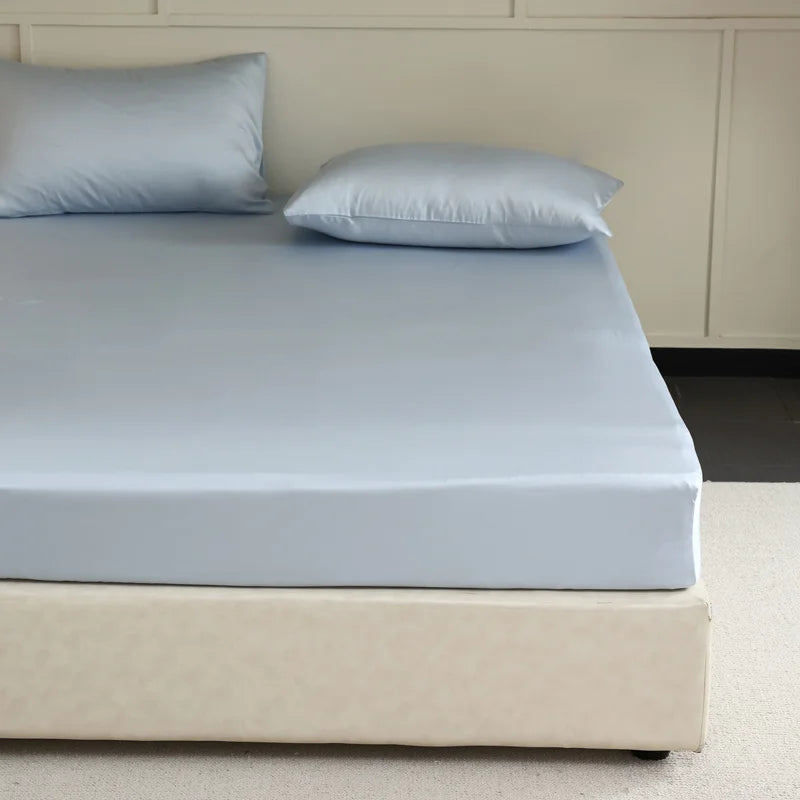
Before buying more bedding, count what is usable, identify which bed each piece fits and record the genuine gaps. A linen-cupboard inventory should make the next bed change easier, not create a perfectly styled storage display. Start with one bed and a small, accurate list.
A full cupboard can still leave you searching for two matching pillowcases or a sheet in the correct size. The problem may not be the number of items. It may be unclear dimensions, separated pieces or bedding kept for a bed you no longer own. An inventory turns “we need more” into a specific decision.
Choose one bed as the starting point
Write down the mattress, duvet and pillow measurements for that bed. Keep the components separate because they may not share the same familiar size label. If you have more than one bed, give each a clear name before sorting the whole cupboard.
Do not begin by emptying every shelf unless you have the time and space to finish. A small accurate inventory is more useful than several piles left without labels. Work through one bed or one category of piece, then put the usable items back appropriately.
Our bedding measurement guide can help establish the reference dimensions. The inventory uses those numbers to identify what belongs where; it is not a second attempt to standardise every size name used by different retailers.
Count pieces, not just sets
Separate fitted sheets, flat sheets, duvet covers and pillowcases in the record. A set that originally had four pieces may no longer be complete, while separate purchases may already provide a useful combination. The original packaging count does not tell you what is currently available.
For pillowcases, count individual pieces and note whether they form a pair in the size you need. A cupboard with several cases can still lack a suitable pair for two pillows. If the pillows differ, record that rather than forcing them into one assumed size.
Use plain quantities: two usable cases, one duvet cover, one sheet. Avoid a field that says only “one set” unless you also list its contents. This makes a future purchase easier to compare and helps another household member find the correct items.
Give every item an honest status
Try four categories: ready to use, needs care, needs clarification and no current use. These describe the next action without turning the sort into a judgement about whether an item is attractive or expensive. Keep questionable pieces out of the ready group.
Needs care might mean following a supplied washing instruction or dealing with a repair question. Needs clarification might mean an unreadable size label or uncertain composition. Do not invent the missing detail from the colour, shine or the item beside it.
No current use does not automatically mean discard. It may belong to another bed, have a planned purpose or need a later decision. Set it aside clearly rather than allowing it to inflate the count of bedding ready for the bed you are reviewing.
Measure the uncertain pieces
If a label is missing or unclear, measure the item appropriately and record what you can establish. Do not assume a duvet cover fits because it once lived on a bed with the same name. Keep the finished item's dimensions distinct from any intended-fit statement you have not confirmed.
For fitted sheets, include the relevant depth information where known. A sheet may match the mattress footprint but not a setup with a topper. If you cannot establish suitability, leave it in the clarification group rather than making it the only available spare.
For pillowcases, record closure and dimensions where useful. These details can explain why one pair is preferred or why a case does not suit a particular pillow. A small note can prevent the same unsuccessful pairing every laundry day.
Keep composition and care with the item
A storage shelf may contain silk, silk blends, satin and other fabrics. Similar appearance does not make their care interchangeable. Record the instructions supplied for the exact piece and keep them accessible to anyone who handles the laundry.
If the information is missing, ask the retailer or manufacturer where possible. Do not copy a washing temperature from another range or rely on an old instruction remembered from a different item. The inventory should expose uncertainty, not hide it behind a neat label.
A phone photograph of an existing care label can be useful if stored privately and clearly named. Keep the actual label attached as intended. The record is a convenience, not permission to disregard instructions or apply the same treatment to everything in the cupboard.
Identify complete usable combinations
Once the pieces are counted, group the combinations that can make the bed as you use it. They do not have to match perfectly in colour. They need the correct dimensions, suitable care arrangements and the pieces your routine requires.
Write down the combination rather than relying on a visual pile. For example, “plain duvet cover plus this sheet and two appropriate cases” explains the arrangement. If the pieces have different care needs, keep that distinction visible.
This step can reveal that you already own a useful spare setup. It can also reveal a precise missing piece. Either result is better than buying another complete set because the existing shelf looked confusing.
Work out the genuine gap
A gap is a missing usable piece or arrangement for a defined need. “No suitable spare fitted sheet for this mattress depth” is specific. “The cupboard feels disorganised” is an organisation problem, not automatically a reason to buy bedding.
Consider the ordinary laundry routine and any predictable guest use. Do not choose a universal number of sets from someone else's household. Available storage, care time and the way beds are used vary. Count what your own routine needs.
Also distinguish a replacement from an optional refresh. Replacing a worn piece and choosing a new colour can both be valid purchases, but they should not be confused. Naming the reason helps you set a proportionate budget and avoid unnecessary duplicates.
Compare separate pieces with a complete set
If one piece is missing, a separate item may solve the problem. If several pieces need replacing, a set may be worth comparing. Read the exact contents and dimensions rather than assuming every four-piece option contains the same sheet style.
Daylilt's Stillair listing offers a fitted sheet or a pillowcase pair as separate options. The Moonlit listing describes a duvet cover, a selected flat or fitted sheet and two pillowcases. Check the current selected option; these are different ways of filling a gap.
Compare the actual purchase you need, including care and fit. A lower headline price for an option containing only pillowcases is not directly comparable with a complete set. The inventory gives you a concrete reason to choose the right type of listing.
A simple inventory format
Use these fields: bed name; piece type; quantity; exact dimensions; material information if confirmed; care reference; condition or status; storage location; and next action. Leave a field blank or mark it unknown when you do not have the information.
You can keep the record on paper, in a phone note or in a simple table. The tool matters less than whether someone can use it. Avoid building a complicated database that takes longer to maintain than finding the bedding.
Update the record when an item is bought, moved to another bed or no longer usable. A short current list is more dependable than a polished inventory that still includes things you removed months ago.
Choose storage around retrieval
Put frequently used suitable combinations where they are easy to find. Keep occasional or uncertain pieces distinguishable rather than mixing them into the same stack. The next person should not have to unfold every sheet to discover which one belongs to the bed.
Use labels that identify the bed or exact size, not only the colour. A neutral sheet can look like several others in a cupboard. If you use containers, make sure they suit the items and storage conditions, following relevant care guidance.
Do not pack items away damp or ignore care requirements to make the shelf look full. The inventory and storage need to work together: ready items should actually be ready, while items awaiting care should have a clear next step.
An illustrative full-cupboard example
Imagine a fictional household with two duvet covers, three sheets and five pillowcases on one shelf. They assume they have plenty for the main bed. When sorted by exact dimensions, one sheet belongs to a previous mattress and two cases fit different pillows.
The remaining pieces provide one complete usable combination and part of another. The specific gap is a suitable spare sheet, not an entirely new coordinated collection. They can now compare that purchase without treating every item on the shelf as equally useful.
The figures are an example, not a recommended quantity. The lesson is that a total count can hide mismatches. A smaller set of clearly identified pieces may support the routine better than a larger collection with uncertain fit.
An illustrative guest-bed example
Now imagine a guest bed used only occasionally. Its bedding is mixed with the main bed's pieces, and each visit triggers a search. The household does not initially need more items; it needs the usable guest combination identified and stored together appropriately.
They confirm dimensions, record the contents and mark the storage location. Before a guest arrives, they can check condition and complete any required care without discovering a missing pillowcase at the last moment.
If the guest arrangement changes later, the inventory changes with it. An occasional bed should not become a reason to keep every unsuitable item indefinitely. A defined current purpose makes the decision clearer.
Make the record useful for shared laundry
Ask another household member to use the list to identify one suitable combination. If they cannot, improve the labels or location notes. An inventory that only its creator understands still depends on memory.
Keep care differences visible without expecting everyone to memorise the whole wardrobe. A reference to the exact label or stored instruction can be enough. Do not write a broad rule such as “all shiny bedding is delicate” and treat it as a substitute for item-specific information.
For a purchase made by someone else, share the exact gap and dimensions. “We need pillowcases” can produce a correct-looking but unsuitable option. “We need two cases for these measured pillows, with these confirmed preferences” is a clearer starting point.
Keep the first review small
Do not turn sorting into an immediate disposal deadline
An item in the no-current-use group may need a considered decision rather than instant removal. Check whether another bed in the household uses it, whether a planned repair is worthwhile or whether someone else has a genuine use for it. Do not move it into another person's space simply to make your own shelf look finished.
If you choose to pass bedding on, check the recipient's current acceptance requirements and be accurate about condition and composition. A missing material label should remain missing information, not become a guess repeated as fact. Keep anything awaiting a decision clearly separate from ready bedding so it does not reappear in the useful count.
The inventory can be complete even when a few decisions remain open. Its purpose is to explain what you have and what happens next, not to force every item into a permanent category during one afternoon.
Complete one bed, return the usable items to their places and stop. You can review another bed later. The benefit comes from accuracy and retrieval, not from sorting the whole house in a single afternoon.
Write only the next actions you intend to take: clarify one label, follow one care instruction or compare one missing piece. An inventory should reduce vague shopping and searching, not create a long list of improvements that nobody needs.
Count what serves the bed, not what fills the shelf. With dimensions, contents and status clear, you can make the next bedding purchase for a specific reason—or discover that organising what you own is enough.



Leave a comment
This site is protected by hCaptcha and the hCaptcha Privacy Policy and Terms of Service apply.