

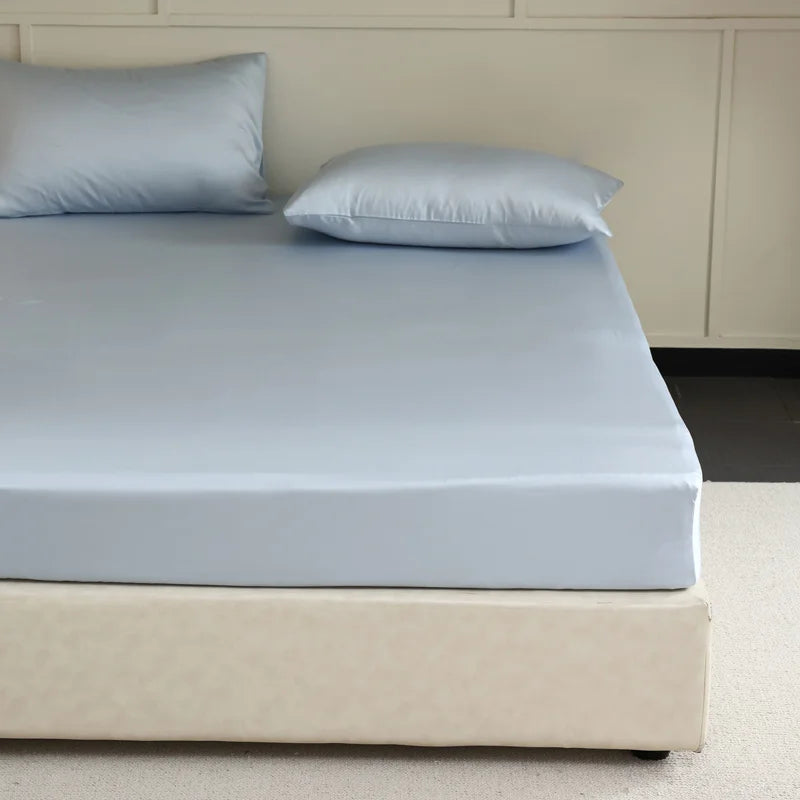
A mattress protector, pad and topper can all sit beneath a sheet, but the names do not describe one interchangeable product. Identify the job you need done, then check the selected item's actual construction and instructions. A protective cover and an added cushioning layer answer different questions, even when photographs make them look similar.
This is category education, not a claim that Daylilt sells protectors or toppers. It does not recommend a product for pain, allergies or a sleep disorder. Use the relevant mattress and accessory manufacturers' information for compatibility, care and any specific performance claim.
Start with the job, not the category page
Are you trying to protect a surface, change the feel of a bed, replace a worn removable component or make an existing sheet fit better? Those are different jobs. Write the actual problem before opening a shopping category.
“I want to keep a particular mattress covered under its care instructions” is different from “I would like a different surface feel”. “The sheet no longer fits” may be a sizing question rather than a reason to add another layer. A clear job prevents one purchase from being asked to solve several unrelated issues.
If the concern is damage, a fault or a health symptom, deal with that directly. Do not add a layer merely to hide the evidence while deciding what it means.
What a protector description usually emphasises
JYSK's category guide distinguishes a thinner protective layer from a thicker topper intended to change comfort. That is the retailer's general description of its categories, not a universal specification. The actual selected item may have its own coverage, fastening and care requirements.
Read what the protector claims to protect against and which surfaces it covers. Do not assume a familiar name establishes protection from every kind of moisture, dirt or other concern. A fitted design and a full encasement, for example, need their actual coverage explained rather than being treated as identical from a small picture.
If a particular barrier property is essential, ask for the exact specification and relevant evidence. Do not infer it from the word “protector” alone.
What a topper description usually emphasises
A topper is generally presented as an additional layer intended to change the bed's surface feel. The White Company's guide separates purpose from material when describing its own toppers and protectors. Its examples show why the category name does not tell you the filling or complete construction.
Use that distinction without importing the retailer's comfort or temperature promises into another product. Ask about the actual thickness, filling, cover, attachment and instructions for the selected item. A category definition is a starting vocabulary, not independent evidence of a performance outcome.
A thicker-looking layer is not automatically the right choice. It may change other parts of your setup, and it should not be selected simply because “more cushioning” sounds like an upgrade.
Why the word pad needs clarification
Retailers may use terms differently, and “pad” should not be treated as a complete technical specification. Ask what the item actually contains and what job the seller intends it to do. Do not decide that it is interchangeable with a protector or topper based on a heading alone.
Check whether you are looking at a thin cover, a padded textile, a removable insert or another construction. Keep the seller's exact wording in your notes rather than translating it into the product you expected to find.
If two shops use different names for apparently similar items, compare the physical details and instructions. The useful question is not which shop has the correct-sounding word, but whether the selected product does the particular job you need.
Separate filling, cover and barrier claims
An accessory can contain several components, and a short material phrase may describe only one of them. Read the full specification rather than assuming the cover and filling are the same material. Ask which part a percentage or fabric name refers to if that is unclear.
If the item claims a barrier against liquid or another substance, identify the layer providing it and the scope of the claim. Do not assume that a washable outer cover establishes the same property for the whole construction.
This guide does not verify any particular barrier, fibre composition or test result. It helps you make the question specific enough to ask the manufacturer or seller.
Water-resistant is not a blank cheque
Read the exact wording of any liquid-protection statement, including limitations, care and coverage. Do not replace it in your notes with a broader promise such as “nothing can reach the mattress”. A product title may be shorter than the specification that explains it.
If protection is important for a particular care need, ask an appropriate professional about that need and the manufacturer about the item. A general shopping article should not prescribe a product for a medical or hygiene situation it has not assessed.
Avoid improvised home tests that conflict with instructions or could damage the item. Seek the seller's recommended inspection or evidence rather than pouring liquid onto a newly purchased layer simply to see what happens.
Check the mattress instructions before combining layers
The underlying mattress may have its own care, compatibility or warranty information. Read that alongside the accessory's instructions rather than assuming any topper or protector can be added in any configuration.
If the bed is adjustable or has another particular construction, ask the relevant manufacturer about compatibility. This guide does not certify a layer for movement, a specialist bed or a particular mattress. Do not use a generic image of a flat bed to answer those questions.
Keep the actual model details available when asking. A precise answer about one setup is more useful than a broad assurance that a product “fits most beds”.
Added depth creates a separate sheet question
If you add a layer, reassess the complete arrangement the sheet must accommodate. Do not assume the mattress's original depth remains the only relevant measurement. Check how the accessory is fitted and which dimensions the sheet supplier asks you to use.
Our fitted-sheet depth guide covers that measurement question in more detail. Here the important distinction is that buying a topper and choosing a compatible sheet are related but separate decisions.
Do not force a sheet into place or assume stronger elastic will solve an unsuitable fit. Ask for the exact product guidance, and avoid adding yet another layer to compensate for a problem introduced by the previous one.
Care may involve more than one component
Read whether the complete item, only its removable cover or another particular part can be cared for through the stated process. A washable cover does not mean the entire insert can go through the same treatment.
Check what is involved in removing and replacing that cover, where permitted. Use the actual instructions and your equipment's capacity. Do not borrow a washing temperature or drying method from another product with the same filling name.
If care information is absent, ask before buying. An attractive layer that cannot be managed within your actual routine may not be the appropriate solution, regardless of how impressive it looks on a product page.
Do not treat softness as a medical recommendation
A personal preference for a softer or firmer feel is different from evidence that a product treats pain or improves a health condition. Seek appropriate healthcare advice for those questions rather than relying on a category guide or a customer review.
Similarly, a generic fibre label does not establish allergy suitability, cooling performance or a sleep benefit. Ask what evidence applies to the exact claim and selected item. Do not transfer a study about a different construction to the product in your basket.
You can choose something because you prefer its documented construction and practical requirements. It does not need an unsupported therapeutic explanation to justify an ordinary comfort preference.
An illustrative protection-first decision
Imagine a household whose mattress already feels suitable but whose manufacturer recommends a particular kind of removable covering. In this fictional example, the household reads that guidance, checks the selected protector's actual coverage and care, and asks about any unresolved compatibility question.
They do not add a topper simply because it is thicker or marketed as more luxurious. The job is protection under the relevant instructions, not changing the surface feel. The final choice depends on the specific evidence they obtain.
This example does not establish that every household needs the same cover. It shows why identifying the job first can remove an unnecessary product category from consideration.
An illustrative feel-first decision
A second fictional shopper would like to explore a different surface feel. They check the condition and instructions of the existing mattress, then investigate a particular topper's construction, thickness and compatibility. They treat any health concern as a separate professional question.
Before ordering, they check whether their current sheet can accommodate the complete setup and whether they can follow the accessory's care instructions. They do not count the product's marketing description as proof of a personal outcome.
If an important detail remains unknown, they pause. The category name has helped identify a possibility; it has not completed the purchase decision.
A layer-by-layer note
Write the intended arrangement from the mattress upward using the exact product names and relevant instructions. Do not use this article as a universal stacking order. The manufacturers' compatibility and fitting guidance govern the actual setup.
- Underlying mattress: model and relevant instructions.
- Added item: exact protector, pad or topper and its stated purpose.
- Construction: cover, filling, fastening and any documented barrier.
- Fit: dimensions and effect on the complete arrangement.
- Care: which parts can receive which instructed process.
- Open question: the one missing answer that would change the choice.
This note is not a demand to buy every layer. It is a way to understand a setup you are considering without allowing several vague category names to stand in for specifications.
Keep the budget tied to the job
Compare complete current options only after establishing suitability. An inexpensive item that does not provide the required documented function is not the same option as one that does. Equally, a more expensive topper is not automatically better for a protection-only need.
Include any genuine additional purchase the change would require, such as a suitable sheet, without inventing future savings or a longer mattress lifespan. This guide does not calculate financial returns from an accessory.
Sometimes the sensible result is no purchase, a question to the manufacturer or a different solution. Identifying the category is useful even when it keeps something out of the basket.
If the bed belongs to someone else
For a rented room, guest bed or other shared arrangement, establish what is already supplied and what changes are permitted before adding layers. Do not remove an existing cover because you assumed it was optional decoration. Ask the owner or provider about the actual setup and its instructions.
Keep your own item identifiable without altering somebody else's mattress or equipment. Check the fit and care just as you would at home, and plan how the item will be removed and stored when you leave. A category guide does not authorise modifying a bed or overriding a provider's requirements.
If you cannot obtain the relevant information, pause the purchase. Guessing an unseen mattress's dimensions or promising an accessory as a surprise creates several uncertainties at once. The useful first step is an accurate account of what is there, not a parcel containing another unexplained layer.
Where Daylilt bedding fits
The Stillair listing provides current separate fitted-sheet and pillowcase options; it is not a protector or topper range. If you choose a sheet, check its exact fit against the arrangement it will cover.
Do not use a bedding photograph to infer unseen layers or assume that everything shown or imagined is included. Confirm the selected contents and care. A sheet completes a different part of the bed from the accessory categories discussed here.
The useful sequence is to identify the job, establish the exact item and compatibility, then check the rest of the bedding around it. Clear category knowledge should simplify the bed, not create a reason to add every possible layer.


Leave a comment
This site is protected by hCaptcha and the hCaptcha Privacy Policy and Terms of Service apply.