


A useful guest bedroom gives someone an easy place to sleep, put their belongings and find what they need without asking awkward questions. Start with access, a comfortable bed and a few clear choices. Decorative cushions and an elaborate welcome tray are optional; a room that works in ordinary use is the real welcome.
This is a practical room-preparation guide, not a promise that a particular fabric or colour will improve anyone's sleep. Your guest may have their own routines, accessibility needs or comfort preferences. Asking one considerate question before they arrive can tell you more than copying a hotel photograph. The aim is to remove small uncertainties so they can make the space work for themselves.
Begin with a normal night, not the arrival photograph
Imagine your guest coming back to the room after everyone else has gone to bed. Where do they put their glasses? Can they find a light without crossing the room in darkness? Is there a clear path to the door? Does the luggage block that path once it is open? These are more useful starting points than whether the throw sits at exactly the right angle.
Walk through the room yourself with an overnight bag. Open it, take out a change of clothes and place your phone somewhere sensible. If this requires moving three decorative objects or balancing things on a chair, make space. You do not need to provide a large wardrobe. A clear hook, a small drawer or a defined section of shelf can be enough when its purpose is obvious.
Consider the return journey from the bathroom too. A room can feel simple in daylight but confusing in a house someone does not know. Explain which door is the bathroom and whether a hallway light will remain on. If a guest has mobility or vision needs, ask what would help rather than assuming that your usual arrangement is suitable. Do not improvise equipment or adaptations that need specialist advice.
Ask about preferences without collecting a life history
A short message might say: “We are getting the spare room ready. Is there anything practical that would make your overnight stay easier?” This leaves room for the guest to mention a preference without inviting an intrusive medical conversation. You can also ask whether they would like a lighter or warmer layer available, or somewhere to charge a device beside the bed.
Some people bring their own pillow or a familiar item. Make that easy rather than treating it as a criticism of your hosting. Ask where they would like your spare pillows stored so the room remains usable. If there is a household pet, discuss where the pet normally goes and how you will keep the guest room arranged during the stay. Preferences are easier to respect when everyone understands the plan.
Avoid announcing that the room is “perfect for sleep” or that a special pillowcase will solve a guest's difficulty sleeping. Those statements can create pressure and may not be true. A more helpful offer is specific: “There is another blanket in the cupboard, and the lamp switch is on the cord beside you.” Your guest can use that information without having to agree with a claim.
Check the bed as a collection of separate pieces
Make sure the mattress, protector, sheet, duvet and cover actually belong together. A neatly made bed can hide a fitted sheet that lifts at one corner or a duvet that slides inside an oversized cover. Before adding finishing touches, check the underlying arrangement. You should be able to make the bed without forcing closures or stretching fabric beyond the stated fit.
If you are replacing bedding, measure each item rather than relying on the name of the bed. Our bedding measurement guide explains that process in detail. For guest-room preparation, the important question is simpler: have you checked the pieces already on this bed, and do you know where a suitable spare is kept? Do the measuring before the guest arrives, not while they wait with a suitcase.
Keep the material label and care instructions available for your own preparation. A glossy appearance does not identify the fibre, and the word satin describes a weave rather than guaranteeing silk. If you mix pieces from different sets, do not assume they share washing instructions. Prepare them according to their own labels and let them dry fully before making or storing the bed.
Offer layers that can be changed independently
A guest should be able to make a small comfort adjustment without remaking the entire bed. For example, place an optional extra layer where it is easy to find rather than tucking every available blanket under the mattress. Explain what is spare and what you would prefer them to leave in place. The arrangement should still be manageable if the guest wakes during the night.
There is no need to buy a stack of new bedding for a short visit. Start with clean, suitable items you own and check their condition. If you have only one appropriate duvet, say so when discussing preferences. Honest limitations are more useful than creating a complex bed that looks generous but gives the guest no practical choices.
Where two people share the guest bed, ask about their preferences together rather than assuming one answer covers both. They may prefer different extra layers or different pillow arrangements. You do not need to resolve every difference. Providing a little flexibility and enough space to move unused items off the bed is often the most considerate contribution.
Keep the bedside area deliberately simple
Leave a stable, clear surface for the guest's own belongings. A lamp, space for glasses and a glass of water can be more useful than several scented products or decorative accessories. If you provide a coaster or water container, make it obvious that it is for use. Avoid placing anything delicate where a sleepy person is likely to reach for the light.
Check charging access without trailing a cable across a walkway. Do not overload sockets or use damaged electrical accessories. If there is no suitable bedside socket, identify a safe alternative and tell the guest where it is. People use different devices and chargers, so an available socket can be more useful than assuming the spare cable in your drawer will fit.
Give the lamp a real trial from the bed. A switch that is easy for you to find while standing may be hidden behind the headboard when lying down. Move ordinary furniture only when it remains stable and access is safe. If a light cannot be reached comfortably, explain the arrangement rather than leaving the guest to discover it after the main light is off.
Make room controls understandable
Explain the curtain or blind, the window latch and any heating control the guest is allowed to use. Do this briefly when showing them the room. Complicated instructions are easily forgotten, so a small written note can be helpful if a control is unusual. Include only the information they need; this is a welcome, not an appliance-training course.
Do not make a general room-temperature promise based on how the room feels at midday. Your guest may experience the space differently overnight. If the heating follows a household schedule, mention that. If the window should not be opened for a practical reason, explain it and discuss another comfortable arrangement. Keep ventilation and security decisions consistent with the property and your guest's needs.
Noise deserves equally plain communication. Perhaps the household leaves early, the boiler starts beside the room or a delivery is expected. A short warning removes surprise. You cannot guarantee silence, but you can avoid placing an alarm clock the guest does not use beside their pillow or scheduling a noisy household task outside their door unnecessarily.
Prepare for the length of the stay
For one night, a clean bed and a clear place for a bag may be sufficient. For a week, your guest may need more hanging space and an explanation of laundry arrangements. Do not prepare every stay as though someone is moving in. Match the practical offer to the visit and keep the room's normal household use in mind.
If the guest room is also an office, decide what happens to work equipment before arrival. Shut down or secure devices as appropriate, clear confidential papers and explain anything that must remain untouched. Avoid expecting the guest to fold a bed away or restore your workstation each morning unless you have discussed that arrangement in advance.
A child visiting with an adult, a person travelling with assistance equipment or someone who needs accessible facilities may require a different setup. Ask the responsible person what is suitable. This article does not provide infant-sleep or specialist accessibility guidance. Do not treat spare adult bedding or a decorative room arrangement as appropriate for those needs without qualified advice.
A worked example: the spare room with no spare wardrobe
Imagine a compact room containing a double bed, a small desk and a wardrobe full of household storage. This is an illustrative example, not a report of a Daylilt customer. Instead of buying another piece of furniture, the host clears one desk corner, provides a stable luggage space and frees two hooks. The guest is told that the wardrobe is storage, so there is no uncertainty about opening it.
The host checks that the suitcase can open without blocking the doorway, removes unused decorative pillows from the sleeping area and leaves one additional layer on an accessible shelf. The bedside lamp is tested from the bed. A short note explains the bathroom, the early household departure time and where a spare towel is kept.
Nothing in that example requires matching furniture or expensive bedding. The improvement comes from checking actual use. If the guest later says the shelf was awkward to reach, the next preparation changes accordingly. Treat feedback as a practical observation rather than a score for your home. The most useful room is one that gets easier to use over time.
Use a short preparation and reset checklist
Before arrival, check the bed, walking route, light, luggage space, controls and agreed preferences. Tick only what you have actually done. A list that says “comfortable room” is too vague; “clear bedside surface” and “spare layer shown” are actions you can verify. Keep the checklist small enough to use again without turning hosting into a project.
After the visit, separate routine cleaning from decisions about replacement. A guest's different preference does not automatically mean an item is poor quality. Check wear, fit and care independently. Put coordinated pieces together so that the next preparation is straightforward, and note a missing dimension or damaged closure while you can still identify the relevant item.
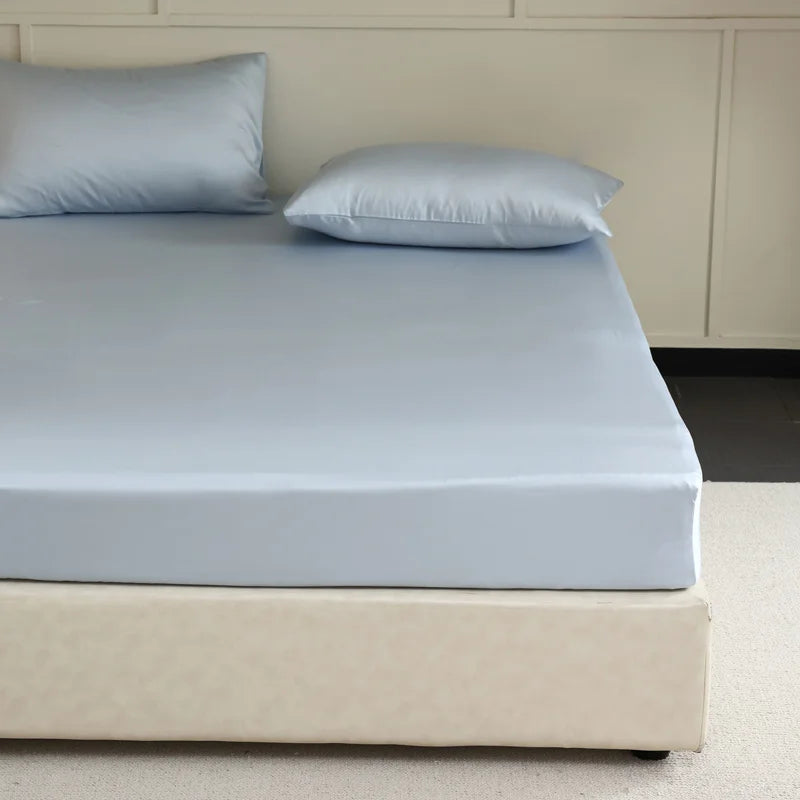
If you choose to refresh the bed visually, the Moonlit Satin Four-Piece Bedding Set is one current Daylilt option to compare. It is described as rayon with a satin weave; it is not linen or a sleep treatment. Check the exact option, dimensions, contents and care information against the guest bed. Buying something new should answer a real need, not replace the practical checks above.
Frequently asked questions
Do I need a complete matching guest-room set?
No. Coordinated pieces can look considered, but fit, condition and ease of use matter more than having one collection. A suitable mix of existing items is a reasonable starting point. Check each piece's material and care requirements, and make sure the guest knows where to find an optional extra layer.
Should I leave lots of decorative cushions on the bed?
Only if there is an easy place to put them. A guest should not have to pile bedding on the floor or block the doorway to get into bed. Use the number that suits the available room. A simple bed with two usable pillows can feel more welcoming than a display that needs dismantling.
How much information should I give a guest?
Enough to use the room independently: lighting, bathroom access, room controls, spare items and anything unusual about the household schedule. Keep private or medical questions optional. A practical offer and a clear explanation make it easier for the guest to ask for anything else they need.
The best guest-room finishing touch is confidence about how the room works. Clear a useful surface, check the bed, explain the controls and offer a little flexibility. Let the bedding support the welcome rather than asking it to do the whole job.


Leave a comment
This site is protected by hCaptcha and the hCaptcha Privacy Policy and Terms of Service apply.