

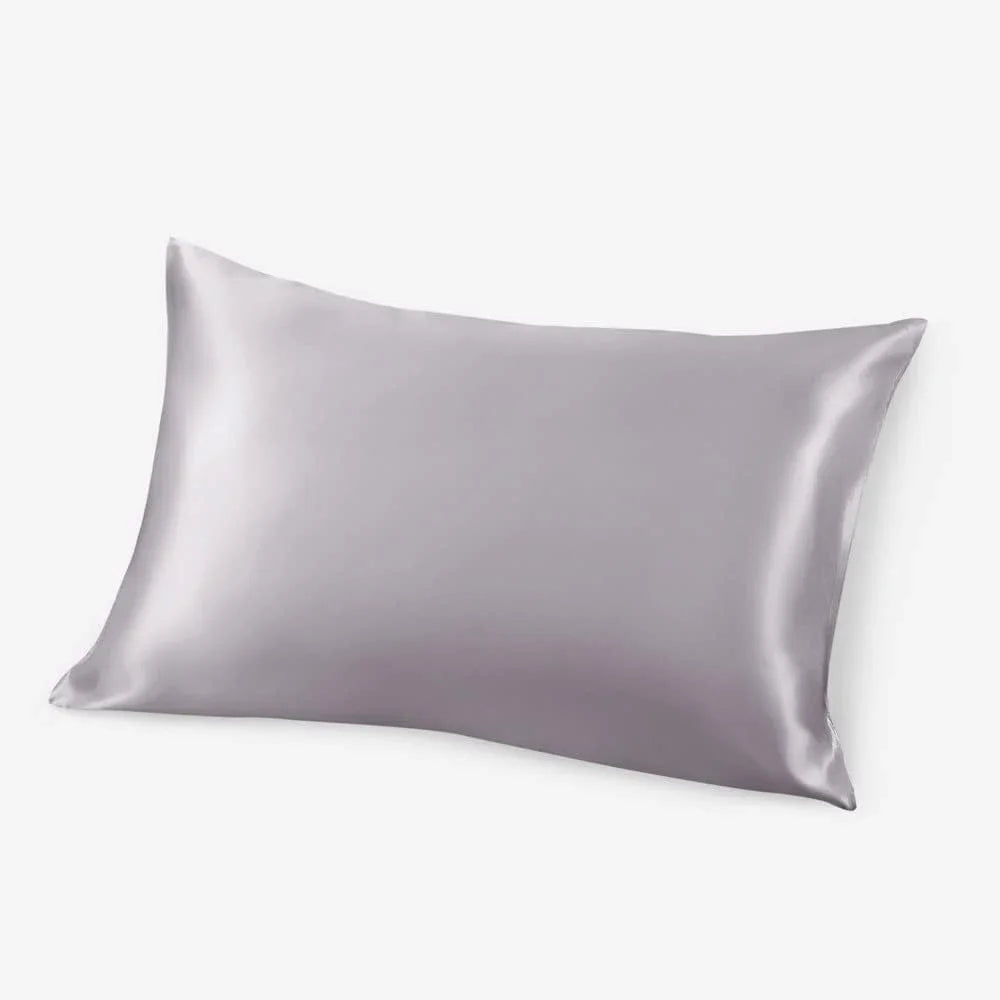
If a pillowcase feels too tight, leaves loose fabric or will not close neatly, check the pillow and case separately before replacing either one. Compare the exact centimetres, the pillow's shape and the closure arrangement. A familiar size name is useful shorthand, but it cannot explain every fit problem.
A poor fit can make a new pillowcase disappointing even when you like the colour and material. The solution is not always a bigger case or a different pillow. Sometimes the wrong option was selected, a pair of pillows is not actually identical, or a decorative photograph created an expectation that the dimensions cannot support. This guide helps you identify the specific mismatch and ask a useful question.
Describe the problem before browsing
Start with what you can observe. Does the case require force to pull over the pillow? Are the corners empty? Does the closure sit under strain? Is there excess length at one end? “It does not fit” is a reasonable first reaction, but a more precise description makes the next decision much easier.
Look at the pillow on a flat surface and again in the case, without forcing a zip or seam. Note where the difference appears. A case that is short along the long edge presents a different problem from one that has enough length but little room for a deep, strongly shaped pillow.
Do not continue pulling simply to prove that the case can be made to close. If the item appears damaged or differs from the order, keep the packaging and relevant labels available and contact the retailer using its current support information. Check the returns conditions before washing or using an item you may need to return.
Check the order and the physical labels
Compare the full ordered option with the label on the item received. Include product name, size in centimetres, colour and quantity. A confirmation that says only “standard” or “pink” may leave an important detail unresolved. Find the selected variant rather than assuming the first option currently shown on the product page is the one you bought.
Then check the pillow's own label where available. A pillow that has lived on a bed for several years may not be the size you remember buying. Decorative and sleeping pillows can look similar when arranged together. If there are two pillows, check both instead of using one measurement for the pair.
Keep these records separate: what was ordered, what arrived and what the pillow measures now. They answer different questions. A discrepancy in the delivered item needs support; a mismatch between two correctly supplied sizes needs a different buying decision. Mixing them together can lead to an unnecessary replacement.
Measure without compressing the answer
Use a flexible tape and record the pillow's length and width in centimetres. Measure the item as it naturally lies rather than squeezing it into the dimensions you hope to find. For a strongly shaped or unusually deep pillow, note the shape and depth as well. A flat rectangle alone may not describe the space it occupies.
Measure again if the result is close to a decision boundary. Make sure you are using the same units on the product listing. Do not compare an inch measurement with a centimetre option without converting it correctly. A small transcription error can make two otherwise clear specifications appear incompatible.
For the full bed, our bedding measurement guide explains how to keep mattress, duvet and pillow records distinct. Here the aim is narrower: identify why this particular pillow and this particular case do not sit together as expected.
Read dimensions as dimensions, not a guarantee
Retailers use familiar fit names to help shoppers navigate, but the exact numbers remain important. Terms such as standard, compact or super king are not a substitute for checking the selected case. A pillow from one market or range may not match the item another retailer groups under a similar name.
Also ask what the quoted dimensions describe if it is unclear. Are they the finished case dimensions, the intended pillow dimensions or a supplier's nominal size? Do not invent an extra allowance or assume a manufacturing tolerance that the seller has not stated. Ask about the exact item when the answer changes your choice.
A close numerical comparison does not automatically establish how a plump or shaped pillow will feel inside the case. If depth or construction matters, include those details in your enquiry. The useful answer is not “buy one size up”; it is an explanation of the specific fit the product is intended to provide.
Consider the closure as its own component
A hidden zip, an envelope end and an open finish organise the remaining fabric differently. Do not assume that two cases with similar dimensions will behave identically at the opening. The closure may be the part you notice first when the pillow has a deep profile or firm corners.
Check the exact product description and images for the closure used on your chosen option. Do not infer it from a lifestyle picture in which the opening is hidden. If the listing does not show the detail and it matters to you, ask before ordering rather than relying on another product from the same collection.
Daylilt's Cool Lilt pillowcase is currently listed with a hidden zip. That is a description of this product, not a statement that every Daylilt pillowcase uses the same finish. Compare each listing separately, including the selected size and number of pieces.
When the case feels tight
First check that the ordered size and delivered label agree. Then compare the pillow's actual dimensions and profile with the stated intended fit. If you have to distort the pillow heavily or pull hard on the closure, stop and reassess. Forcing the item can damage it without resolving the underlying mismatch.
Look at whether the tightness is even or concentrated in one place. Tightness along the entire length suggests a different question from strain only around a thick edge. Take a clear photograph on a plain surface if you need to explain the issue to the retailer. Show the relationship between pillow and case rather than a close-up with no scale.
Do not diagnose shrinkage merely because the case is tight after washing. Check the before-and-after information you actually have and the care instructions followed. Without an original measurement, the cause may remain uncertain. Report the observed facts and let the retailer advise on the specific product rather than making an unsupported conclusion.
When there is too much loose fabric
Check whether the case is longer, wider or both. A small pillow in a much longer case is a different issue from a correctly sized but flatter pillow leaving less volume. Note whether the excess affects use or is mainly a visual preference. The answer may change whether any replacement is worthwhile.
Compare with the pillowcase you already use comfortably. Measure both cases where practical, but remember that material, construction and closure can differ. A comparison can help explain your preference; it does not prove that the new item is defective. Keep the distinction clear when asking for assistance.
Avoid folding or modifying a new case in a way that makes it difficult to assess or return. If a different option looks more suitable, check its complete specification before exchanging. Repeating the same familiar size name without resolving the centimetres can produce the same disappointment twice.
When two matching cases look different on the bed
Check the pillows first. Two pillows bought at different times may differ in dimensions, depth or filling distribution even when their labels use the same broad name. If one case looks full and the other loose, the difference may not be in the cases themselves.
Lay the pillows beside each other and compare them without styling. Then compare the cases separately, following any handling instructions. Record the differences you can see. Do not compress the fuller pillow or stretch the other case to make the photograph look symmetrical.
If a pair is intended for two sleepers with different preferences, perfect visual symmetry may not be the most useful goal. You can choose cases that suit the actual pillows or accept a small visual difference. A coordinated room does not require both people to use an unsuitable pillow for the sake of a photograph.
Keep material questions separate from fit questions
A glossy surface cannot tell you why a case is too small. Fibre, weave, finish and dimensions are separate pieces of information. A case described as silk, silk-blend or satin still needs a suitable size. Do not assume a material label automatically provides stretch or a forgiving fit.
Likewise, do not change the care method to try to reshape the item. Follow the supplied instructions for that exact case. Deliberately applying heat, stretching damp fabric or changing the washing process may damage it and will not reliably create the fit you need.
If composition or care information is missing, resolve it with the retailer. Daylilt stocks different types of bedding; advice for one listing should not automatically be transferred to another. The decision should cover fit and care together, but each needs its own evidence.
A diagnostic worksheet
Create a short record with these fields: pillow length, width and shape; current case dimensions; new case ordered option; delivered label; closure type; observed problem; and the question you need answered. Add photographs only where they make the relationship clearer. Avoid including personal information in images.
Use neutral language in the problem field. “Zip end is under tension when the pillow is inserted” is more informative than “bad quality.” “There is approximately this much unused length” is clearer than “far too big.” You can still be dissatisfied while describing the issue accurately.
The worksheet is useful even if you decide not to contact anyone. It shows which information is missing before another purchase. You may discover that you know the case size but not the pillow dimensions, or that you have compared a single item with a pair without noticing the difference in contents.
An illustrative comparison
Imagine two rectangular pillows, one measuring 50 × 70 cm and another measuring 51 × 76 cm. A shopper has treated both as “standard” because they look similar on the bed. These are invented example measurements, not a recommendation for either pillow or a test of a Daylilt product.
A case selected for the first pillow may not give the same result on the second. The second pillow is both longer and wider before depth is considered. The correct next step is to compare the intended fit of the exact case, not to assume that the word standard overrides the difference.
If the shopper wants two identical-looking cases, they still need to decide whether those cases can accommodate the actual pair. Alternatively, separate suitable options may be more practical. The exercise turns an unclear aesthetic disappointment into a specific sizing question.
Ask the retailer one answerable question
Send the product name, exact option and relevant measurements, then ask for the missing detail. For example: “My pillow measures 50 × 70 cm and has a deep, firm edge. Does this selected option quote the finished case size or the intended pillow size?” This is an illustrative enquiry, not a claim that a particular case is suitable.
Keep an order issue distinct from a pre-purchase question. If the wrong item arrived, include the order reference through the retailer's appropriate private support channel. Do not post order details or addresses publicly. A clear photograph of the label and item may be more useful than several unlabelled lifestyle pictures.
Once you receive an answer, keep it with your measurement record. The next purchase should become easier because you know which detail mattered. You do not need to remember every bedding size convention; you need a reliable record of the pillows you actually use.
Before replacing the pillow
- Confirm the full ordered and delivered pillowcase option.
- Measure each pillow separately in centimetres.
- Note shape and depth where a flat rectangle is incomplete.
- Check closure details and what the quoted size describes.
- Follow the exact care label; do not force or reshape the case.
- Ask a specific fit question before choosing another option.
Solve the mismatch, not the label. A pillowcase should be chosen around the pillow you own and the finish you prefer. With a clear record of dimensions, closure and the observed issue, you can make a more useful choice without replacing a perfectly serviceable pillow simply because one case did not fit.



Leave a comment
This site is protected by hCaptcha and the hCaptcha Privacy Policy and Terms of Service apply.