

When bedding seems smaller after laundering, separate three questions: what dimensions were specified, how the item was measured and what care process it actually received. “It shrank” may describe a real change, but it does not explain the cause, establish a universal percentage or tell you what should happen next.
This guide explains dimensional change in plain English and offers a practical record for buying or asking about bedding. It is not a home laboratory method, a repair tutorial or a prediction for a particular fibre. Do not deliberately wash an item outside its label to find out what happens, and do not stretch, alter or rewash a questionable item before asking the seller for appropriate advice.
What dimensional change means
Textile testing distinguishes changes in length and width rather than treating “size” as one vague number. The published scope of AATCC Test Method 135-2025 describes assessing fabric dimensions after specified home-laundering procedures. Its introduction explains that standard procedures support comparison but may not reproduce every household's practice. That is the important boundary: a result belongs to a defined item and process, not to every product sharing a fabric name.
A consumer's measurement note can help describe a concern, but it is not automatically a result obtained under that standard. Do not attach a test-method name to an informal measurement or describe your tape measure as independent certification. You can be precise without pretending to have performed laboratory testing.
For purchasing, the useful question is usually about the finished item you will receive and its documented care requirements. A generic statement about an entire fibre category cannot answer that by itself.
Separate a bed label from finished dimensions
“King”, “double” or a similar name can be a convenient browsing label. The actual component measurements determine what you need to check. A duvet cover, fitted sheet and pillowcase each fit a different object, even when sold as one coordinated set.
Ask whether the published dimensions describe the finished item as supplied and whether the seller specifies a measurement tolerance or other relevant qualification. Do not invent an allowance yourself. If the page does not explain what the number means, keep that as a question before deciding whether the fit is suitable.
A fitted sheet also has shape, corners and elastic; it is not simply a flat rectangle whose measurement explains everything. Use the supplier's stated measuring and fit guidance. Our fitted-sheet depth guide covers the separate mattress-and-topper fit question.
A percentage needs a starting measurement
A percentage is only meaningful with a clear starting point. To illustrate the arithmetic, imagine a fictional flat textile measured consistently at 200 cm before a process and 196 cm afterwards. The difference is 4 cm, or 2% of the original 200 cm. Those invented numbers are a calculation example, not an expected result for bedding.
If the other direction started at 150 cm and ended at 148.5 cm, its change would be 1%. The two directions would therefore have different results. Combining them into one casual statement can hide the information a supplier needs.
You do not need this calculation to raise a concern. Actual measurements with units are often clearer than a rounded percentage, especially if you cannot establish the original dimensions. If there was no reliable before measurement, say so instead of using the advertised number as if you personally measured it.
Do not turn an example into an allowance
The fictional 2% calculation above does not mean that 2% is acceptable, inevitable or covered by a store's policy. Those are separate questions that require the selected product's specification and applicable terms. Nor does this guide establish a maximum for silk, satin, cotton, linen or a blend.
Be wary of shopping advice that supplies one shrinkage figure without naming the product, construction, process or evidence. A number can sound reassuringly technical while being unsuitable for the item you are choosing. Ask what the claim actually covers.
Similarly, “pre-shrunk” or another treatment description should be clarified if it matters to your decision. Do not translate a short marketing term into a promise of no dimensional change under every washing and drying process. The exact statement and supporting scope matter.
Before buying, ask about the fit you need
Start with the object the bedding must fit: the measured duvet, pillow or mattress arrangement. Then compare the exact selected item's stated dimensions, care information and any supplier guidance. Do not buy a larger size simply because a generic online comment says everything will shrink.
If your fit is already at a boundary, ask a precise question. For example: “Does this listed measurement describe the supplied finished cover, and what tolerance or care-related dimensional information applies to this exact option?” Include the selected variant so the response does not cover a different item.
A seller may not have laboratory data for the question you ask. That absence should remain visible. Decide whether the documented information is sufficient for your needs rather than treating a friendly answer as a numerical guarantee it did not provide.
Read the exact care information first
The relevant label belongs to the particular item, not to a similar product you owned previously. Check all stages of its care before use and follow the supplied instructions. Do not copy a washing temperature, cycle or drying method from a general fibre article.
For a set, establish whether all components have the same requirements. A closure, trim or other detail may be relevant to the complete item's instructions. Where information is missing or inconsistent, ask the seller before laundering rather than choosing whichever version is more convenient.
Our care-label reading guide helps organise those questions. Here the important point is evidence: if a dimensional concern arises later, you need to know what instructions applied and what process actually occurred. That record is more useful than a confident guess about what someone probably selected on the machine.
Make an ordinary baseline record if needed
If exact fit is important, ask the supplier how it recommends checking the item before use. Follow any relevant inspection instructions and preserve packaging or labels where appropriate. Do not mark, cut or modify the fabric in an attempt to create a test specimen.
For a permitted ordinary check, record the component, selected option, date, units and the points between which you measured. A photograph can show the method more clearly than a number alone. Avoid pulling the material to achieve the advertised result; if the measurement method is unclear, ask.
Keep this proportionate. Most purchases do not need a full dossier. The aim is to make a specific fit question understandable, not turn every new pillowcase into a quality-control project. Stop once you have enough information to check the intended use.
If the fit changes, describe what you observed
Separate observation from explanation. “The cover now measures this between these points” describes something you checked. “The fibre was poorly made” asserts a cause you may not know. Start with the observation and let the relevant supplier or professional explain what further information is needed.
Record whether the change concerns overall length, width, a corner, a seam, a closure or how the item sits on its intended insert. A duvet folded inside a cover and a cover with changed dimensions are different possibilities; do not force them into the same description without checking.
If there is no before record, be honest about that limitation. You can still explain the current problem and provide the selected-item details. Inventing a precise starting measurement makes a support conversation less reliable, not more persuasive.
Keep the laundry history factual
Write down the process you know was used, including any uncertainty. If someone else handled the laundry, ask them rather than reconstructing it from habit. “Usually we use this setting” is not confirmation of the process for this item on that occasion.
Do not repeatedly launder the item to see whether it changes again before seeking advice. That can alter the situation and make the original question harder to assess. Similarly, avoid online stretching, steaming or chemical remedies that conflict with the label or have not been recommended for the particular item.
The purpose of a laundry record is not to assign blame within the household. It is to give the seller enough accurate context to advise. A simple “drying method unconfirmed” is more useful than an invented account that happens to sound careful.
An illustrative product enquiry
Imagine a shopper whose duvet has been measured and whose existing cover already fits closely. This fictional shopper finds a new cover with similar stated dimensions but no explanation of tolerance. They ask the seller about the exact selected option before buying.
If the response clarifies the finished dimensions and care requirements, the shopper can compare that information with the fit needed. If the answer remains vague, they may choose a different option or wait. They do not assume that buying one size larger is the correct solution.
The useful result is a decision supported by the item's own information. It does not require a general verdict that one fibre always shrinks less than another or that a higher price prevents all change.
An illustrative support enquiry
In a second fictional situation, a household finds that a pillowcase no longer fits as expected. They identify the exact order and option, photograph the current measurement method and record the care information and known laundry process. They also state that no before measurement was taken.
Their message asks what further check the seller recommends and whether the current result is consistent with the selected specification. They do not label the item defective solely from a social-media percentage, and they do not promise that they followed a process they cannot confirm.
The seller's next step may depend on the particular circumstances and terms. This guide does not decide the outcome or promise a refund. It helps make the concern specific enough to discuss without unnecessary alteration or speculation.
Use a five-line dimension note
- Item: product, component and exact selected variant.
- Specification: stated dimensions and any supplied explanation or tolerance.
- Observation: current measurements, units and method, with before figures only if known.
- Care: the exact label and actual known process, including gaps.
- Question: the clarification or next step you need from the seller.
This note is enough to separate a size-selection issue from an observed change without pretending to diagnose either. Keep it with the relevant order rather than mixing several similar items into one account.
Compare the same component in the same units
Before describing a change, check that the two numbers refer to the same component and direction. A set's duvet-cover dimensions cannot serve as the sheet's starting size. Likewise, a pillowcase's decorative edge, if present, may not describe the space that takes the pillow. Ask how the published number is defined rather than choosing whichever edge gives the expected result.
Keep centimetres and inches clearly labelled. If you convert a figure, retain the original alongside the conversion so someone else can follow the calculation. Do not report a rounded converted number with more apparent precision than the original measurement supports. A misplaced unit can create a dramatic-looking difference without establishing any fabric change.
Check whether you are comparing an item laid out for measurement with an item fitted over a pillow or mattress. Those are different arrangements. If you cannot recreate a comparable ordinary measurement without pulling or altering the textile, describe the fit problem and ask the supplier for its method. The objective is a trustworthy account of the item, not a contest to prove a chosen explanation.
Where Daylilt product information fits
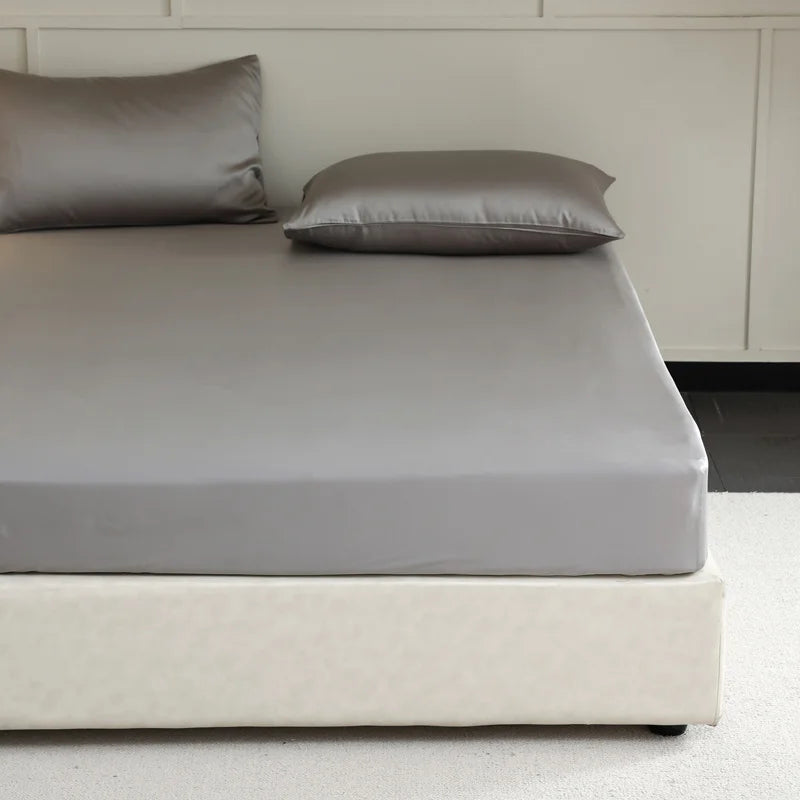
Use the current Soft Horizon product page to check its selected components, sizes and available information. The photograph illustrates appearance; it does not establish dimensional stability or a laundering result. Do not infer a shrinkage allowance from the words “silk blend” or from the shine of the fabric.
If the information you need is absent, ask about that exact option before choosing it. A useful question may be answered without buying anything. The aim is bedding that works with your actual bed and care routine, supported by clear item-level information rather than a generic prediction about what fabrics do.

Leave a comment
This site is protected by hCaptcha and the hCaptcha Privacy Policy and Terms of Service apply.