


When a bedroom is also a workspace, give work a defined place and a clear end-of-use routine rather than trying to pretend the desk is not there. A small room can serve more than one purpose, but it works better when papers, devices and household belongings do not compete with the bed at the end of the day.
This is a practical organisation guide, not a claim that a room layout treats a sleep condition. Housing and work can impose real constraints. You do not need a separate office, expensive furniture or an idealised minimalist bedroom to make one useful change. Start with the space you actually have and the tasks that genuinely need to happen in it.
Identify what the room must do
Write the room's essential uses before planning its appearance. You may need a bed, a desk for daytime work, clothing storage and space for a mobility aid or other important equipment. Those requirements belong on the plan first. Decorative additions should work around them rather than making basic access more difficult.
Separate regular work from occasional tasks. A desk used daily needs a different arrangement from a surface used once a month for household paperwork. Likewise, a laptop and one notebook are not the same storage problem as printed files, samples and several devices. Describe your actual workload instead of copying someone else's home-office photograph.
If the room is shared, include the other person's needs from the beginning. They may use the room while you are working or need a clear area at a different time. A layout that solves one person's work problem by moving everything onto the other person's side of the bed is not a shared solution.
Draw the ordinary movements through the room
Sketch the bed, desk, door and storage without worrying about a polished floor plan. Add the movements you make: entering with a bag, sitting at the desk, opening a drawer and getting into bed. Look for conflicts when furniture is in use, not only when chairs are pushed in and everything is tidy.
Open the wardrobe and pull the desk chair out during the check. A layout may look spacious until the two movements happen together. Keep exits and necessary access clear. If a change affects accessibility or specialist equipment, seek appropriate advice rather than relying on a general layout suggestion from a blog.
Do not buy storage until you know where it can safely go. Measure the available space and think about access to existing controls, sockets and windows. A narrow cabinet that prevents a door from opening properly is not a useful solution simply because its colour matches the bedding. Function sets the boundary for style.
Keep the sleeping surface out of the work system
Decide where work items go when the desk is full. Without that decision, the bed can become the default overflow surface. A dedicated tray, shelf or suitable box may be enough for ordinary papers. The container should have a clear purpose and a defined location, not become another pile that moves between the chair and duvet.
Use the size of the storage as a prompt to review what must remain in the room. Perhaps archived papers belong in another agreed location, or a regularly used item needs an easier place. Do not simply hide everything and make tomorrow's work harder. The objective is a usable transition between room functions, not an empty-looking photograph.
If you cannot avoid using the bed briefly for a household task, plan when and how it will be cleared. Keep that separate from work storage. A reliable end point is more useful than promising that the room will never be untidy. The bed should be ready for its normal use without a late search for somewhere to put the day's paperwork.
Create a closing routine that is genuinely short
Choose a few actions you can repeat: save your work, secure or put away relevant items and clear the surface you need later. Use your workplace's actual security requirements. Do not add an elaborate productivity ritual simply because the room serves two purposes. A routine that takes too long may be the first thing abandoned on a busy day.
Keep tomorrow's first task identifiable without leaving confidential information on display. A brief note in the appropriate work system may be sufficient. The exact method depends on your job and its rules. Do not place passwords, private customer data or sensitive documents in a general household checklist.
Agree what “finished” means if another person uses the room. They should not have to infer whether a laptop left open on the desk means you are still working. A clear statement and an ordinary closing action can reduce uncertainty without requiring a new piece of furniture. The communication is part of the arrangement.
Handle charging and cables deliberately
List the devices that actually need charging and where they are used. A desk and bedside area can end up competing for the same socket or cable. Choose a suitable arrangement that does not trail across a walkway, overload outlets or rely on damaged accessories. Electrical safety needs appropriate products and advice, not improvised styling.
Keep work and personal accessories identifiable if that reduces confusion. You might use a designated storage space rather than buying more cables immediately. Check what you already own and what is suitable for the devices. Do not assume every spare charger is interchangeable simply because the connector appears to fit.
If the existing socket arrangement is unsuitable, seek qualified advice where needed. A room photograph cannot establish that an electrical setup is safe. Do not tuck a problem behind a bed or under a throw to make it disappear visually. The practical issue remains even when it is no longer visible in the picture.
Manage papers according to their purpose
Separate active work, reference material and items awaiting a decision. These categories should be useful to you, not a filing system copied for its appearance. Give each a location and avoid letting uncertain papers become a permanent stack. If you need to retain something, know why and how you will find it.
Follow relevant workplace and privacy requirements for storage and disposal. A bedroom used by guests or another household member may not be appropriate for leaving sensitive information visible. This article does not provide data-protection or legal advice. Use your organisation's instructions and seek guidance when the correct handling is unclear.
For ordinary household papers, keep a separate small place so they do not blend into work. A bill or appointment note should not disappear under a project file, and work papers should not migrate to the bedside table because it is the nearest clear surface. A simple boundary helps both uses remain understandable.
Set expectations about interruptions
A shared bedroom does not automatically become a private office during work hours. Discuss when the other person needs access and how you will handle calls. If quiet is essential for a particular meeting, say so in advance and agree a realistic arrangement. Avoid making a last-minute demand that someone cannot use their own belongings.
Consider what happens when work overruns. Is there another suitable place for a short task, or does the household need notice? A defined communication route is better than repeatedly extending the workday without discussion. You may not be able to change the work requirement, but you can make the impact on the shared room more explicit.
Do not promise that switching off a device will solve persistent sleep difficulty. It can be a useful practical boundary without being a medical intervention. If work or sleep concerns are affecting your wellbeing, seek support through appropriate professional or workplace channels rather than asking a room-organising routine to answer everything.
Style the room after the practical zones work
Once the desk, bed and access are workable, decide how you want the room to look. A limited palette can help you compare options, but there is no requirement for all furniture to match. Start with the colours and surfaces that will remain. Bedding can then be chosen as one element of the room rather than as a disguise for unresolved clutter.
Keep the desk background and sleeping area visually considered without adding numerous objects. A useful lamp or a small familiar item may be enough. Ask whether each addition earns the space it occupies. Decorative items are not inherently wrong; they simply need to fit the room's actual workload and storage.
Use current product images for exact appearance comparisons. Do not recolour bedding in a mock-up and expect the real variant to match it. A digital mood board can compare relationships, not certify physical colour or texture. If an exact match matters, ask whether reliable additional information or a sample is available.
Choose bedding around fit and care, not work stress
A bedding refresh can be an enjoyable style decision, but it should not be presented as a treatment for the pressures of working from home. Decide what the item needs to do: fit your existing pieces, suit your preferred appearance and work with your care routine. Keep those practical requirements separate from claims about productivity or sleep.
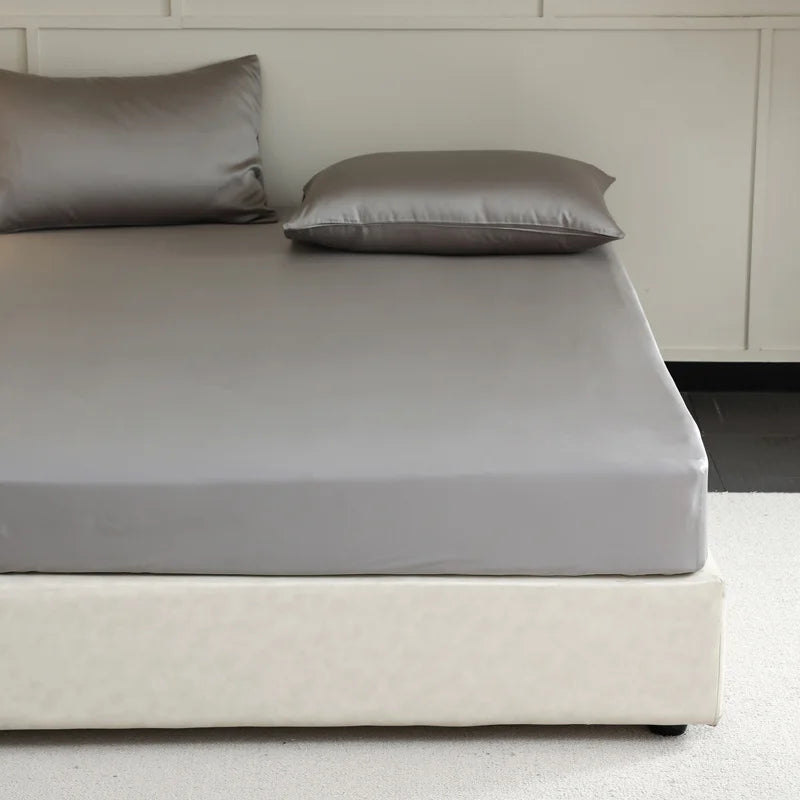
If you consider Daylilt's Moonlit Satin Four-Piece Bedding Set, read the exact selected option. The current description identifies rayon with a satin weave and four pieces. The lifestyle photograph shows an arrangement, not proof of a better night's sleep or a more successful working day. Compare dimensions and care details before ordering.
Our bedding measurement guide can help you check the pieces separately. Do not let a room refresh become an excuse to guess the fit. A suitable set should work with the mattress, duvet and pillows you own, and it should not create a maintenance routine that conflicts with the rest of the household plan.
An illustrative compact-room arrangement
Imagine a bedroom with a small desk beside a wardrobe and no separate home office. The desk is usable, but active papers move onto the bed each afternoon. At night, they are transferred to the chair; the following morning, they return to the desk in an uncertain order. The household decides that this repeated movement is the specific problem to solve.
They identify one suitable storage space for active work and agree a short closing routine. The bed remains clear, the chair can be used and tomorrow's first task is noted in the work system. They do not replace the desk, repaint the room or buy new bedding as part of the first change. This is an illustrative example, not a Daylilt customer account.
After a representative period, they ask whether the arrangement is easy to maintain and whether it protects access to the wardrobe. If the storage is awkward, they revise it. The useful result is fewer repeated moves and a clearer room, not a claim that one box improved sleep or work performance.
Keep the arrangement realistic on a busy day
Test the plan when work ends later than expected, not only after a quiet afternoon. Can the essential items still be put away without a full reorganisation? Can the other person use the room without asking where everything has moved? These questions reveal whether the boundary is practical rather than decorative.
If the system depends on having an uninterrupted half-hour every evening, simplify it. Keep the small actions that protect access and the bed, and move non-essential organising to another time. A room that works reasonably well on a difficult day is more useful than one that only stays tidy when nothing else happens.
Your two-purpose-room check
- List the room's essential uses and the people who need access.
- Check movements with the chair and storage actually in use.
- Give active work a defined place that is not the sleeping surface.
- Keep closing actions short and consistent with workplace requirements.
- Manage cables safely and seek qualified advice when needed.
- Agree shared-room interruptions and late-work communication.
- Style around a workable layout and use exact product images.
- Keep bedding choices separate from health or productivity promises.
A bedroom workspace does not need to vanish; it needs a manageable boundary. Give work items a clear home, keep the bed available and agree how the room changes purpose. Start with one practical improvement and let the styling support the arrangement you can actually maintain.


Leave a comment
This site is protected by hCaptcha and the hCaptcha Privacy Policy and Terms of Service apply.