

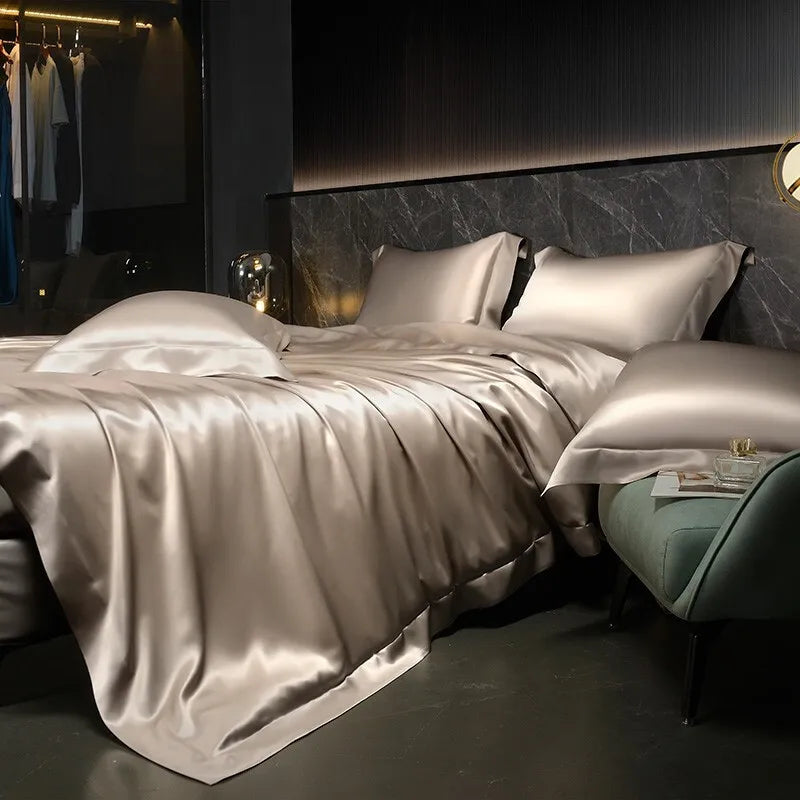
Choose separate bedding pieces when they fill the gap you actually have. Consider a set when its particular components, measurements and care requirements all make sense for your bed. Neither route is automatically better value: the useful comparison is between what you will use, not between an impressive piece count and a smaller-looking basket.
This guide starts after you have identified what needs replacing. It helps you turn that need into two comparable shopping options, check the selected variants and make a decision without buying duplicate pieces simply to achieve a coordinated photograph. It is a practical purchasing method, not a claim that one fabric or bundle improves sleep.
Write the gap as a job, not a product category
“New bedding” is too broad to guide a comparison. “One fitted sheet that works with the measured mattress and our existing duvet cover” is much more useful. So is “a complete cover-and-sheet change for the spare bed, including two pillowcases that fit its pillows”. The job tells you which components count as useful.
Distinguish a worn-out item from an optional visual change. Both can be legitimate reasons to shop, but they create different baskets. If the sheet needs replacing and everything else works, a full set is a choice to change more, not an unavoidable response to the original problem.
For help identifying the gap first, use our bedding inventory guide. Here we will assume you already know the pieces you own and focus on comparing the alternatives in front of you.
Create the minimum useful basket
List the smallest collection of pieces that completes the job. Name each component and quantity rather than relying on a set description. A duvet cover does not include the duvet unless the listing says so. A pillowcase is not the pillow inside it. A styled bed may contain several items not offered for sale together.
Beside each required piece, write its exact fit requirement and the existing item it must work with. A pillowcase must suit the pillow; a cover must suit the duvet; a fitted sheet must accommodate the relevant mattress arrangement. A shared size label across the bed does not remove the need to check each component.
Your minimum basket is a comparison tool, not a rule against treating yourself. You can still choose a coordinated set. The point is to know which parts solve the original job and which parts represent an additional purchase you deliberately want.
Read what the selector changes
Product pages sometimes use one selector for size, another for colour and another for the type of item. The name at the top of the page may cover all those possibilities. Read the selected option and the contents together before counting pieces.
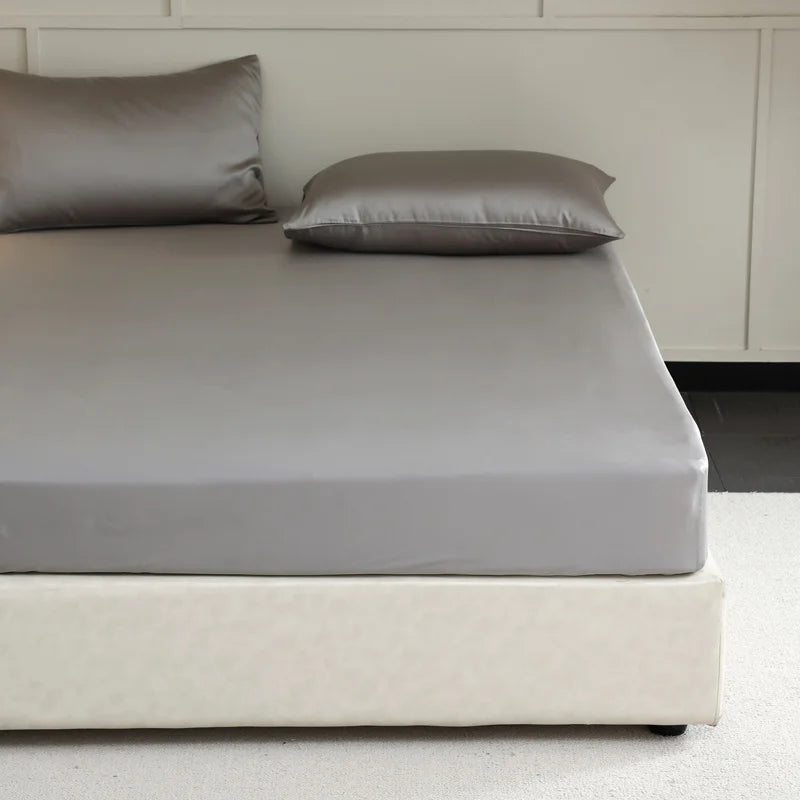
For example, Daylilt's Stillair listing, checked on 17 October 2026, offers a fitted sheet or a pair of pillowcases as separate options. It should not be treated as a complete bedding set merely because both kinds of item appear on the same page. Confirm the exact current selection before ordering.
By contrast, the Moonlit listing, checked on the same date, describes a duvet cover, a selected flat or fitted sheet and two pillowcases. The sheet choice matters even though the total count remains four. These examples explain the comparison; they are not a guarantee that every size, colour or price will remain available.
Make two comparable option cards
Call the first card “separate pieces” and the second “set”. Under each, record the selected product names, precise variants and included quantities. Do not record only a starting price or a broad collection name. The cards need enough detail that you could rebuild the same basket later.
Then compare the same job under both routes. If the set includes a duvet cover you do not need, do not pretend the baskets are identical. Note the extra cover and decide whether it has a real place in your household. If separate pieces omit something required, add that piece before comparing totals.
- Needed: which original gaps does the option fill?
- Included: what arrives in this exact selected option?
- Additional: which included pieces were not part of the original job?
- Still missing: what else would you need to buy or already own?
- Unclear: which question must the seller answer first?
A blank answer should remain a question, not be filled with whatever the photograph appears to suggest. Save the product link and the selected variant details alongside the card.
Compare complete costs without inventing savings
Use the current selected-item prices and any relevant checkout costs shown for your destination. A displayed “from” price may belong to another size or component. A higher piece count may have a lower average cost per piece while still costing more than the job requires.
Keep three amounts separate: the item total, any additional cost you can actually verify and your overall budget. Do not assume a delivery charge, promotion or return service from a previous order. If a cost depends on your destination or final basket, check it through the store's current information rather than copying an old figure.
You can calculate a simple total for each complete option. You do not need to assign a fictional monetary value to every unused component to make the set appear economical. If an extra cover will stay untouched, describe it as an unused extra, not a saving.
Fit is a pass-or-question decision
A lower total is not useful if the pieces do not fit. Compare actual measurements for each component with your bed, duvet and pillows. If you are considering a fitted sheet, include the mattress arrangement rather than the mattress label alone. If you want a flat sheet, check the size against how you intend to use it.
Do this component by component for both cards. One matching measurement does not confirm the whole set. A duvet cover that fits does not prove that its accompanying pillowcases suit unusually shaped pillows. A sheet described with a familiar bed name still needs its measurements checked.
Where a measurement or depth definition is unclear, ask before ordering. Use our fitted-sheet depth guide for the questions to ask about a topper arrangement. This comparison is not a reason to buy a different pillow or duvet merely to make an attractive set work unless that wider replacement is something you actually want.
Check care across the whole choice
Separate pieces may have different labels. So may components within a set. Before assuming that everything can go through one laundry process, read the exact care information for each item and ask about anything missing. Do not infer washing or drying instructions from a fabric name, finish or glossy photograph.
Think about the equipment and time available in your own household. Can you follow the instructions? Where will the item be dried according to its label? Who else might put it into the laundry? These questions can change which otherwise suitable basket is practical.
The comparison is not “easy fabric” against “difficult fabric” in the abstract. It is the documented requirements of these selected items against your actual routine. A coordinated set does not automatically mean coordinated care, and a mixture of separate pieces need not be a problem if you know how each is handled.
Decide how closely the pieces need to match
Some people want a deliberately uniform bed; others prefer related colours and textures. Decide which you mean before treating a slight difference as a defect. A separately purchased sheet does not need to be visually identical to an existing cover if your intention is a coordinated rather than matching look.
Use the selected variant's own images and description. Keep a note of the exact colour names, but remember that a shared name across products is not confirmation of identical appearance. If a close match is essential, ask the seller what evidence they can provide for those particular items.
Do not rebuild the room around an unconfirmed colour assumption. Comparing two actual pieces is different from comparing two screens or a lifestyle photograph with your existing bedding. The sensible outcome may be a clear contrast, a complete set or waiting for better information.
An illustrative one-piece replacement
Imagine a household whose duvet cover and pillowcases still work, but whose fitted sheet no longer does the job. This fictional household measures the bed and identifies the sheet requirements. Its separate-piece card contains one suitable sheet, while its set card also includes a cover and pillowcases.
The set may be attractive. However, the household already has somewhere to use neither the extra cover nor the extra cases. It compares the current complete totals, confirms care and chooses the separate sheet. That is not proof that separate pieces always cost less; it is a decision based on a specific gap.
If the set later becomes the preferred visual change, the same household can reconsider deliberately. It need not describe the earlier sheet purchase as a mistake simply because the new set has more components. The two decisions serve different purposes.
An illustrative complete bed change
Now imagine a spare bed being prepared with a new cover, sheet and two pillowcases. All those pieces are needed. The household checks a set against the measured duvet, mattress and pillows, then compares it with an equivalent basket of separate components.
In this example, the set's selected sheet style and all measurements work, its care requirements are manageable and the colour is the intended choice. The complete total is within the household's budget. The set offers a straightforward route because its contents match the actual job, not because a four-piece label is inherently superior.
If one component fails the fit check, the result changes. The household either asks for clarification, chooses another option or returns to separate pieces. It does not ignore the unsuitable pillowcases merely because the rest of the set is appealing.
Plan the extra pieces before paying
If you choose a set with components beyond the minimum job, assign them a real use. An extra cover might become the ready spare for the same bed, provided it fits and you have room to keep it. Extra pillowcases might serve existing pillows. These are useful plans only when the measurements and household need support them.
“I will find a use eventually” is not the same as a plan. Ask where the extra pieces will live and whether they replace something already owned. If they simply expand an overcrowded cupboard, include that inconvenience in the decision rather than looking only at the checkout total.
You do not need a complicated cost-per-use forecast. A plain sentence is enough: “This extra sheet will be the spare for this bed.” If you cannot write an honest sentence, the extra is optional value at best, not a reason the purchase is necessary.
Check the current terms for your particular choice
Before paying, read the store's current delivery and returns information for the destination and item. Confirm any uncertainty about opening packaging, inspecting measurements or changing your mind through the seller's published terms and applicable advice. This guide does not promise a return right or service for a particular order.
If the purchase is a gift or needed for a fixed date, add those constraints to both option cards. A theoretically good basket is not useful if you have not checked the timing or the recipient's measurements. Do not turn a comparison into pressure to buy immediately.
Keep the final selection, item contents and key answers with the order record. That makes receiving the parcel easier: you can check it against what you chose rather than against a remembered photograph.
The final decision in one sentence
Finish with: “I am choosing this option because it provides these needed pieces, in these checked fits, with care I can follow, at this verified total.” Add any deliberate extras separately. This sentence makes the reasoning visible without turning shopping into an endless spreadsheet exercise.
If a vital part of that sentence is still unknown, pause and ask. A well-chosen separate piece and a well-chosen set can both be sensible purchases. The best route is the one that completes your particular bed, rather than the one that creates the largest-looking pile of bedding.


Leave a comment
This site is protected by hCaptcha and the hCaptcha Privacy Policy and Terms of Service apply.