


When two people share a bedroom, the most useful starting point is to separate shared decisions from individual preferences. Agree what must work for both people—access, room use and a suitable bed—then identify what can be adjusted independently. You do not need identical tastes or identical bedtime habits to make the room more practical.
This guide is about a household conversation and the ordinary organisation around it. It does not diagnose sleep problems or promise that a particular bedding arrangement will improve health. If one person has persistent sleep concerns, medical needs or equipment requirements, keep those questions with the appropriate healthcare professional. A room refresh is not a substitute for that support.
Describe the issue without describing the person
Begin with the specific inconvenience rather than a judgement. “The bedside light reaches my side when you read” is easier to discuss than “You never let me sleep.” “We have nowhere to put the spare blanket” gives the room a practical task. Use ordinary observations and avoid claiming you know exactly why another person wakes or feels uncomfortable.
Ask each person to name one thing that works and one thing that is awkward. This keeps the conversation from becoming a list of complaints. Perhaps both like the existing bed but disagree about the number of decorative layers. Perhaps the colours are not the problem at all; charging cables and bags have taken over the floor. Find the actual issue before browsing products.
Choose a calm time for the discussion. Trying to redesign the room when someone is already tired is unlikely to produce a clear plan. You do not need a formal meeting, but you do need enough attention to hear the other person's preference. Keep the first conversation small enough to finish without resolving every difference in the household.
Sort choices into three groups
The first group is shared practical requirements: clear access, safe furniture placement and bedding that fits what you own. These are not style compromises to trade away. If a particular accessibility or health need applies, give it the appropriate weight and seek qualified advice where necessary. Do not treat a decorative preference as equal to an essential requirement.
The second group is shared preferences, such as the overall colour palette or how much visual detail the room contains. These are topics for discussion. You might each choose one priority and look for an arrangement that respects both. A shared preference does not mean every item must be everyone's favourite; it means the overall decision is understood.
The third group is independent choices. A personal bedside storage area, an optional extra layer or a place for an individual's book may not need a single household answer. Look for these choices before forcing a compromise. Sometimes the room works better when each person has a small amount of control over their own part of it.
Distinguish bedding layers from room conditions
If one person wants another layer, that is a different question from whether the whole room's heating should change. Discuss the exact preference rather than automatically moving the shared control. An independently usable layer may be worth considering when it suits the bedding and room arrangement. Do not assume it is the right answer for every situation.
Check whether the proposed layer can be added and removed easily. Where will it go when unused? Can the person reach it without stepping over belongings? Is its care requirement manageable? A solution that creates floor clutter or a laundry problem may simply move the disagreement. Practical details belong in the conversation as much as the initial idea.
Avoid prescribing a universal temperature or a particular fabric as the cure. People and circumstances differ, and a lifestyle article cannot assess individual needs. If someone's comfort changes markedly or they are concerned about health, seek appropriate advice. The household's task is to make reasonable practical choices, not to explain every symptom through the duvet.
Give each person a usable bedside area
Look at the bed from both sides. One person may have a table, lamp and socket while the other has a narrow gap and a pile of books. A symmetrical photograph does not necessarily reveal that difference. Check what each person needs within reach and whether the current arrangement gives them a stable place to put it.
You do not need matching furniture to make the areas fair. A clear surface and accessible light can matter more than identical tables. If furniture is moved, keep it stable and maintain safe access. Avoid improvised electrical arrangements or cables across walkways. Where a physical need is more complex, ask an appropriate professional rather than copying an online layout.
Agree what belongs in the shared centre and what stays on each person's side. This can prevent small frustrations, such as one charger repeatedly disappearing or a glass being placed where someone expects to put their glasses. The rule should be simple and useful, not a system that requires constant policing.
Discuss different evening routines as logistics
If one person reads while the other prepares to sleep, map the actual sequence. Where does the reader sit, which light is used and where is the book placed afterwards? You may find a small arrangement change that is more useful than a general argument about who should change their bedtime. Keep the question concrete.
When one person arrives later, think about what can be prepared outside the room. Clothes, bags and ordinary work items may not need to be searched for beside the bed. This is a practical suggestion to discuss, not a command to hide normal household life. The aim is to reduce unnecessary interruption while keeping the arrangement realistic for both people.
If shift work, caring duties or health needs shape the routine, acknowledge that. Do not treat a fixed responsibility as a bad habit. Identify what can genuinely change and what support may be available through appropriate channels. A household plan should represent the people who live there, not a generic ideal evening.
Choose visual priorities before colours
Ask what each person wants the room to feel like visually, using words you can connect to a decision. “Less cluttered” may mean fewer decorative layers. “More colourful” may mean a patterned duvet rather than painting every wall. “Calmer” is less useful until you say which existing elements feel too busy. Translate impressions into manageable choices.
Start with the pieces that will remain: bed frame, walls, flooring, curtains and furniture. Then choose what you want bedding to do within that setting. If one person likes a print and the other prefers plain surfaces, a limited patterned element may be an option. It is a proposal, not a universal styling rule.
Use exact product photographs when considering a purchase. Do not recolour a saved image and then expect the real product to match it. A screen can help compare relationships, but it is not a physical colour sample. Keep that limit visible in the discussion, especially when an exact match is important.
Separate the shopping list from the preference list
A preference does not automatically require a purchase. If someone wants fewer layers, begin by removing unused decorative pieces and finding a suitable storage place. If the problem is an awkward bedside area, clear the surface before replacing the table. Test whether the existing room can answer the need first.
When a new item is genuinely useful, write the requirement before looking at options. “A cover that fits our existing duvet” is a measurable requirement. “Something more luxurious” needs clarification. Identify the desired appearance, material information, dimensions and care routine so that both people understand what the purchase is meant to change.
Set a shared budget and distinguish the main item from optional accessories. Do not let one small refresh expand into replacing everything around it because a product photograph uses different furniture. A well-chosen piece should work with the actual room. If the choice only looks right after several unplanned purchases, reconsider the choice.
Check the sizes together
One person may know the mattress label while the other knows which duvet was bought. Bring those details together before ordering. Measure the pieces and record the units. Do not assume that a familiar bed-size name establishes the dimensions of the duvet and pillows, particularly when items were bought at different times or from different markets.
Use our bedding measurement guide for the detailed fit process. The shared-room task is to keep one agreed record so you do not buy from different assumptions. Include the selected option and the contents you expect. A set photograph does not establish that a pillow, duvet or mattress is included.
Keep material and care separate from the size decision. Two items can fit equally well and still have different maintenance requirements. Ask which routine the household can actually follow and who usually handles it. Do not assign a delicate-care purchase to someone else without discussing the practical work it creates.
Try an arrangement, not a verdict
Choose one small change and agree when to discuss it again. For example, give the spare blanket a defined storage place or move the reading material to a clearer bedside surface. Decide what would make the arrangement useful: easier access, less clutter or fewer searches. These are observations you can make without judging anyone's sleep.
Do not introduce several unrelated changes and then claim one item caused a better night. A shared room is not a controlled experiment. You can say that a storage arrangement was easier to use or that a colour choice was liked by both people. Keep those practical results separate from medical or performance claims.
If the change is awkward, revise it. Perhaps the storage place is too far away or the rule does not fit a late shift. A trial is there to reveal those problems. Avoid treating an unsuccessful arrangement as evidence that one person's preference is unreasonable. The useful question is what would make it work in ordinary life.
An illustrative shared-room conversation
Imagine two people who like their existing bedroom but disagree about the bed's presentation. One enjoys a layered look; the other finds it frustrating to move decorative pieces every night. They agree that the problem is not the colour or quality of the bedding. It is the number of loose items and the absence of a storage place.
They keep the duvet and usable pillows, reduce the decorative layers and place one optional throw on an accessible shelf. Each person has a clear bedside area. After a week, they discuss whether the room is easier to use. This example is illustrative, not a Daylilt customer account or evidence that the arrangement changes sleep quality.
They may still want a refresh later. If so, they now have a clearer brief: a coordinated look with fewer separate pieces and dimensions that fit their existing bed. The conversation has improved the shopping decision without requiring an immediate order. Keeping what works is a legitimate result.
Where a coordinated bedding set can help
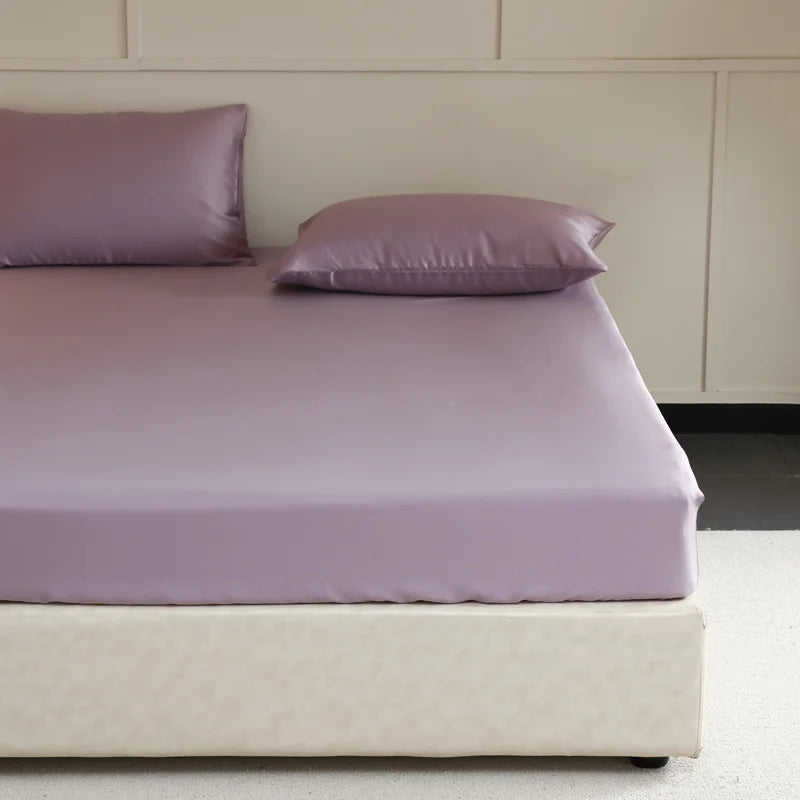
A coordinated set may suit a household that wants fewer visual decisions, provided the pieces meet its actual requirements. Daylilt's Moonlit Satin Four-Piece Bedding Set is one option to compare. Its current description identifies rayon with a satin weave and four pieces; read the selected option, exact dimensions and current care information rather than relying on the image.
That does not make it the right answer to every shared-bedroom disagreement. It will not resolve a bedside access issue, a scheduling conflict or a health concern. Use the product only where it matches the brief you have agreed. A good purchase has a specific job and realistic expectations.
Your shared-bedroom agreement
- Name one practical issue without blaming the person.
- Separate essential requirements, shared preferences and independent choices.
- Check both sides of the bed for access and useful space.
- Discuss routines and care work as well as appearance.
- Try existing items and small arrangement changes first.
- Record exact sizes and a budget before shopping.
- Review a practical result without claiming a sleep treatment.
A shared bedroom does not need to erase individual preferences. Make the essential parts work for both people, leave room for independent choices and change one practical obstacle at a time. The aim is a room you can use together comfortably, not a perfect photograph that asks one person to do all the compromising.


Leave a comment
This site is protected by hCaptcha and the hCaptcha Privacy Policy and Terms of Service apply.