

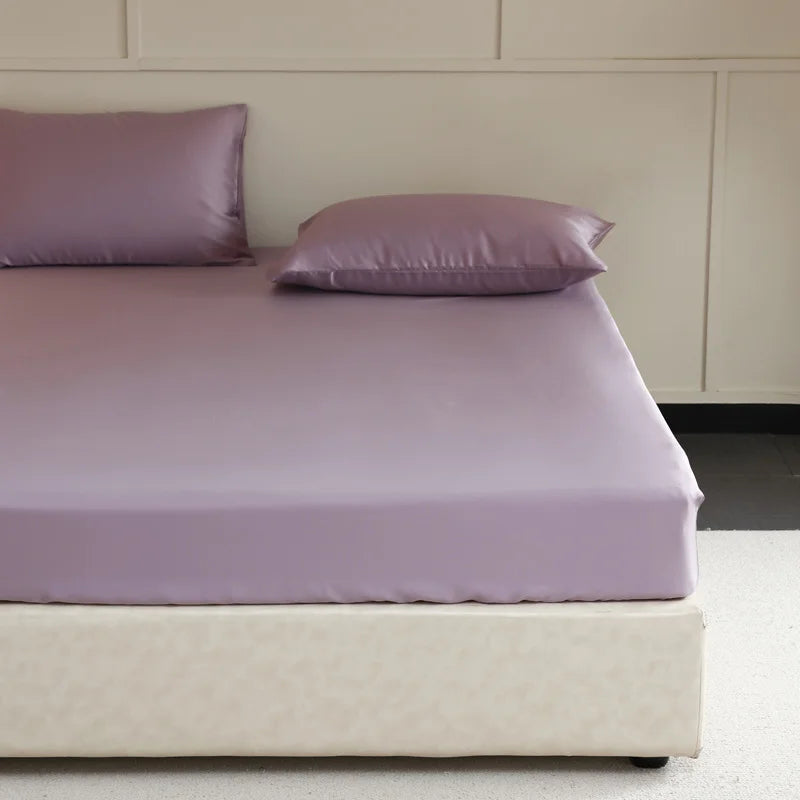
When comparing UK and European bedding, use the exact dimensions of the mattress, duvet and pillows rather than translating size names alone. Keep the country or market of the listing visible, identify what the numbers describe and compare every piece in a set. A familiar word such as double is not a complete specification.
Buying across markets can be straightforward once the actual measurements are clear. The problem is not that one naming system is wrong; it is that a name, photograph and selected option can answer different questions. This guide focuses on that cross-market comparison, not a universal chart covering every retailer or country.
Start with the objects you already own
Make a reference record for the actual mattress, duvet and sleeping pillows. Keep their measurements separate. A bed frame's overall footprint is not the mattress size, and the duvet chosen for that mattress has its own dimensions.
Use the supplied product information and appropriate measurement instructions. If an existing item has an unclear label, record what you can establish and ask for relevant advice rather than replacing uncertainty with the size name you remember from the purchase.
Our bedding measurement guide covers the general measuring task. The next step here is comparing that record with a listing from a particular market. Do not start again from the assumption that every item called king belongs to one standard combination.
Keep the market beside the name
When saving an option, include the retailer, country version of the site and exact size wording. A product shared through a search engine or social link may open a different market from the one another person used. Confirm what is actually selected before comparing.
Language is only one clue. An English-language page is not necessarily a UK page, and a price currency does not describe the dimensions of a duvet cover. Read the actual measurements and selected option rather than treating the page's familiar appearance as enough.
Do not translate a size name into a measurement from memory and then discard the original. Keep both together. That makes it easier to ask the retailer what the option is intended to fit without confusing your own conversion with the supplied specification.
Use published numbers as examples, not universal promises
IKEA UK's current mattress guide, checked on 17 October 2026, lists standard UK double at 135 × 190 cm, king at 150 × 200 cm and super king at 180 × 200 cm. These are mattress dimensions from that guide, not duvet-cover or pillowcase measurements.
For a separate market example, an IKEA Germany VALEVÅG listing identifies a 140 × 200 cm mattress. That specific listing illustrates why you should compare actual numbers. It does not establish one mandatory European double size or make every German mattress identical.
The useful lesson is the relationship between the dimensions, not a recommendation to buy either mattress. Neither example establishes that a particular Daylilt sheet fits. The exact textile option, intended-fit information and relevant depth still need to be checked.
Compare width and length separately
Do not reduce the comparison to whether two options look roughly the same size. A difference can occur in width, length or both. Keep the order of the numbers explicit and confirm the retailer's meaning rather than silently rotating a measurement to make it seem closer.
In the two mattress examples above, 135 × 190 cm and 140 × 200 cm differ by 5 cm in the first dimension and 10 cm in the second. That arithmetic is not an acceptable-fit tolerance. It simply shows why one label cannot replace two numbers.
A fitted product may have a stated range, while another may specify one intended mattress size. Ask about the exact item. Do not invent a rule that a few centimetres never matter or that stretching, tucking or force makes every near match suitable.
Distinguish centimetres from rounded inches
If a listing provides more than one unit, use one consistently in your comparison and retain the original values. Check whether the retailer explains rounding. A short inch label can be a convenient guide without being the most detailed measurement supplied.
Do not mix a rounded number from one chart with a precise number from another and treat the apparent discrepancy as proof of an error. Ask which dimension governs the specific product's intended fit. Keep the retailer's answer with that option.
Equally, do not use your own conversion to overwrite the product's supplied dimensions. A conversion helps you compare information; it does not create a new manufacturer specification. If the figures conflict materially, resolve the conflict before ordering.
Ask what the measurement describes
A listing may describe the finished textile, the mattress it is intended to fit or another component. Those are different statements. A flat sheet's finished width is not the same kind of number as a fitted sheet's intended mattress width.
Read the relevant labels around the chart rather than copying only its largest numbers. Look for references to duvet cover, fitted sheet, flat sheet and pillowcases. Keep each component's dimensions on its own line so an answer about one does not accidentally become an answer about all.
If a chart is unclear, send the retailer the exact option and ask what the disputed measurement represents. Avoid a broad question such as whether the whole set fits a European bed. Name the actual dimensions and the piece whose meaning remains uncertain.
Treat the duvet as its own purchase reference
Your duvet may not follow the mattress's naming convention, especially if the pieces were bought separately or in different countries. Use the actual duvet dimensions when choosing a cover rather than assuming the mattress name determines both.
Compare the complete selected cover measurement. A photograph of bedding draping generously over a bed does not establish the intended duvet inside it. Decorative staging can illustrate an appearance without resolving the fit question for your existing insert.
If you prefer a particular overhang, discuss that preference separately from whether a cover fits the duvet. You may need a different duvet arrangement, but that deserves its own decision. Do not buy an unsuitable cover hoping it will create a photograph's proportions.
Keep pillowcases out of the assumed pair
A set containing two pillowcases still needs to provide the dimensions you require. The count does not mean every market or range uses the same pillow size. Compare your actual pillows individually where their dimensions or construction differ.
Read the closure description where it affects how the case is intended to hold the pillow. Do not assume extra fabric, a border or an opening changes the usable dimensions in a way that makes an unclear fit acceptable. Ask about the exact construction if needed.
For an existing mismatch, our pillowcase-fit guide helps distinguish the question before replacing the pillow. Here the cross-market habit is preserving the actual size rather than transferring a familiar label to a different pair.
Do not forget sheet depth
A correct footprint comparison is not a complete fitted-sheet decision. Keep the relevant mattress depth and approved additional layers in your reference record. Read what the selected product says about intended depth, including whether the meaning is clear.
A topper can make this question more specific. Our fitted-sheet depth guide explains that separate practical comparison. Do not rely on a larger size name as a shortcut for an unresolved depth question.
For adjustable or specialist equipment, confirm compatibility through the applicable manufacturer information as well as dimensions. This article does not certify a sheet for a moving setup. A cross-market label comparison cannot resolve an equipment requirement it does not describe.
Read the full set contents
A listing can contain different types of option within one product page. Check whether the selected purchase is a complete set, a single sheet or a pair of pillowcases. A lower starting price may refer to another combination rather than the product you imagined.
Daylilt's Moonlit listing currently describes a duvet cover, selected flat or fitted sheet and two pillowcases. Its familiar fit labels are a starting point; compare the exact selected measurements against your actual components. This article does not announce new European-fit options.
Keep the final choice's contents beside its size wording. Otherwise a saved screenshot can preserve the colour while omitting the component information that made the option suitable. A clear record reduces that kind of accidental change between comparison and ordering.
An illustrative imported-bed example
Keep the delivery market out of the fit conclusion
An option can have suitable stated dimensions while the purchase itself still raises a separate delivery question. Check the retailer's current destination, charges and support information for the actual country you intend. Do not assume that reading a foreign-market listing means you can order it through the same arrangement from home.
Equally, a retailer offering delivery to your address does not establish that its bedding matches your mattress, duvet or pillows. Keep the purchase logistics and fit comparison on separate lines. Each needs its own answer, and a reassuring answer about one should not conceal missing information about the other.
If you switch to a local market version of the page, confirm the selected option again. Preserve the dimensions and contents you actually checked rather than assuming the same product photograph means every selectable combination remains unchanged.
Imagine a fictional household whose mattress was bought abroad. They remember calling it double, then nearly order bedding using only a UK double selector. Before payment, they compare the actual mattress label and find that its measurements need a different enquiry.
They keep the original market and dimensions in the record, identify the exact sheet option and ask the retailer about intended fit. They also check their separately purchased duvet and pillows rather than assuming the whole room belongs to the mattress's original market.
This example is not a report about a particular bed or Daylilt customer. The useful outcome is a component-by-component decision. The household does not need to replace every piece simply because one familiar name created uncertainty.
An illustrative replacement-cover example
Now imagine someone replacing only a duvet cover while keeping an existing duvet bought on a different market's website. They initially search using the bed's size name, which returns several visually similar options with different numbers.
They narrow the search using the actual duvet measurements and confirm what the product chart describes. The mattress dimensions remain useful context, but they no longer substitute for the item the cover has to contain.
The buyer may discover a suitable option or need to ask another retailer. Either is a clearer result than choosing the most familiar name and hoping the fabric compensates. This is a purchasing comparison, not a universal tolerance or fit guarantee.
Build a short comparison record
Use fields for the piece you need, your actual reference dimensions, retailer and market, selected option wording, supplied dimensions, stated intended fit, relevant depth or construction, and the unanswered question. Keep optional colour choices in a separate field.
Mark missing information as unknown. Do not fill a gap with a measurement copied from an unrelated chart. If the missing detail determines fit, the next action is clarification rather than a vote between two appealing photographs.
After choosing, preserve the exact option with its current product information. If another person places the order, send that record rather than a message saying buy the king one. Clear dimensions and contents are more reliable than a shared assumption about a word.
Check the delivered option before use
Compare the actual labels, contents and selected size with the order before washing or modifying anything. If the item differs or the information is unclear, use the retailer's current support process. This article does not determine return rights or promise a particular remedy.
Do not force a piece into an unsuitable arrangement to avoid acknowledging a mismatch. A close-looking photograph is not a successful fit check. Follow the item's instructions and the relevant manufacturer's requirements for your actual bed.
Across markets, let the numbers travel with the name. Keep mattress, duvet, sheet and pillowcase specifications distinct, identify what each chart describes and ask the exact unanswered question. The result is a better-informed choice, not a larger pile of bedding selected by familiar labels.



Leave a comment
This site is protected by hCaptcha and the hCaptcha Privacy Policy and Terms of Service apply.